
Business Is Better Because of People
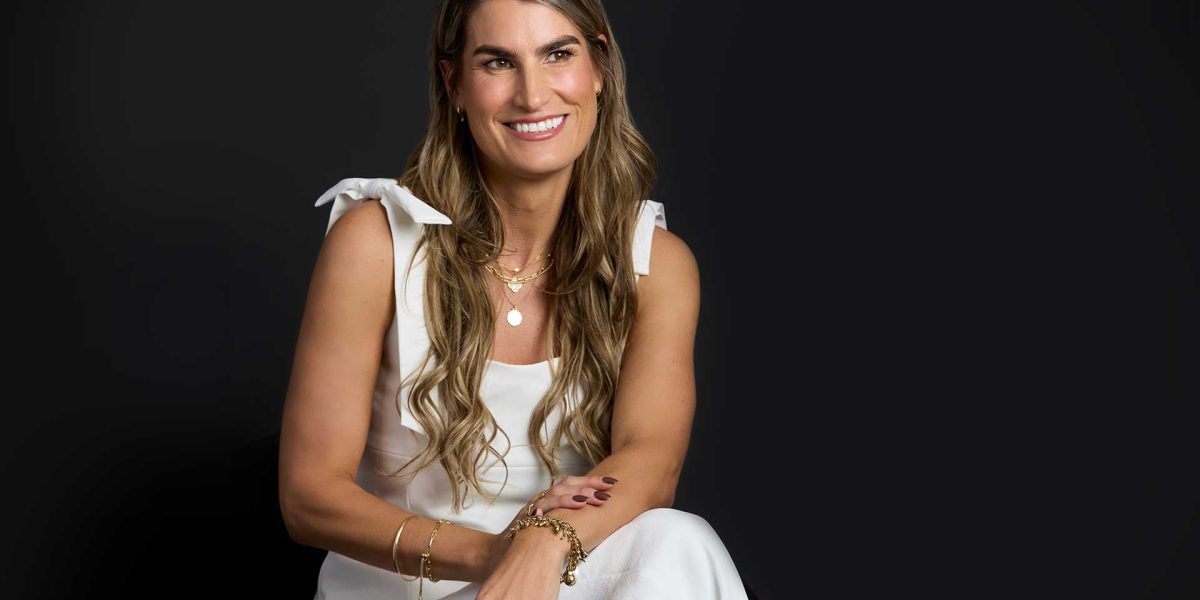
Samantha Stewart runs a 45-year-old import and distribution business with a philosophy borrowed from the sports field, a bell named Tinker, and a firm belief that the art of leadership is to let others shine.
“People are quick to say business would be easier without people,” says Samantha Stewart, General Manager of Electrical Supply Corp. “You don’t often hear someone say the opposite; business is better because of people, and I would love to hear more people say that.”
Stewart has spent three years at the helm of ESC, a business now into its forty-fifth year, after more than a decade working her way through the electrical industry, an industry she describes as feeling at home in. Her route in, however, was anything but planned. She studied physical education and commerce at Otago, spent an exchange year at Dublin’s Quinn Business School, and assumed her career would sit somewhere between business and sport, most likely with the Special Olympics or the Halberg Foundation, where she’d done adaptive mentoring through university.
Then she went to Russia.
“I was in Russia, and on that trip I met the general manager of Philips New Zealand. He said to me, when you finish studying, come see me back in New Zealand. I did, and he offered me a role.”
By 24, she was Philips’ national field sales manager, running six reps and, indirectly, fifty merchandisers, having never been a rep herself. What she remembers most is how her direct boss treated her. “He always made me feel on his level. He made me feel that we were one team.” When she eventually left to travel the world, that same general manager wrote something on her leaving card that she’s only recently come to appreciate. “He wrote, all the best for your travel, Sam, hope to see you back here in my seat one day. I thought it was a bit of a joke. That was 10 years ago. But now I look at where I’m at in the industry and I think oh, wow, maybe he did really mean that.”
Her family business, Globelink, came next, though not by entitlement. “Dad had always said to me, there’s a door here, but it’s up to you to knock on it. You need to be the one that walks through it.” She knocked, started as national sales manager, and was general manager within eighteen months. Then came the opportunity to lead ESC, a bigger business again. “It felt like a big step up and a chance to grow as a leader, I went for it and have not looked back since.”
Ask Stewart to describe her leadership style and she sums it up in three words. “Authenticity is number one. Approachability, number two, and adaptability, number three.” But given how often she talks about listening, she might well add that to the list too. “At the start I enjoyed giving solutions. I thought I was helping the team by giving answers immediately, but I’ve come to see the value in just stopping to listen. When someone comes to me asking what to do in a situation, I try to ask, what do you want to do? It’s shown me that people often have the answer but need the encouragement and confidence to share it.”
She is a vocal proponent about what she calls decentralised decision making. “When decisions are decentralised, you’ve got more people taking ownership. You’ve got people coming up with better ideas, because in their role they are seeing things that I wouldn’t see. It allows things to move faster. They make a decision, and whatever the results, they get either the confidence to do it again or the lesson through the experience, and they make another decision. And through that, they will grow as a person.”
The theory gets tested every week. Stewart has recently moved to Papamoa while ESC’s head office is in Hamilton, so when she’s in the building she wants to be engaged with the team. One way of doing this is “Tuesday Chats”, an open calendar where anyone in the 45-person business can book time with her, agenda optional. “Within the first week there were five people. The most amazing ideas and conversations have come out of this.” One team member arrived with a list of bullet points for improvements in their department. She also started an “ideas” email address where anyone in the team can send their idea through. “Most of them have actually been executed. It’s shown the team that they all have the opportunity to shape and grow the business.”
Stewart says that fostering a close-knit team and strong culture within ESC’s business is one of her most satisfying achievements to date. “Seeing people from across the business collaborating, engaging and working together is very rewarding, both from an enjoyment and performance perspective. By including everyone across the business in our end of year conference and ensuring that every team member is not only informed but knows their opinions and ideas are welcomed has really delivered. And at the end of the day, every one of us plays a part in the customer’s experience.”
The evidence, she notes, was at last year’s Christmas Party. “The tables were filled with people from all different departments, some people with tears of laughter and enjoying being amongst their colleagues. I took a moment to step back and take it in. I was so proud to see that our business is a place where people enjoy what they do and who they are doing it with. There’s no greater feeling than feeling like you are on one team.”
At the heart of ESC’s culture is something Stewart inherited rather than invented, and is quick to say so. The business has employed a team from IHC NZ since 1988, currently the team consists of eight people she calls “the heartbeat of our business”. One team member, 25 years in, hands out nicknames as a rite of passage. “You know you’ve made it when you get a nickname from her.” Stewart’s is Sammy, a name otherwise reserved for family. When ESC installed a bell to ring for larger orders, the same woman named it Tinker (Tinker-bell) and it’s stuck. “These moments create our culture. It’s not forced. It’s just part of who we are.”
The thread runs right back through her life. At 11, she was one of only a few kids who turned up to a classmate’s birthday party, a boy with down syndrome. At university she coached a team of kids with disabilities “The Wildcats” into a social basketball league they’d originally been told they couldn’t join, and watched them make the final. Last month, the boy from that birthday party walked up to her in a customer’s branch. “He came beelining towards me and gave me the biggest hug. He’s got a job, he’s doing his thing, and now he’s a customer of mine. That was 25 years ago and it feels like its come full circle which is pretty cool.” She’s now helping establish the Bay of Plenty Disabled Surfers Association, because apparently running a national electrical supplier leaves gaps in the calendar!
Those gaps also contain surfing, snowboarding, padel and, lately, wing foiling lessons, chosen precisely because she’s always wanting to try new things. “It’s pretty humbling when you turn up and find something you’re not very good at. As business leaders we can become masters in our own skill and get quite comfortable. So where do we find those areas that keep us grounded?”
Her advice to her younger self comes straight from an 80-plus-year Harvard study she quotes from memory. “The strongest predictor of long-term health and happiness is the quality of your relationships. Not your wealth or your social status or your IQ. So invest in the relationships with the people in your life. And say yes to opportunity.”