
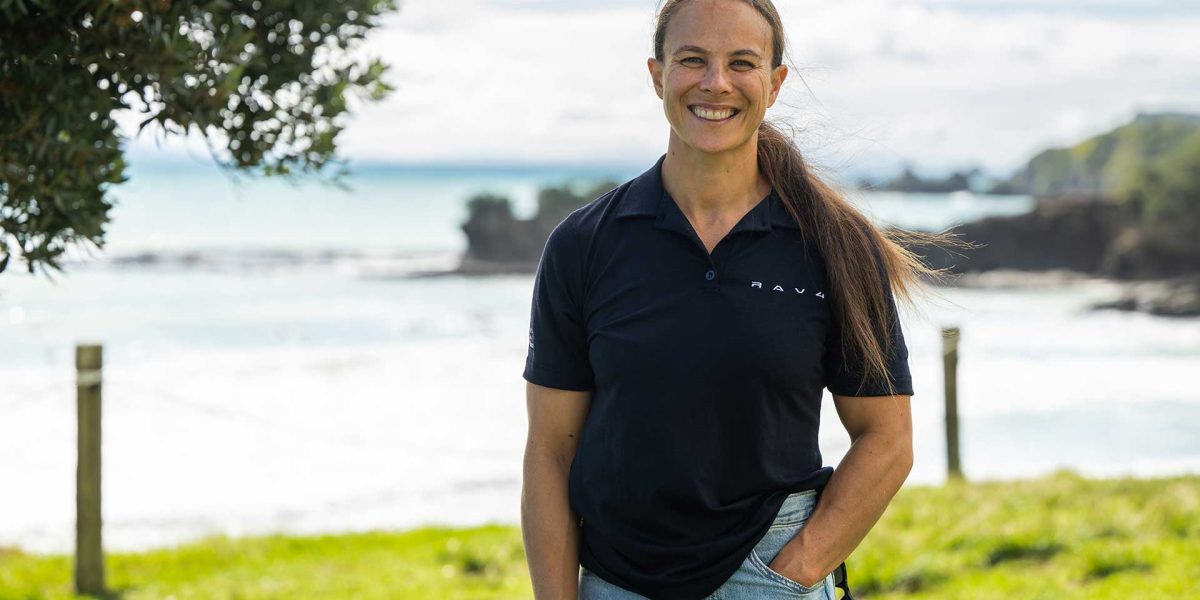
What You Drive When You Are Lisa Carrington
New Zealand’s most decorated Olympian on independence, gear, and the practical question of where the car seat goes.
Dame Lisa Carrington has eight Olympic gold medals and a handshake that suggests there is room for more. We meet the Toyota Brand Guardian, at the launch of the sixth-generation RAV4 and there is a lot to fit into a short window. Alongside the training and representative work, she has a new challenge booked in: motherhood.
I want to know what cars have meant to her because what somebody drives often describes how they live more honestly than anything they would put in a bio.
“My dad loved cars, so growing up we were always changing our cars,” she says. “Every few years, new ones, good ones and that type of thing. A car provides a sense of independence, so as soon as I could get my licence, straight away.”
Independence is the first thing she mentions. Not comfort or safety or anything to do with how a car looks.
And she was clearly keen to get started. She learned to drive in a Renault.
“The clutch was so tricky I just stalled all the time.”
We all did that.
I ask what she drives now, on the assumption it is easier than the French car.
“I’m driving a Toyota bZ4X. I’ve had it for 18 months, and my parents love it so they just bought one.”
There is no higher review than your parents copying you.
The RAV4 sitting behind us is aimed fairly squarely at the life Carrington is about to start. It has been the country’s best-selling vehicle, the sort of position that might encourage a manufacturer to leave things as they are. Not Toyota though.
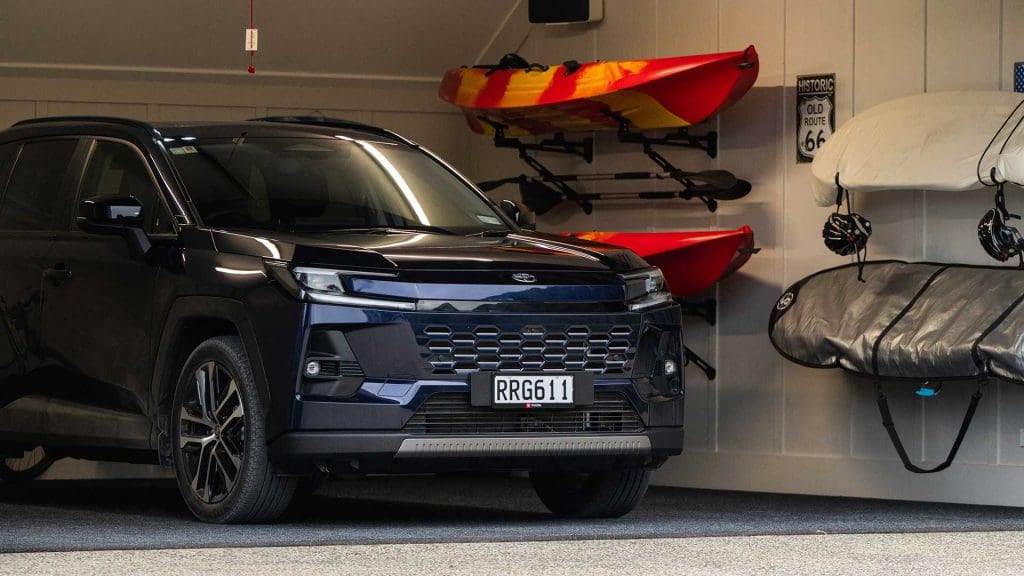
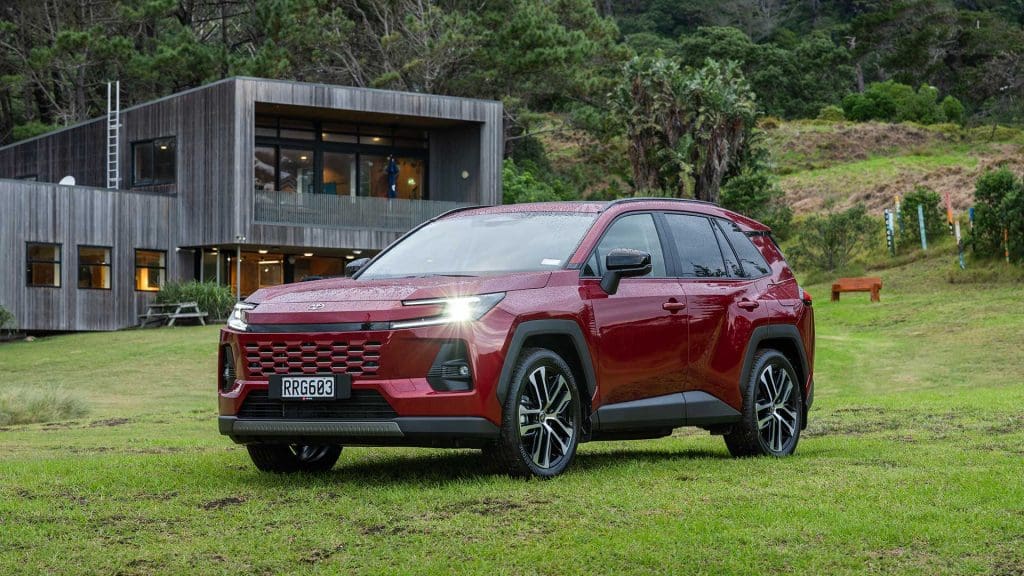
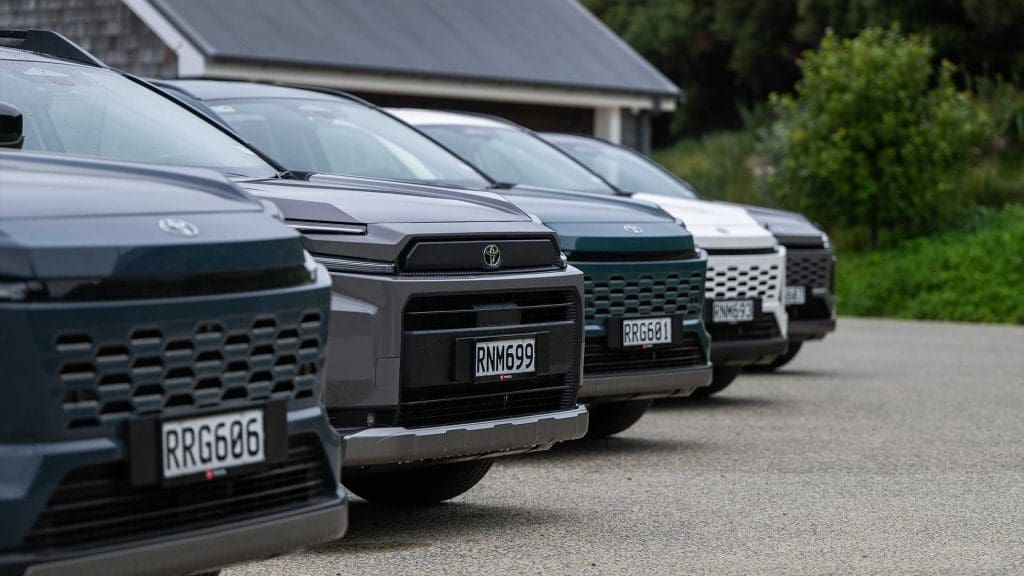
The sixth generation comes in three distinct styles and, importantly, they actually look different.
Core is the polished one. There is a honeycomb grille and, in Limited trim, 20-inch machined alloys, a panoramic roof, head-up display and nine-speaker JBL system.
Adventure looks like it has some serious plans for the weekend. It gets larger over-fenders, its own bumper and grille, bridge-style roof rails and 18-inch matte grey metallic alloys. Inside, there is black synthetic leather or an exclusive Mineral interior that is worth seeing in person before deciding.
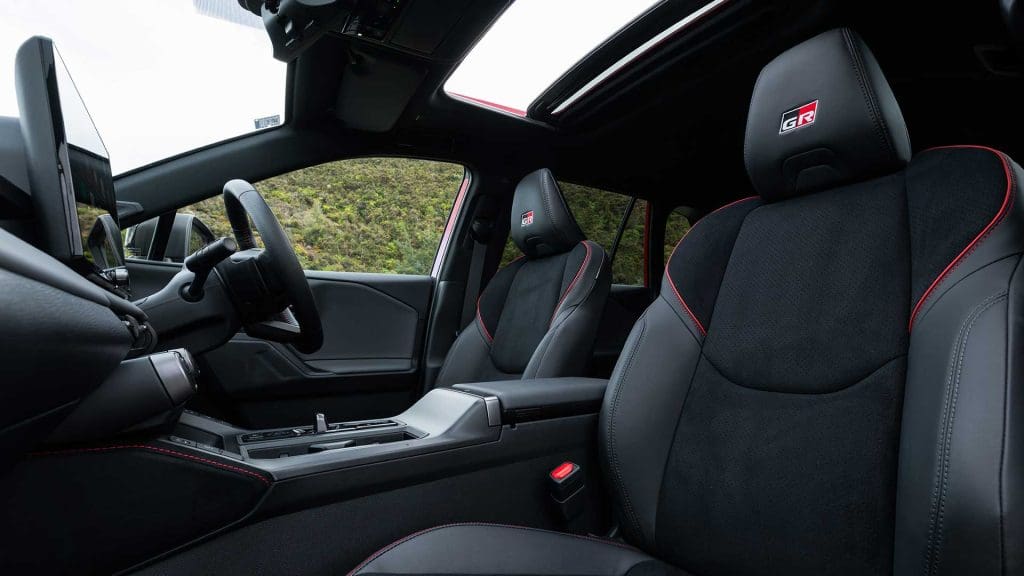
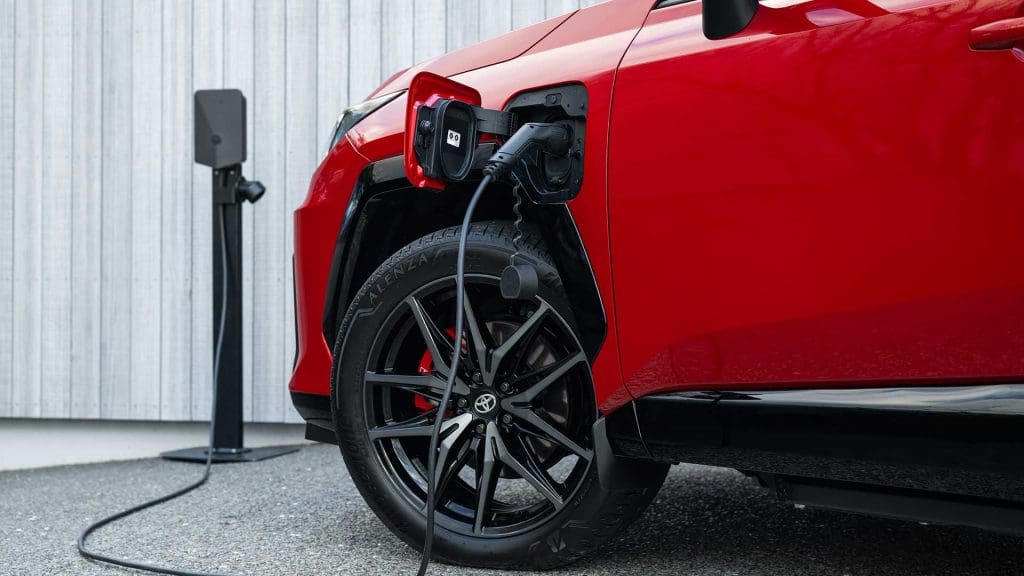
Then there is GR SPORT, the first GR SPORT RAV4 in six generations. A Plug-in Hybrid with improved system output, it gets 20-inch black and machined alloys, red GR brake calipers, GR synthetic leather and Brin Naub microsuede, aluminium sports pedals and a shift-by-wire selector finished in metallic and gloss black.
It is the one that looks least interested in disappearing into the school carpark.Which may become increasingly relevant to Carrington.
“I still want to be an athlete, plus being a mum, it’s like, ‘Oh, that’s right, now you have to put a car seat in the back’,” she says. “You actually have to think about it because I’ve had really big cars growing up, being a sports person.”
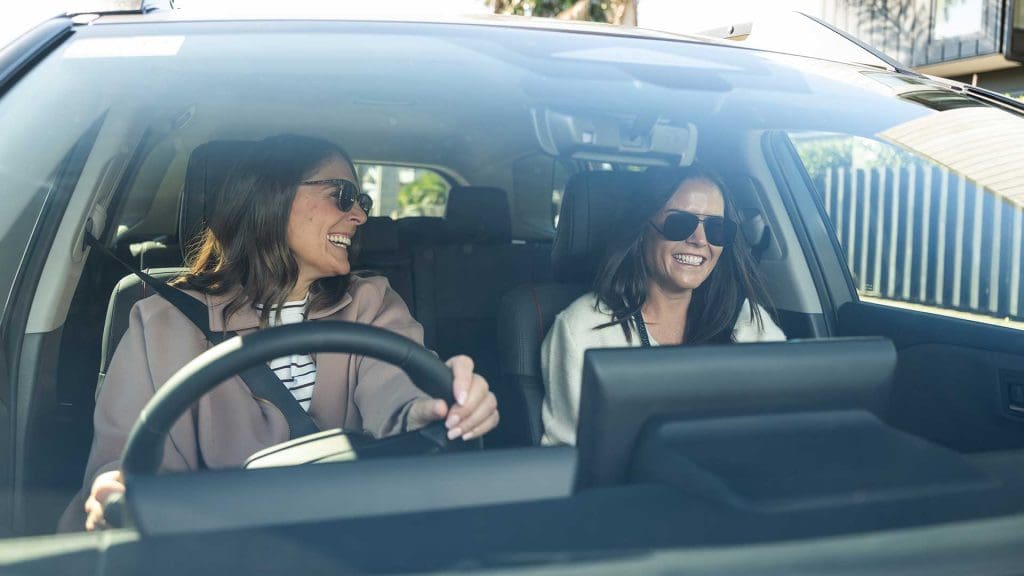
She also has a hybrid Highlander. “It’s a big car just for two of us, but I’ve got more gear.”
An elite paddler’s boot is not a normal boot. There is training equipment, paddles and everything else that follows an athlete around. A baby does not replace any of that. It just arrives with another category of equipment.
When I ask whether the car situation is going to work, Carrington already knows whose luggage is likely to lose the argument. “Yeah. I think the difference is I’ll have to take less of my own stuff. So that little addition, I’d say it’ll be big.”
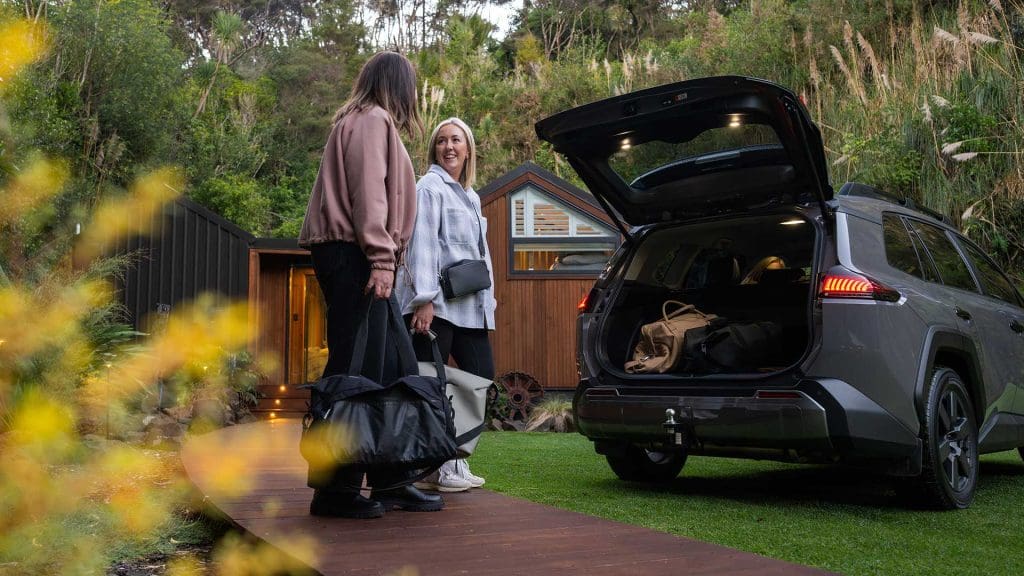
Anyone who has attempted to fit a pram into an already full boot will recognise the struggle. The new RAV4 has had its cabin reworked with this kind of daily use in mind. The Adventure grade also gets a rear seat designed for greater durability and long-distance comfort. It does not sound especially glamorous written on a specification sheet, but three hours into a drive to the coast it probably matters more than the wheel design.
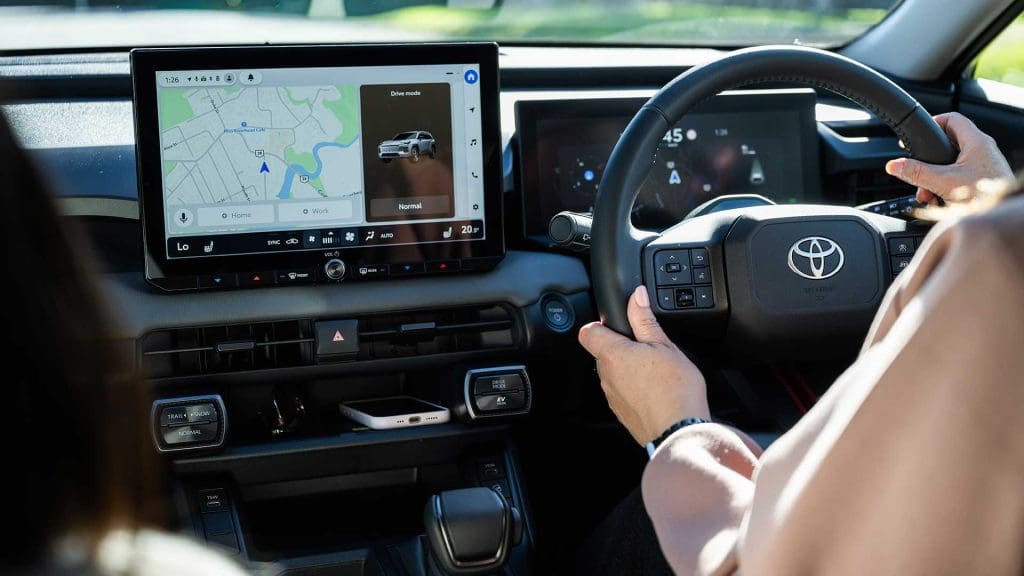
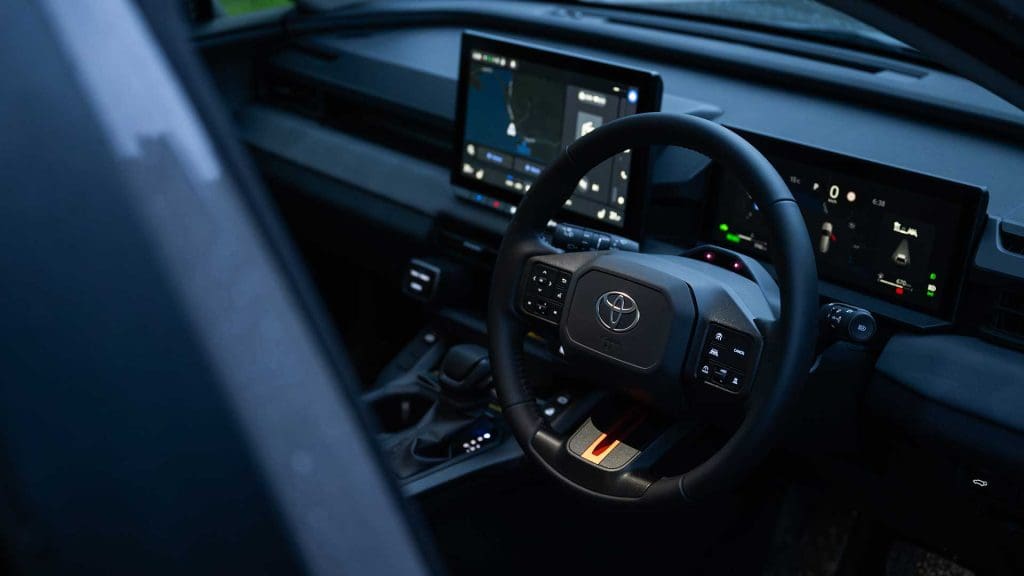
Inside, there is a new-generation multimedia system, a customisable home screen, faster voice recognition and wireless Apple CarPlay and Android Auto. Depending on grade, the central screen runs up to 12.9 inches.
More importantly, Toyota has decided not to put all of the controls into the central screen. Indicators, wipers and temperature controls are still where your hands expect to find them.
The new RAV4 is also the first Toyota launched in New Zealand with Toyota Connected Services.
Of the new technology, the emergency functions are probably the most useful to understand. There is a physical SOS Emergency Call button in the overhead console. Press it and you are connected to an around-the-clock call centre, who can contact emergency services if required.
If the airbags deploy or the vehicle’s impact sensors are triggered, the car can make that connection automatically and provide its location and vehicle details if emergency assistance is required. Nobody inside needs to find a phone or press anything.
Toyota New Zealand says neither it nor its dealers can track the vehicle and that its location is shared with the Toyota emergency call centre only during an emergency.
There are more everyday functions through the myToyota Connect app. You can check fuel level or battery state of charge before leaving home, find the car in a carpark, lock or unlock it remotely, receive an alert if a door has been left unlocked and start the climate control to clear the windows on a cold winter morning.
Toyota Essentials, which covers SOS and Automatic Collision Notification, comes complimentary with the vehicle. Connected multimedia and remote-function packages are also complimentary for an initial period.
Underneath all of that is another fairly significant change. For the first time, New Zealand gets a plug-in RAV4. The petrol-only version disappeared several years ago, and at the top of the new range is Toyota’s sixth-generation plug-in hybrid system. It combines a 2.5-litre engine, front and rear electric motors and a 22.7kWh battery.
Output is 201kW in the front-wheel drive GXL and 227kW in the all-wheel drive XSE and GR SPORT.
Official quotes are 154km of electric-only range for the front-wheel drive version and 144km for all-wheel drive on the official NEDC test cycle. That makes it possible to handle a substantial amount of ordinary weekday driving without the petrol engine getting involved. When the battery’s usable electric range is gone, it carries on as a hybrid.
That simplicity is probably the most persuasive part of the plug-in argument. Charge it and you can do much of your daily driving electrically. Don’t charge it and you still have a hybrid. Toyota is betting that flexibility will appeal to RAV4 buyers more than asking them to suddenly reorganise their lives around a different kind of car.
It also fits Toyota’s wider multi-pathway strategy, with petrol, diesel, hybrid, plug-in hybrid, battery electric and hydrogen technologies developing in parallel rather than waiting for one winner to emerge.
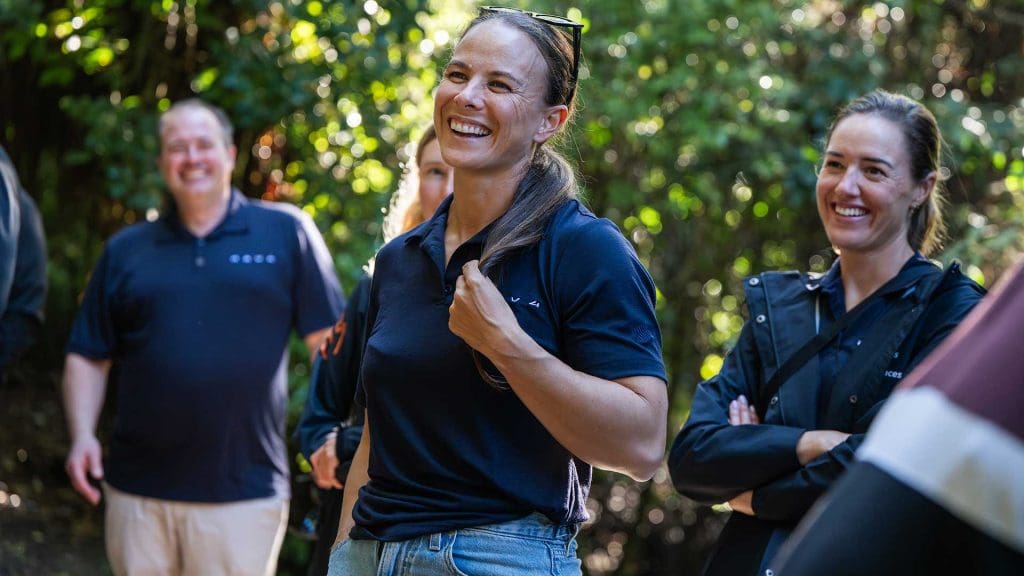
And speaking of winner, Carrington still has Los Angeles in her sights, with baby in tow.
“I guess it’s going to be different. I can get through this, and it’d be really enjoyable, but also give myself the option, if this is such a big change in my life, ultimately that’s where I want to go.”
New Zealand wants to see her back on the water, and I tell her so.
She smiles.
On land she is relaxed and down to earth to a degree that is genuinely disarming, which is not quite what you expect from the most decorated Olympian this country has produced.