
The Building Blocks of Leadership
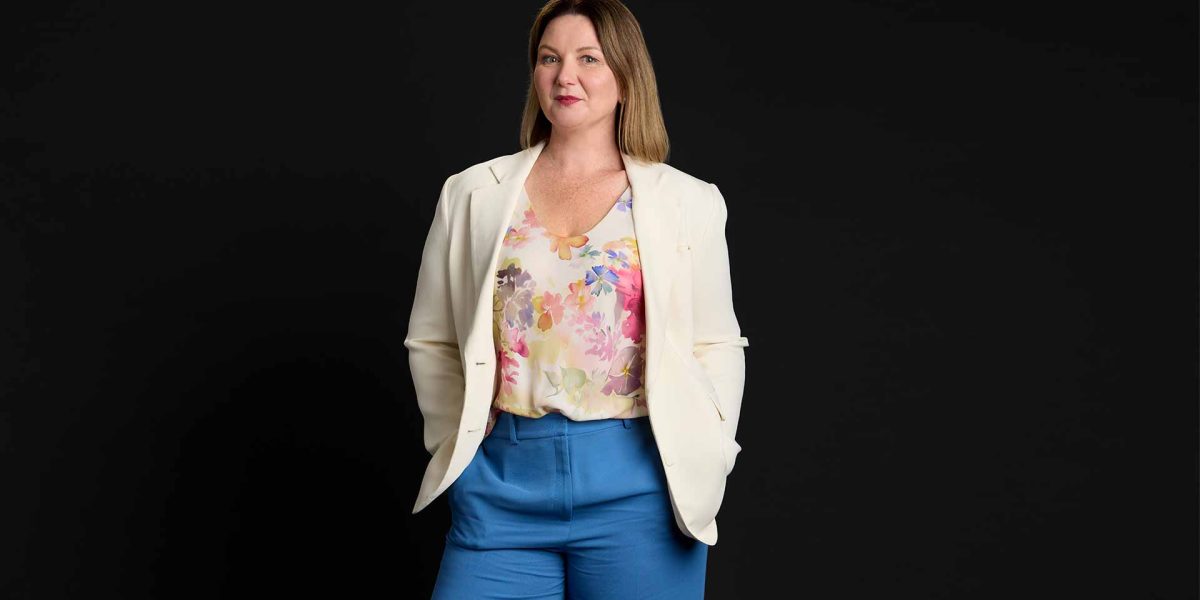
Sara Johnson leads one of the biggest trade-facing businesses in the country as CEO of ITM, New Zealand’s largest independent building supply network. On paper, the scale is substantial: a co-operative of more than 90 stores nationwide, backed by 26 Frame & Truss plants, serving everyone from local builders to major residential construction players. But what makes her role most interesting is not just the size of it but the shape of it. ITM is not some neat top-down corporate ladder. It is a network of independent operators, community relationships and corporate strategy. The job is not just to lead but to keep a lot of moving parts aligned.
In this respect Sara sees communication as a real leadership skill, not a soft one. Looking back at what she brought into the CEO role, she says her background in marketing helped because it taught her “how to communicate to different types of audiences” and “how to break down your messaging”. More than that, she says one of the core lessons she carried with her was that “You can never assume how people understand or receive your messages – you need to be very clear on what you want people to take away from what you are saying.”.
That same idea helps shape the way Sara leads today. “You can’t make assumptions,” she says. “You have to go and talk to people and really listen and understand them before you form your view.” In a co-operative model, that matters even more. Johnson says a successful co-operative must stay very close to its purpose and serve the needs of its members.
Sara doesn’t see leadership as something done from behind a desk. “In a pretty typical week, I probably spend a day to half a day on governance or strategy work or risk work and then I’m with stores, suppliers or customers. I put on boots and the high-vis and I’m out in the yards with people talking to them about their businesses.” She is also realistic that not everyone in a network like ITM is in the same place. Some are thinking hard about the next five or ten years. Others are not. Part of the job, as she describes it, is supporting that full spectrum while still making clear strategic choices.
And while communication is a key factor for Sara, so are the facts. “My decision making is very analytical based. I love evidence,” she says. “A lot of small businesses in New Zealand rely on gut instinct or experience. That’s fine and appropriate. But when you’re getting into a larger organisation like ours, you do need to start pulling together the evidence to make or to inform your decisions.” “In most instances, particularly in the co-operative world, you get a lot of rhetoric and you get a lot of gut instinct and you get a lot of big feelings. But one of the few truths you have is data. And so we here at ITM, we spend a lot of time and effort making sure our data is correct and a source of truth, so we then can take it to the next step.”
When mistakes happen, Sara appreciates people who can own them. “When they feel the mistake, they know they have a responsibility to make it right. Then I know I’ve got the best person in the job. When you really care about what you do, you will feel the burn of a mistake – and that’s how you learn.” She contrasts that with people who are too relaxed about getting things wrong. “When I’ve observed people who didn’t feel it so much, or a bit sort of laissez-faire about it, then it does make me pause for thought about where their time and attention is going.”
She extends that same standard to organisations. “When you have made a mistake, you’ve got to feel the burden on that. And you’ve got to show your shareholders that you feel it, and you’ve got to show your shareholders your reflections on it, and not brush it under the carpet or try and make excuses for it that aren’t legitimate.” For Sara, honesty is one of the biggest values for an organisation. “Honesty and transparency is key to the way we do things and in our one-to-one engagements and our one-to-many organisational engagements because nothing good comes from any other approach.”
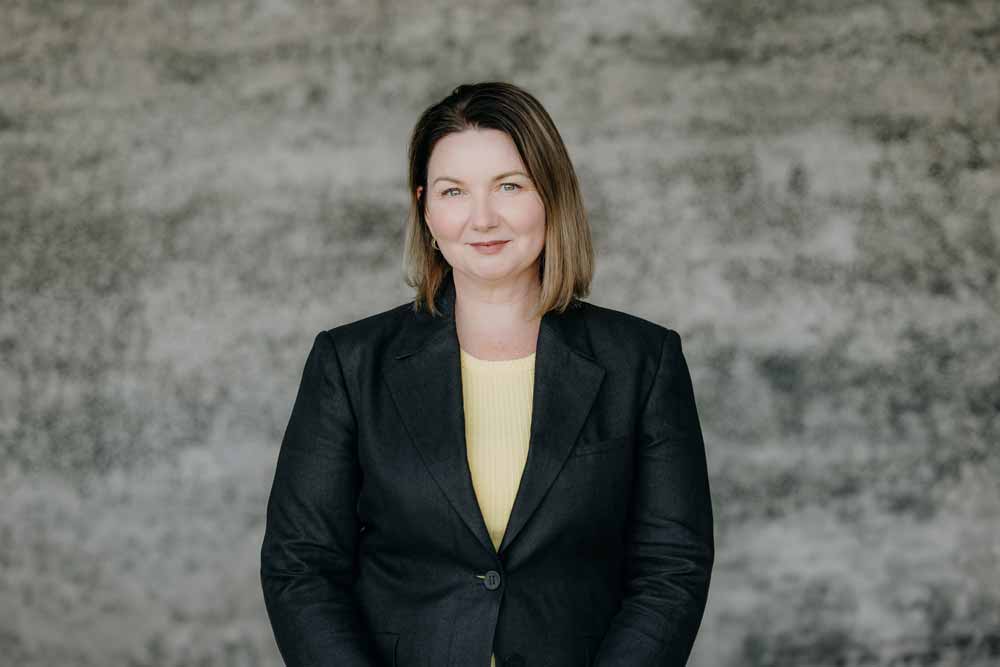
In terms of AI, Sara is interested in it and uses it, but is careful not to turn it into something mystical. “We use AI for work that has a large material impact – but doesn’t require any deeper thinking. AI will change the way we work, but it currently doesn’t have creativity or the nuance to completely meet our needs. And we always have human oversight on the outputs. That’s an absolute must.” She says she also uses it for “checking out or validating previous information, previous decision making, pulling records up quickly, and then building on the thinking”. But she is very clear about the limit. “It’s all past information, using inference to provide a future view. So AI can give you past information, scenario planning, but it’s not a crystal ball. That’s where you have to apply your knowledge, critical thinking, creativity and consider all of the conversations you have every day about what people want and need.”
Part of Sara’s focus is making sure the team can harness their creativity, knowledge and interactions with each other. “I’m quite cynical about companies that talk about culture and then stick it on the wall,” she says. “Culture is what you walk past when you walk through the office. It’s about how people talk to each other, how people engage with each other.” What matters is whether people can actually feel it in the way the place operates. “Do people challenge each other? Do they feel comfortable challenging? Are people very territorial? Do people protect their patch or are people supportive? Our team does that really, really well. They fundamentally understand that together they rise.”
Sara also mentions that culture has a key role in shifting some of the imbalance in male-dominated industries. Even when organisations are going through “the motions”, she highlights a moment from a previous company’s women in leadership programme. “If I’m honest, it was a waste of time. They didn’t really invest in bringing women, particularly younger women, up through the organisation and extending them and their skill sets.” In one exercise, the women in the room were asked to step forward if they thought they could be CEO. “It was only me and the woman running the exercise that stepped forward… and it was an environment of fear and cynicism that stopped everybody else from stepping forward. And that was a company culture issue. It wasn’t the women that were in the room. There were incredible, talented, smart women in the room who could do that job with their eyes shut.”
And Sara’s point to other women looking at the CEO role and wondering whether they could do that is maybe not to start by asking whether they match the person already in the seat. “I’ve never sat there and cut the CEO ‘outfit’ out in my mind and then imagined trying it on,” she says. “It’s more of how would I do that? Would I do it differently? How, where do I see the gap here? And how do I apply myself to the gap? Because I think everybody does the job differently. And you shouldn’t look at someone and go, I have to be like that to be the CEO. I think it’s more about that self-awareness of what you would do and how you would lead and how you would apply your problem-solving skills… So don’t ever plan to do it the way I did it – do it your way.”