
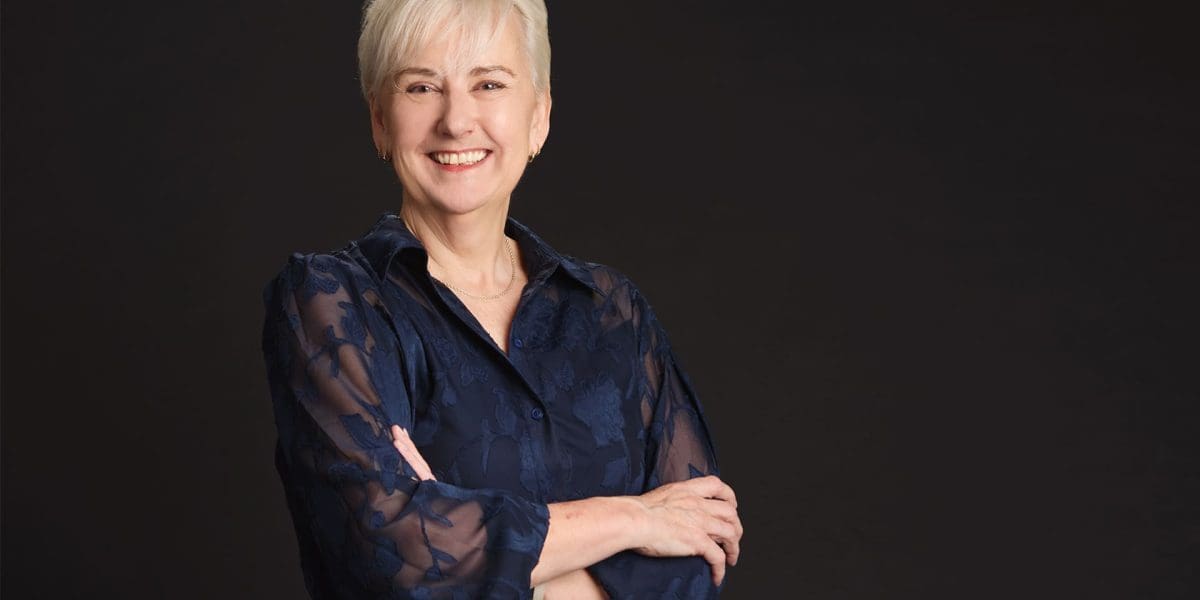
Scale with Heart
Dawn Engelbrecht is no stranger to building scale. She grew a six-child after-school programme into 183 locations with 58 franchisees in New Zealand and branches in Australia, Canada, England, Ireland and South Africa caring for over 9,000 children a day, then brought that experience to Kitchen Studio, where she now leads a 44-year-old brand through its next chapter. But it is the type of scale based on shared success that strengthens everyone involved.
This ethos was shaped early in life. “I grew up in England in a little coal mining village called Kirkby-in-Ashfield,” she says. “My Dad worked in the mines from the age of 14 and later became a self-taught draftsman. When the strikes hit in the ‘80s, everything changed. The mine he worked in never reopened. It took a thriving area and just wiped it out. Unemployment was through the roof. It was life-changing in a very negative way.”
That collapse taught her what scarcity feels like and what happens when whole communities lose their footing. “I’m extraordinarily self-reliant,” she says. “And quite possibly that came from those days. I’m also a bit pig-headed, which helps.” The sense of self-determination never left her. At 18, she followed her childhood sweetheart to Johannesburg, leaving behind a university place in law and languages. Within a year, the relationship ended, but her love for Africa began. “We spent 16 years there, but the crime was getting out of control. It was no longer a matter of if but when you’d be a victim. So we decided to move.”
Instead of returning to England, Dawn took what she calls her “LSD trip” – look, see and decide – to New Zealand. “I came to Auckland on my own for three weeks, met people, visited places, and went back to Johannesburg saying, ‘Yep, we can live there.’ We arrived with nine cubic metres of belongings, most of which were children’s toys. We had enough for a second-hand car, a laptop and a small house deposit. For two years, I divided our wages into envelopes for gas, food and fun. We weren’t rolling in it, but we got through.”
Then came the opportunity that would change everything. “At my kids’ school, there was a before- and after-school programme called sKids. My kids were three of the six attending. I told the lady who owned it, ‘I’m giving you half your profits. You need to sell this to me.’ And she did. That was the sum total of my due diligence,” she laughs. “As an accountant, that’s shocking. But instinctively, I knew it made sense.”
Within a few years, she had created almost every process herself. “So what was I paying the franchisor for?” She and another operator, Bev Parsons, joined forces and took over the brand. They grew it from 19 branches to 183 across New Zealand, supporting 58 franchisees and around 6,500 children every day. Dawn then took the model offshore under the name Sherpa Kids, expanding into Australia, England, Ireland, Canada and South Africa.
“It was probably one of New Zealand’s best-kept secrets, and that was deliberate,” she says. “The tall-poppy thing is alive and well here. People think childcare should be free, but you can’t provide good quality care if you’re not paying decent wages.”
When she sold the business in 2019, she thought she might finally slow down. “That lasted six weeks and nearly killed me,” she laughs. “I trained as a business broker and loved it because I could help other small-business owners have a successful exit.” She later joined the board of Kitchen Studio, one of New Zealand’s longest-running kitchen design brands. When the CEO left suddenly, the board asked her to fill in. Six weeks later, they asked her to stay.
Kitchen Studio is now in its mid-40s as a brand and operates as a cooperative franchise, meaning profits go back to the franchise owners. “I essentially have 16 bosses – 32 if you include their partners,” she says. “My goal isn’t to make profit for me. My goal is to create profit to distribute back to the owners.” It is a structure that gives every owner a stake in the outcome and a reason to collaborate rather than compete. “Every franchisee knows their patch inside and out. They see opportunities and challenges before head office ever would. That knowledge makes the whole network stronger.”
Dawn believes franchising remains one of the most misunderstood business models despite being one of the most human. “If you own everything, you keep all the profits. But in a franchise, you share them, and you grow faster. You don’t have to go to the bank for money. You’re using someone else’s investment to expand, and they’re using your systems and brand to build something of their own. It’s about wealth distribution. At sKids, many of our franchisees were immigrants. When we sold, so many came to tell me that because of their business, they’d bought their first home. That’s powerful.”
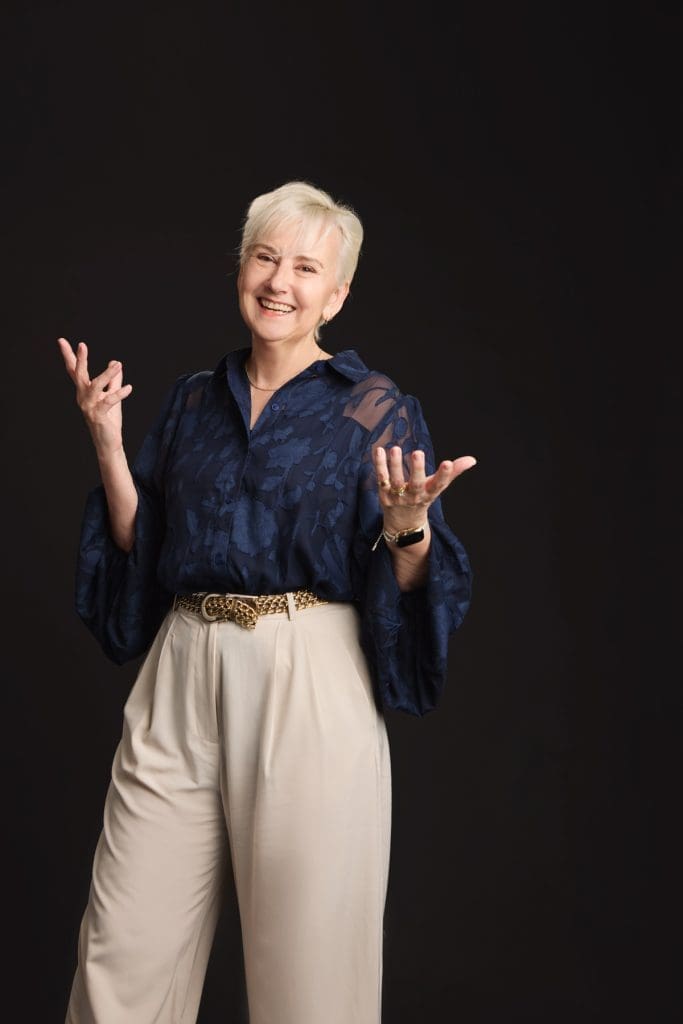
She laments the fact that the model is often left out of business education. “It’s barely mentioned in universities. New Zealand has the highest per-capita rate of franchises in the world, yet it’s still not understood. Policymakers forget that behind every brand name, there’s usually a small business owner running it.”
That sense of shared ownership has defined her transparent leadership style. “If we’ve had a bad quarter, I tell them. I’m not just going to share the good stuff. That doesn’t help anyone,” she says. She holds quarterly meetings with all the franchisees and maintains an open-door policy. “They can ask me anything at any time. Whether they like the answer or not is another story, but they’ll always get honesty.”
Her decisions now as CEO are also guided by a sense of ownership. “Everything I do, I ask myself, if I were a franchisee, how would this land? If I want them to rebrand, is now the right time? You have to think like an owner even if you’re the CEO.” Her daily focus is simple. “My job is to protect the brand and to help our franchisees survive and grow. If that means letting go of a top salesperson, so be it. The brand comes first.”
She hopes people describe her as both passionate and compassionate. “But sometimes, you have to make hard calls, and I can and I will. If you get everything else right, you rarely have to make those awful calls.” In two decades running sKids she only ever terminated two franchisees. “Both times it was because they refused to talk. You can work through almost anything if people are willing to communicate.”
She credits much of her resilience to her husband. “Peter’s been incredible. The day I told him I’d sold my car to pay wages, he didn’t even ask why. He just made sure I could get there and back.”
What drives her now is seeing others succeed. “We’ve got two guys in Tauranga who bought their franchise just as the recession hit. It’s been tough, but they called to say they’d not only met but exceeded their budget. That’s so cool. And a young couple in Dunedin who used to be a designer and an installer now own the branch and they’re hitting every goal. That’s what I enjoy. That’s legacy.”
She also has a genuine affection for the product itself. “A kitchen is worth about eight percent of your home’s value, but it’s worth so much more in joy. It’s where families gather. It should work for you and bring you happiness.”
Unlike many competitors, Kitchen Studio doesn’t manufacture its own products. “That means we’re not limited by what one machine can make. We can work with almost any material. If you came to us wanting a pink kitchen with upside-down doors, we could do it. We’d talk you out of it, but we could. We work with top international suppliers and require a ten-year guarantee on everything, so our franchisees can focus on design and service rather than supply issues.”
As trends move toward natural materials and more sustainable options, she sees design as an expression of how people live now. “We’ve got more choice than ever. It’s about flow and function and joy.”
If she could speak to her 17-year-old self, she says she would keep it simple. “Don’t waste your time with punk rock,” she laughs. “I had a purple Mohawk. But seriously, I’d tell myself to back yourself. It’s okay to make mistakes. Just get up and keep going. I used to be scared to do something in case it went wrong. Now I’m scared not to, in case I miss out on something good.”