

Redesigning Infrastructure and Leadership in New Zealand
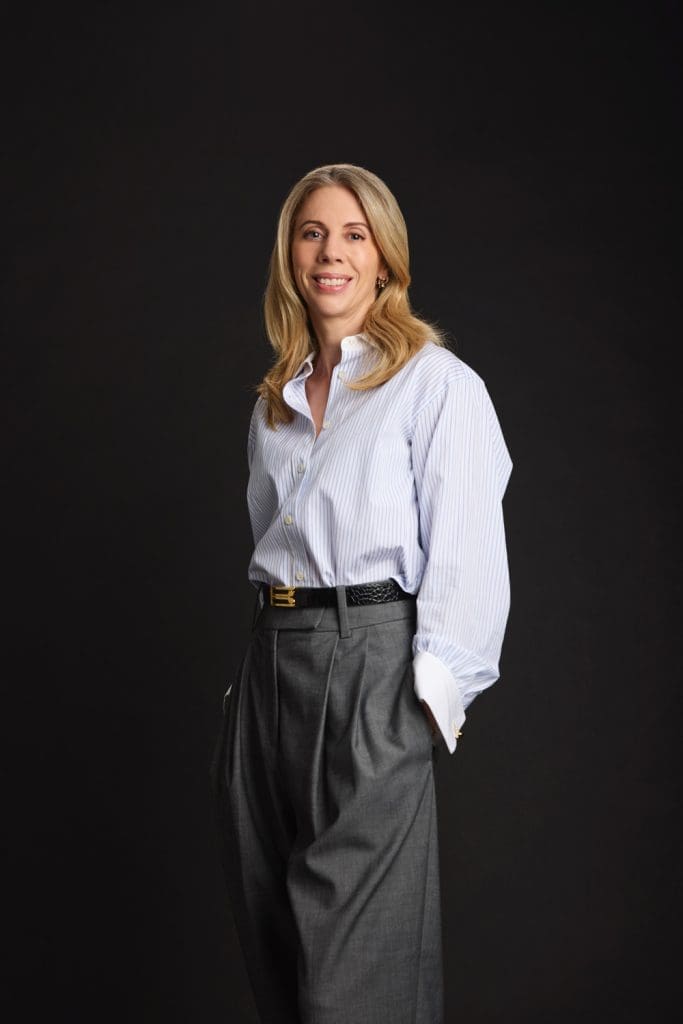
When talking to Tracey Ryan, you quickly get the sense she has lived several careers in one lifetime. Chief Executive of Aurecon New Zealand, she sits at the intersection of engineering, infrastructure and national strategy, but her story starts a long way from project boards and government forums. It begins in rural Ireland, in a farming and land surveying family.
Some of her earliest memories are of being sent down the paddock to help her father. “I remember being out in the field holding the staff while my dad was surveying,” she recalls. “It was very hands-on, very practical. That is probably where the love of the land and the built environment came from.”
Curiosity and being open to opportunities became a kind of compass. “I was always curious, driven to do something else,” she says. “When the opportunities presented themselves, if I think back, I never went searching for something and said, I need this next job or I need this next role. There was always someone who saw potential in me.”
Tracey began her career as a hydrogeologist. At the time, she was providing environmental advice for big transactions, the kind of due diligence that sits behind major mergers and acquisitions. One day, a colleague suggested she move into the earlier stages of the deal process, the so-called phase one or transaction due diligence.
What she discovered was that her strength was not only in gathering data, but in translating it. “I could go out and see a lot of the bigger picture and then distil it into business issues and pull those risks,” she explains. “One of my strengths was being able to work across multiple disciplines, to translate a lot of those technical aspects into risk and to ask those higher-level questions. What does that mean? What does it mean for this transaction? What does this mean for compliance? What does this mean for the banks or the lawyers?”
That ability to connect dots took her into the world of global infrastructure and project finance at a pivotal moment for the sector. “When I started to go across into the world of broader infrastructure, particularly working with the multilaterals and the IFC and the World Bank, that was the time when the Equator Principles and the IFC Performance Standards were coming out,” she says. “A lot of what we were doing with the banks like Barclays and HSBC was really early days. It was cutting-edge at the time.”
The work took her to places that never appear in glossy travel campaigns. In post-conflict Georgia, she found herself walking through damaged industrial sites and communities that were just starting to rebuild. “I remember ringing the bank and going, I do not know what you want me to do here because this place has been devastated,” she says. “They are just surviving, never mind thinking about where they need to be. It was far more than just an environmental audit. There was a big capacity building element that needed to come in to get things moving again.”
In one workshop, a welder quietly began working on something while Tracey carried out her assessment. “He made me an iron rose,” she says. “He produced an iron rose while I was there for the week and gave it to me. I still have it. I have moved many times around the world since then, but that is the one thing I have kept.” It is not just an ornament. For Tracey, it is a reminder that “behind all these things we do and the technical things like that, everything is still real people with real lives” and that local communities often see visiting professionals as a point of hope for a better future.
That sense of purpose is a thread that runs through her career. “If I look back at my career over 30 years, they are the stories that I tell the most,” she says. “They remind me why I keep doing what I do and why I am passionate about this world of infrastructure.”
Today, that passion is anchored in New Zealand. Tracey is now a dual Irish and New Zealand citizen, leading Aurecon’s New Zealand business as part of the global executive leadership team. The company is behind some of the most significant projects in the country, from hospitals and schools to highways and tunnels. One of the projects closest to her heart is Te Ahu a Turanga: Manawatū Tararua Highway. She talks about it not as an engineering exercise, but as something almost emotional, a road that reconnects communities, honours the land and weaves iwi narratives into the design.
Auckland’s City Rail Link is another long-running chapter. Aurecon has served as the Principal’s Technical Advisor for City Rail Link Limited for more than 14 years, walking alongside the client on the journey from concept to reality. There is a personal dimension too. Tracey’s daughters painted tiles that will feature in one of the underground stations as part of an initiative to engage schools in the project. Soon, they will ride those same trains as young adults. For her, that is the definition of infrastructure that matters. It changes how a generation moves through their own city.
Beyond the projects, she spends a substantial amount of time in the broader system. “People ask me, why do I do so much externally?” she says. “You have a big role, you travel a lot, you have your family. But I am deeply passionate about the long-term success of New Zealand and about dealing with big, complex things like climate change. I will get involved with things like Business New Zealand, Infrastructure New Zealand, because someone has to do it. Someone has to put up their hand and try and connect people.” Up until recently, Tracey also chaired the International Federation of Consulting Engineers (FIDIC) Sustainable Development Committee.
She believes that silence is no longer an option. “There are too many people who are far too silent,” she says. “Leaders cannot do that anymore. Business leaders cannot do that anymore.” She is very clear that using her voice in these forums is not a side hobby. It is part of the job.
Another defining aspect of her story is her openness about neurodiversity. Tracey lived most of her life knowing she was dyslexic, but it was only a few years ago that she received a formal diagnosis of ADHD. “It was interesting, and it made me quite emotional,” she says. “You are always kind of told things, that you talk too much or you are distracted, all these sorts of things. But actually, I do think my neurodiversity is a great superpower.”
For her, that superpower shows up most clearly in how she handles uncertainty. “I like complexity,” she says. “I like uncertainty. I do not mind taking risks.” She sees that as a critical advantage in a world of geopolitical shocks, climate disruption and rapid technological change. “In that navigation of the world of complexity of what is happening geopolitically, what is happening in the economy, it does not scare me,” she explains. “So as a leader, it is about how I lean into that unknown and that uncertainty and then how I work with my leadership team to create an environment for our people. We might not have all the answers, but we can bring a lot of our smarts together to start working through this.”
Aurecon itself has played a role in her journey of self-understanding. “I have to acknowledge Aurecon,” she says. “As we are driving inclusivity here, Aurecon has been fantastic. A lot of this journey of my discovery of being ADHD has been through Aurecon and through doing leadership development and growth.” That experience has strengthened her determination to build workplaces where people who think differently are not only accepted but actively valued. “Aurecon is focused on leveraging diverse thinking to create an innovative culture that delivers focused, intentional outcomes for clients.”
Her advice to younger women coming through is simple. “Be in control of your decisions,” she says. “Be in control of the choices that you make. That remains part of who you are.” She shares a piece of guidance that came from a professor at Darden Business School during a leadership programme years ago. “They said, if you are knocking your head against an organisation and it does not align with your core values anymore, just leave,” she recalls. “It was an aha moment. You have choices. Remember you can make good choices. Be yourself.” As an echo to that Tracey also references the famous Oscar Wilde quote, “Be yourself, everyone else is already taken.”