
Love at First Light
We agonise over sofas, paint swatches and the perfect rug, then flick on a single ceiling light and wonder why the room falls flat. These four New Zealand projects, from a glittering Tauranga tower to a lovingly revived winery, prove that light is the ingredient that makes a space feel like somewhere you want to be. Even better, their tricks translate beautifully to home.
You know the feeling. You walk into a room and something about it just works. The light is golden, your shoulders drop, and suddenly you are ordering a second coffee or staying for one more glass. That feeling is rarely an accident. Behind it is someone who thought very carefully about where the light comes from, what colour it is, and, crucially, what stays in shadow.
Happily, the clever bods at Electrical Supply Corp have shared four of their favourite recent projects with us, and between them they show just how transformative that thinking can be. Consider this your permission slip to start taking light as seriously as the professionals do.
Elizabeth Towers, Tauranga
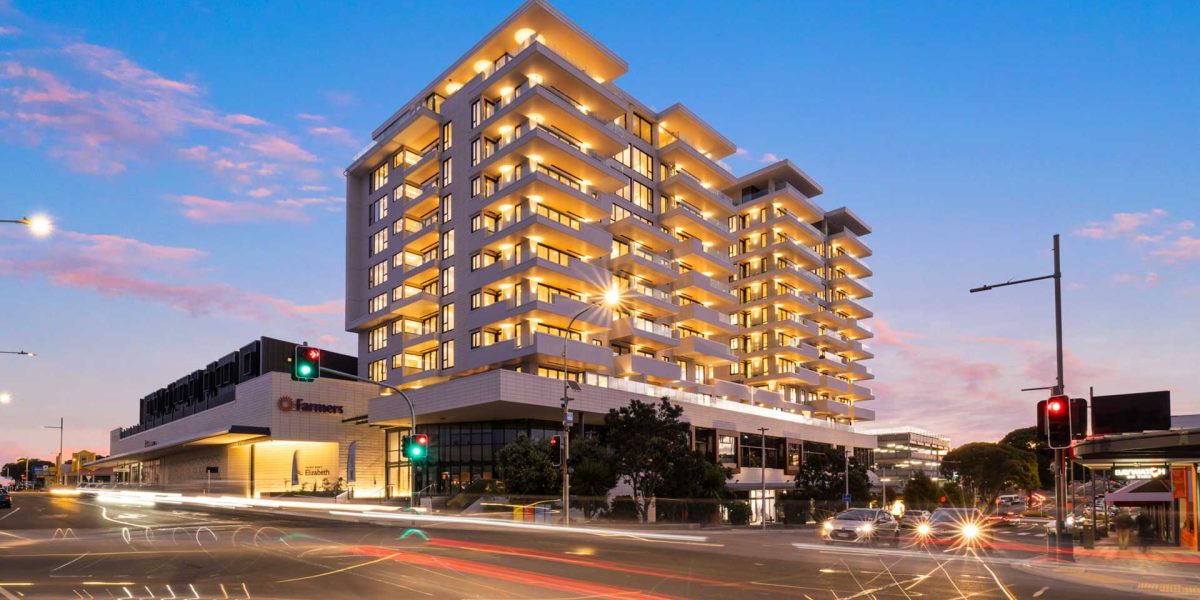
For half a century, the corner of Devonport Road and Elizabeth Street meant one thing to Tauranga: Farmers. Today that famous corner is home to Elizabeth Towers, the jewel of the $200 million-plus Thirty Eight Elizabeth development by Elizabeth Properties, part of the James Pascoe Group. With 96 apartments and 23 garden villas perched above a buzzing new retail and dining precinct, it has given locals a reason to fall back in love with their city centre.
And oh, does it glow. As dusk settles, warm light traces the building’s stacked balconies like the layers of a cake, giving the towers a golden shimmer that feels glamorous without ever being showy. The magic is in the detail: linear luminaires graze the facade in one continuous sweep, built tough enough (IP67 and IK10 rated, in industry speak) to shrug off salty coastal air for decades. Floodlights are angled with surgical care so the light lands exactly where it should, on the architecture and the landscaping, and never in a neighbour’s bedroom window.
It is a lovely lesson in generosity. The best lighting flatters everyone, residents, passers-by and the street itself.
Steal this: That golden quality comes down to colour temperature. Elizabeth Towers uses 3000K, which is warm white, and it is the reason the building feels welcoming rather than office-block cold. At home, keep living spaces and bedrooms at 3000K or the even cosier 2700K, and check the box before you buy a bulb. One rogue cool-white bulb in a warm room sticks out like fluorescent lighting at a dinner party.
The Vines Clubhouse, Bethlehem
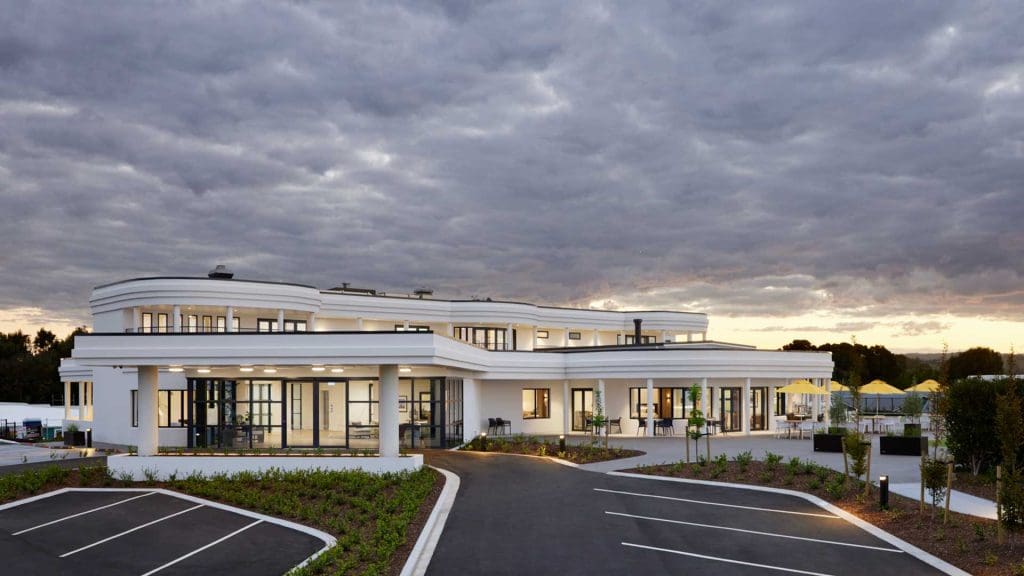
Tauranga locals will remember this sweeping white art deco beauty as the Mills Reef winery. Rather than let it fade away, Classic Group gave it a $12 million second act as the clubhouse at The Vines at Bethlehem lifestyle village, and what a second act it is: 2000 square metres of theatre, library, heated pool, spa, gym and the much-loved Cafe 143, all wrapped in those glorious curves.
The exterior lighting is pure hospitality. Softly lit bollards line the way in, and light levels gently rise toward the porte cochere, so arriving guests are drawn to the front door without a single sign telling them where to go. It is the architectural equivalent of a host waiting on the doorstep with the porch light on. Recessed downlights warm the outdoor seating nooks and pick out the best of that curvaceous facade, and everything, everywhere, is warm white. For the residents who call The Vines home, it means every evening return feels like being welcomed back, not just let in.
Steal this: Light the journey to your door. Make the entrance the brightest point, then use low bollard or step lights to guide the way like breadcrumbs. A couple of downlights under the eaves washing your facade will do more for your home’s evening charm than any floodlight, and warm white keeps things inviting. Nobody ever felt welcomed by a security light.
Kristin Music
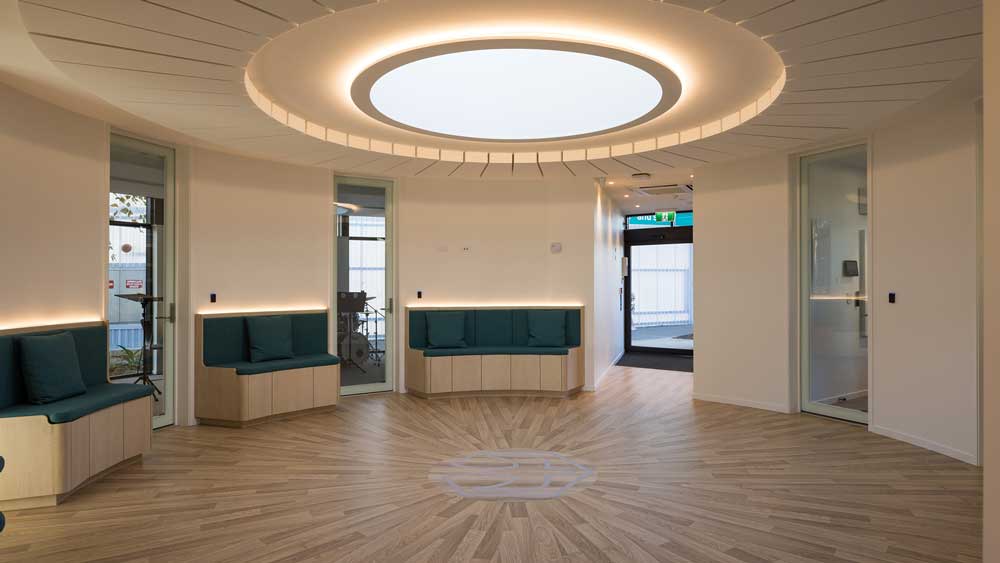
There is something quietly wonderful about a school deciding its music students deserve beautiful light. In Kristin School in Albany the new music and creative learning space’s ceiling is the showstopper: a huge circular feature ringed with a soft halo, floating above curved timber seating like a full moon.
Look closer, though, and you will notice what you cannot see. There is barely a visible light fitting in the room. LEDs are tucked into the bespoke seating, coves wash the walls with a gentle glow, and nearly all the light arrives by bouncing off surfaces first. Nothing glares, nothing buzzes, nothing shines in anyone’s eyes. The warm light makes the timber sing and the whole room feels calm in a way that invites you to pick up an instrument, sprawl on the seats with friends, or stay behind after class just because it is nice in there.
By day the lighting disappears entirely. By night the room becomes its own little performance venue. Clever, and rather sweet.
Steal this: Hidden light is the warmest light. A simple LED strip concealed above your kitchen kickboard, behind the bedhead or along the top of a bookshelf will bounce a soft glow around the room and instantly make it feel more expensive. The rule of thumb: if you can see the bulb, hide it. Show the glow, not the source.
Monk Mackenzie, Britomart
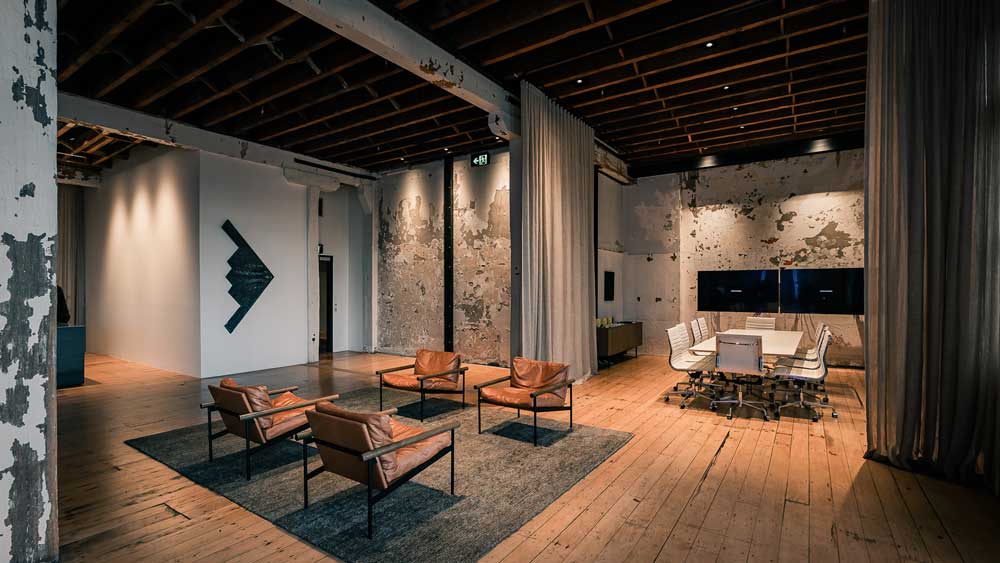
When acclaimed architecture practice Monk Mackenzie went looking for a new studio, the partners, who between them have worked at some of the world’s most storied firms in New York and Hong Kong, fell for a heritage building in Britomart with a century of stories in its walls. Peeling plaster, exposed timber ceilings, floorboards worn smooth by generations. The kind of texture money cannot fake.
So the lighting does something rather brave: almost nothing. No statement pendants, no decorative fittings jostling for attention. Just discreet track spots nestled into the old ceiling structure and a few perfectly aimed accents that wash the walls, catching every crack and layer of that gorgeous patina. Meeting tables get proper task light for working, while the lounge corners are left dimmer and moodier, all leather chairs and low conversation. The contrast between bright and soft is what gives the studio its atmosphere, somewhere between gallery and private club.
Steal this: Stop lighting your rooms evenly. A space that is uniformly bright feels like a waiting room, and no cushion can save it. Instead, pool light where life actually happens: over the dining table, beside the reading chair, on the painting you love. Let the corners soften into shadow. Three small lamps at different heights will beat one big ceiling light every single time.