
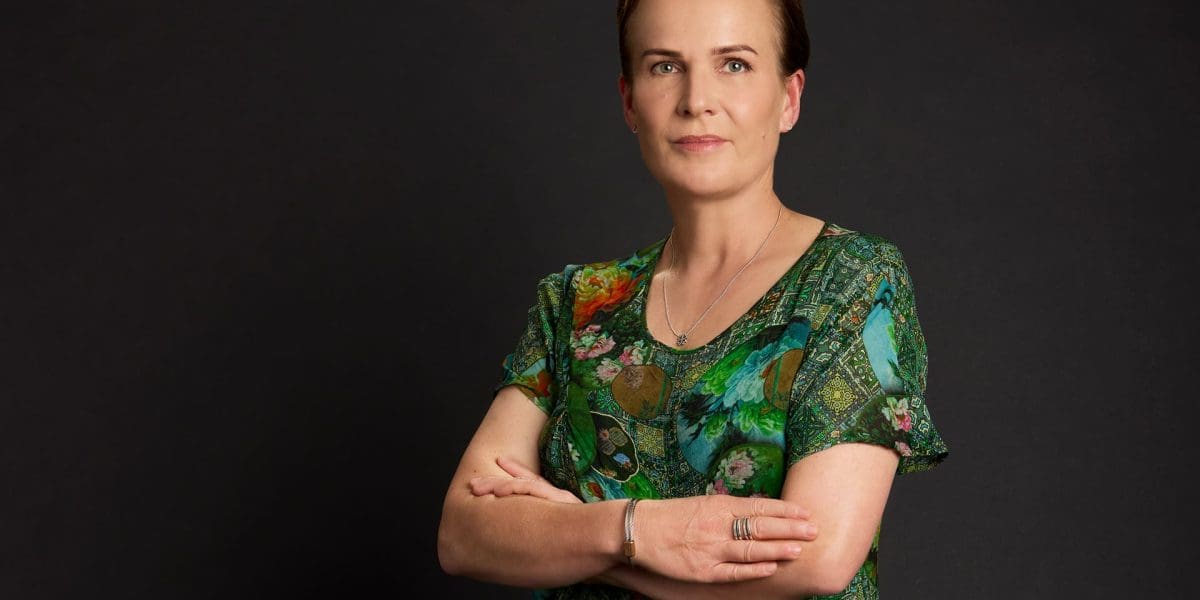
How Curiosity Shapes a Leader – Hannah Walton’s Metlifecare Journey
People often talk about leadership in terms of scale. The size of a business. The size of a transformation. The size of a mandate. But for Hannah Walton, the most meaningful measure is not scale at all. It is the human experience behind the numbers. It is how older New Zealanders feel in their homes. It is how her teams feel in their work. It is how one decision can ripple into someone’s life at a stage where every detail matters.
As Chief Operating and Strategy Officer at Metlifecare, Hannah carries one of the broadest portfolios in New Zealand retirement living and aged care. She oversees 37 villages. She leads the company’s long-term transformation programme, the Full Potential Plan Forward. She is responsible for village financial performance, employee engagement, compliance, and the experience of thousands of residents and their families. She also leads the company’s overall sustainability agenda.
While the operations side might be complex, the purpose is simple. “Our approach is that residents don’t live in our workplace, we work in their homes,” she says. “It comes with a responsibility and a privilege.” She often describes retirement living as the most personal commercial environment she has ever worked in. “Their wellbeing is tied directly to the choices we make every day. You hold that very close.”
Her role sits at the intersection of operations and future strategy. Hannah must ensure that today’s performance is strong and stable while also preparing for a future shaped by demographic change, digital expectations and evolving customer demands. It is an industry where the commercial realities are undeniable, but so is the emotional weight. “It is not like running a standard service business,” she says. “You cannot separate the operational from the human.”
Hannah’s parents once held a strong bias against living in a retirement village or aged care setting, largely influenced by the perception of the historical style of institutionalised care. That shaped her early thinking and, unintentionally, her career. “I wanted to understand why older people felt that way,” she says. “I wanted to see whether that perception matched reality and what we could do to shift it.”
What she found at Metlifecare was a sector full of people who genuinely care passionately about their work. “So many people do this work because it brings them joy,” she says. “They want to make a difference. It is a values-based workforce. That has shaped my own sense of purpose.” She says working in the sector has made her “more connected, more grounded and more aware of the human impact of leadership.”
Many of Metlifecare’s achievements, including their nationwide Dementia Friendly accreditation, were born not just from process, but from belief. “I am very proud of that milestone,” she says. “It took massive effort from our village teams. It shows our commitment to inclusive communities and to sustainability, which is now embedded in our language and our actions. We’re building a culture where people take ownership, work together with genuine purpose, and constantly look for ways to deliver better results.”
Feedback from residents is regularly sought and highly valued. When she visits villages during their respective AGMs, residents speak to her directly about what is working and what is not. It is not like listening to customers. It is like listening to neighbours. “Those conversations are a gift,” she says. “They remind you why you are doing it.” She says resident feedback is central to improvement. “It shapes our priorities. It shapes our village plans. It shapes who we are.”
Hannah is the first to say she did not have a master plan for her career. She studied English, management and marketing. She moved between sectors. She worked in aviation, telecommunications, ICT and finance. She learned discipline and analytical thinking at Air New Zealand. “It was my first exposure to a large, complex organisation,” she says. “It taught me commercial thinking, planning and the importance of precision. Air New Zealand was where I realised the value of understanding how systems fit together.”
“For a long time, I really did not know what I wanted to do,” she says. “But keeping things broad gave me opportunities to try different things. I have accumulated so many transferable skills. The power of the generalist is underrated.”
One constant thread across all those roles has been curiosity. Hannah sees it as one of the most important leadership traits she has developed. “Curiosity is essential,” she says. “You cannot lead if you are not genuinely interested in people. You cannot make decisions if you are not curious about context.” She describes herself as “a listener first, then a leader,” and says deep understanding comes from asking the right questions. “Listening tells you everything,” she says. “You just need to be present enough to hear it.”
This adaptability would later become one of her greatest leadership strengths. When she entered Metlifecare before the EQT acquisition, change readiness was low. The organisation was purpose-led but not conditioned for fast transformation. Hannah understood she needed a different approach from her Spark days. “At Spark, change at pace was the norm,” she says. “Here, people needed empathy, patience and context. Adaptive leadership became critical.”
She learned to adjust her style for operations managers, village managers, clinical leaders and corporate teams. She learned that leadership in retirement living requires not just clarity, but emotional intelligence. “You never know what is going on in someone’s life,” she says. “Do not make presumptions. Read the room. Understand what might be driving someone. Then adapt.” She says learning to lead this way has made her “a far better and more compassionate leader.”
The toughest decisions in her career have been people decisions. They are the ones that stay with her the longest. “Effective leadership includes the ability to make tough calls and have courageous conversations, even when they are unpopular,” she says. “The key is to deliver the message with integrity and empathy.” She is open about the emotional weight these moments carry. “You never forget the big people decisions. They teach you who you are.”
That clarity carried over into Metlifecare’s transformation. When EQT acquired the business, the strategy was developed with uncompromising focus. Every part of the organisation, from digital systems to asset remediation to operations, was expected to contribute. “I have felt really energised by the private equity environment,” she says. “It is not that I changed my leadership style, but the clarity, alignment and investment allowed us to drive tangible change.” She says it was the first time in her career she felt an entire organisation “moving in one cohesive direction.”
Transformation is often depicted as a technical exercise. Systems. Processes. Timelines. But Hannah approaches it as a human journey. “The why is critical,” she says. “Change lands better when people understand the context. You need leadership buy in. You need capability. You need support. And you need expectations that are clear.” She talks about the workforce composition. “We have a richly diverse workforce in terms of gender, age, ethnicity, nationality, tenure and ability. It’s a superpower for us. We also have multi-level frontline teams, support office staff, tech-savvy and non-technical roles. You cannot apply a one-size-fits-all approach.”
She talks about creating layers of support. Centralised teams. Peer champions. Super users. She talks about celebrating wins. She talks about Metlifecare’s Extraordinaries Awards, which honour those who go above and beyond. “The emotion in the room when those people are acknowledged is amazing,” she says. “Those moments keep people going and inspire others.” She says celebration energises people. “People need to feel seen.”
Hannah’s recent trip to San Francisco with her CEO to visit OpenAI has clearly shifted her perspective on what is possible. “It was phenomenal,” she says. “There is hype, but also huge potential for our organisation.” She now sees AI not as a trend but as a tool. “I am already using it for communication, analysis and preparation. We are at the start of our journey, but the prospects are exciting.”
Metlifecare has deployed new core systems over the past few years. CRM. Finance. HRIS. Health and safety. Learning. These were foundational. Now the organisation is shifting its focus to developing digital technologies that enhance our residents’ experience. “The next generation of retirees will expect digitally enabled experiences,” she says. That includes the resident app, now in development, and AI tools that reduce admin time for clinical and village teams. “The more we can reduce administrative burden, the more time people have for meaningful resident interaction.”
But Hannah is clear. Technology must never replace the human touch. “There are things humans do that technology cannot replicate,” she says. “Especially empathy and nuance.” She believes digital enablement can enhance dignity, not diminish it. “It should support independence. It should not replace connection.”
Her experience as a board member with Equestrian Sports New Zealand offers a contrast to her corporate role. “It has given me a greater appreciation for scarce resources,” she says. “It is about balancing consistency with the subtleties of different disciplines. Governance is a distinct dimension of organisational leadership, centred on setting direction and providing guidance, rather than carrying out day-to-day operations.”
If she could go back to the start of her career, she knows exactly what she would ask her younger self. “What are your strengths, and how might you use them to best effect?” she says. “It would have helped me understand myself earlier. But I am grateful for the path I took, and I’m excited about the future we’re building.”