
How To Become A Better Negotiator
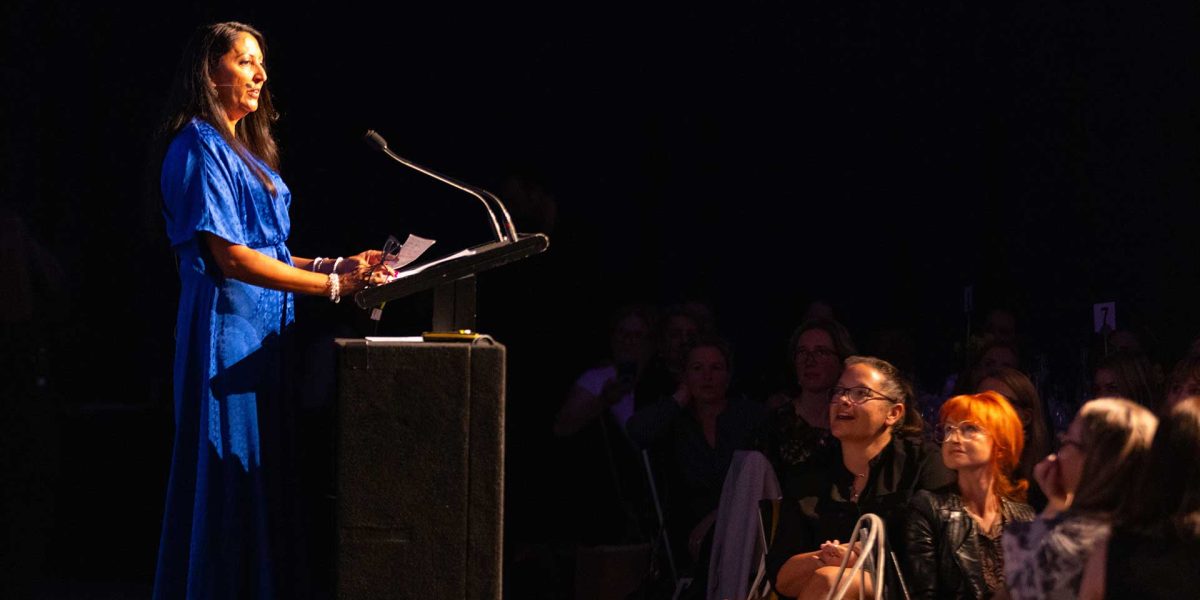
Thirty years in technology sales have taught Sita Proud that negotiation is not a boardroom event. It is a mindset, and women are better equipped for it than they think.
Sita Proud learned to negotiate at about ten years old, in a saree shop in India, watching her mother commit what felt at the time like a public act of madness. The shopkeeper asked for 500 rupees. Her mother offered 100. “I was like, what’s that? What are you doing, mum? Did you fall down the stairs?” The shopkeeper came down to 400; her mother countered at 50. They settled on 200. “What I did learn is that in that culture, it was okay. It wasn’t as okay when she came back home to the UK and did it in the supermarket.”
The story got the laugh, but it also set up her thesis. “Negotiating is actually a mindset. It’s not really a moment. It is absolutely how you think about yourself.”
Proud, Head of Sales at 3Plus Consulting, did not start out thinking of herself as boardroom material. She grew up in a single-parent household in the UK after her father left when she was four and a half, raised by a mother whose English was limited and whose definition of success for her daughters was simple: “marrying a nice Indian man, cooking, cleaning, and being a great wife.” She can do all of that, she noted, “apart from I married a Kiwi, which is why I’m here.” Nobody talked to her about confidence, business or her own value.
Then, at 19, having fallen into a technology sales role in London, something unexpected happened: a boss saw something in her that she could not see herself. He pushed her to speak up in rooms, lead people older than her, and take opportunities she was not ready for. “He trusted me before I’d actually proven anything. He backed me long before I backed myself.” Her reaction at the time was bafflement: “Why are you investing in me? I’ve got things to do. I’ve got to find a husband.” Three decades on, she is clear about what it was. “That one moment, I realised, wasn’t luck. It actually was intention. Someone choosing to see potential in someone is a decision that they made.”
The practical heart of the talk was a rejection of negotiation as combat. In loud, competitive, male-dominated industries, the received wisdom is that winning means “pushing harder, talking faster, and controlling the room”. Her experience says otherwise. She described a competitive sales process against far larger firms with bigger teams, bigger brands and more resources, one that on paper she should have lost. Instead of out-pitching them, she slowed down and asked questions: what would make the buyer successful in their role, what did success look like for them personally, what were they worried about if something went wrong. “This wasn’t about technology. It was about trust, risk, and people.” Her team won. “Not because we were the loudest, the cheapest, or anything else, but the fact that we understood them better.”
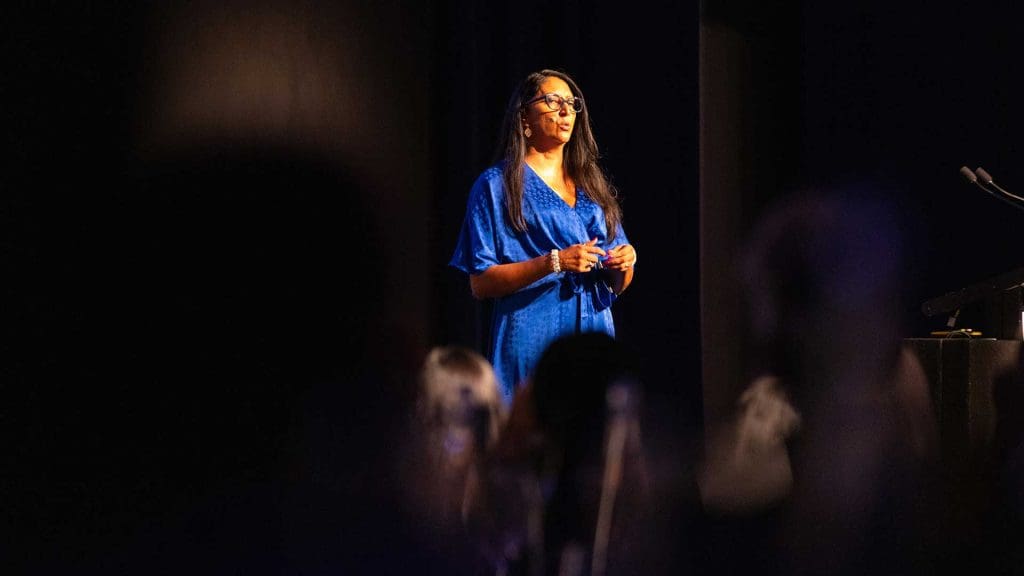
That, she argued, is where women hold an advantage they routinely undervalue: empathy, emotional intelligence, reading the room, listening, relationship building. “All these years, they’ve been called soft skills. But in reality, they are power skills.” Women negotiate constantly, at work, at home, in parenting, in managing expectations, and are conditioned to minimise it: “to be grateful instead of being visible. To work harder instead of asking for more. And to prove value instead of actually owning it.” Her definition cuts through the discomfort many women feel about asking: “Negotiation is not arrogance, it’s clarity.”
The talk turned personal with the brain injury she suffered five years ago, which moved negotiation out of her job description and into daily life. “Suddenly negotiation for me stopped being something I did at work and it became really personal. I had to renegotiate my relationship with energy, time, ambition, and expectations, both my own and other people’s.” Recovery, she said, teaches one lesson very quickly: “Energy becomes currency. Every yes will cost something.” For a self-described go-getter, working out what deserved her energy and what no longer did was the hardest negotiation of her life. “Protecting your energy is not a weakness, ladies. It’s actual wisdom.”
Her closing challenge had nothing to do with contracts. What would change, she asked the room, if you stopped waiting until you felt ready, trusted your instincts, and “walked into rooms already believing that you belong there”? Because in the end, “negotiation isn’t about deals or outcomes. It’s about changing the conversation you have with yourself.”
Key Takeaways
- Lead with curiosity, not assertion. Before any negotiation, ask questions and uncover what the other party actually needs rather than what they say they want. Understanding wins deals that pitching loses.
- Stop negotiating against yourself. Many women shrink before they speak, discounting their position before anyone else has had the chance to. State your value without apology.
- Use silence as a tool. Say your point and pause. Let it land. You do not need to fill every space with words, however uncomfortable the quiet feels.
- Relationships outperform transactions. Trust, not logic, is often the reason a decision goes your way. You do not need to know everything; you need people to believe you are on their side.
- Protect your energy like it matters. After her brain injury, Proud learned that every yes costs something. Boundaries are not weakness; they are how you stay valuable for the long haul.