
The Return Voyage with Keira Knightley
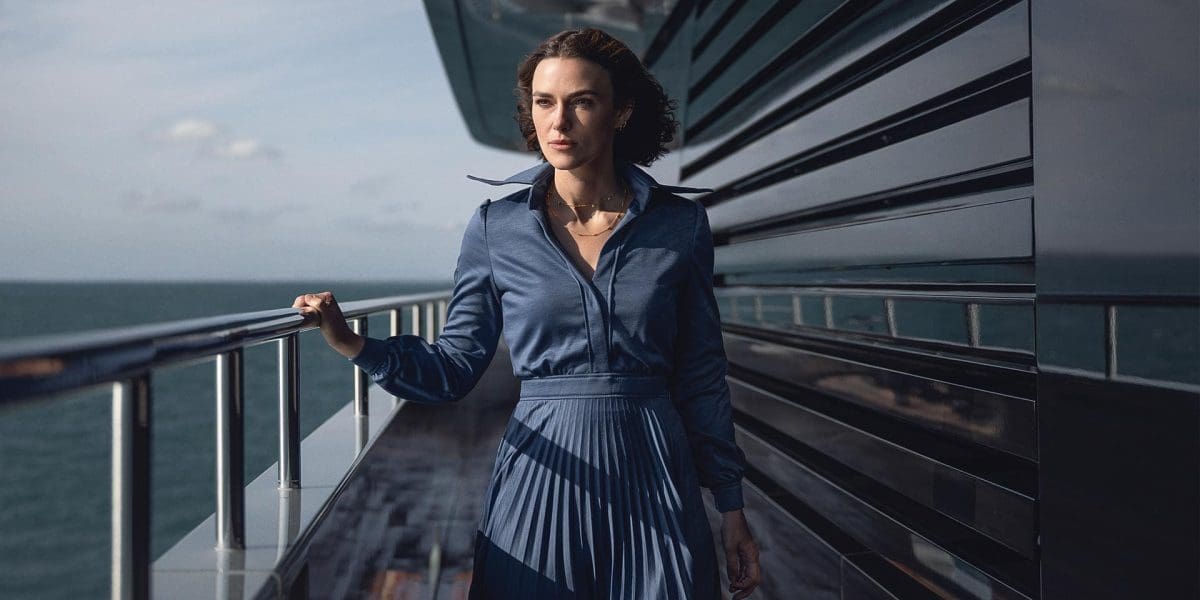
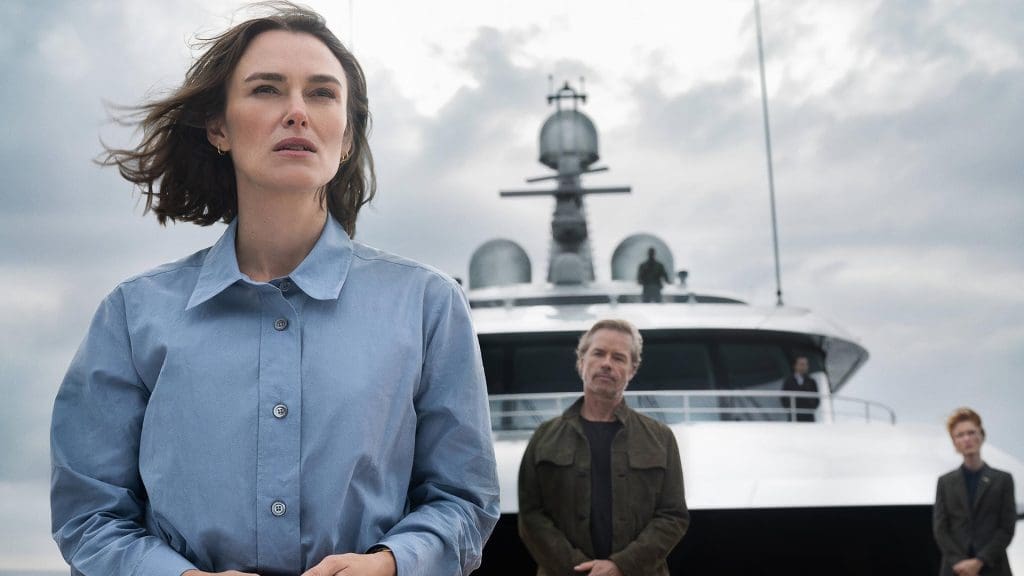
Keira Knightley is back on a boat, but this time there are no pirates, wacky mutant sea villains or Johnny Depp channelling his best inner Keith Richards. Two decades after she first strode across a Disney soundstage in a corset and tricorn hat as Elizabeth Swann, the British actress who helped turn Pirates of the Caribbean into a global phenomenon has sailed into another storm. In Netflix’s new thriller The Woman in Cabin 10, Knightley plays Laura “Lo” Blacklock, a travel journalist on a luxury superyacht who is sure she sees a woman being thrown overboard. The crew insist nothing happened. The passenger list is complete. The more she pushes, the more everyone around her suggests she is drunk, traumatised, or simply imagining things.
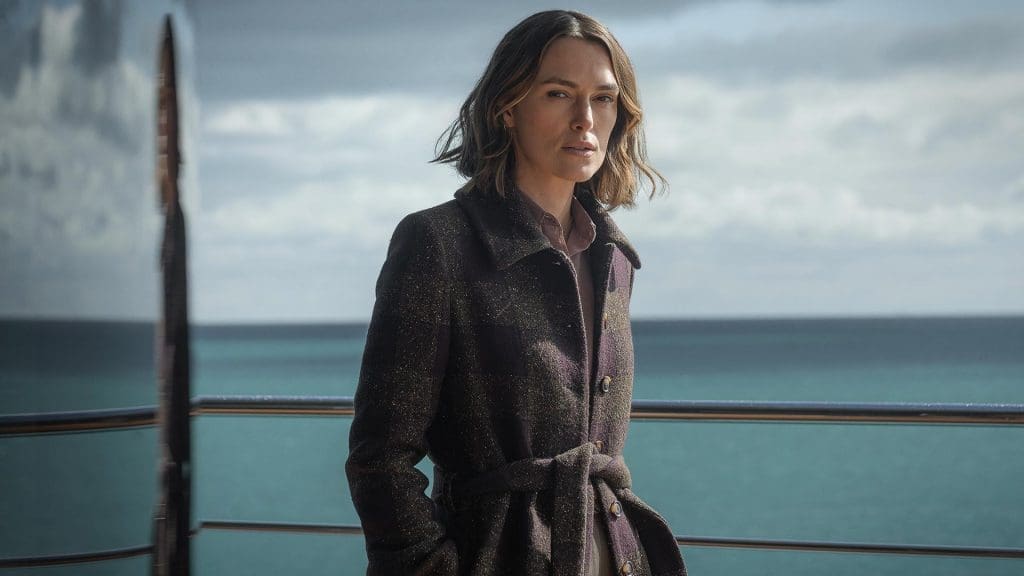
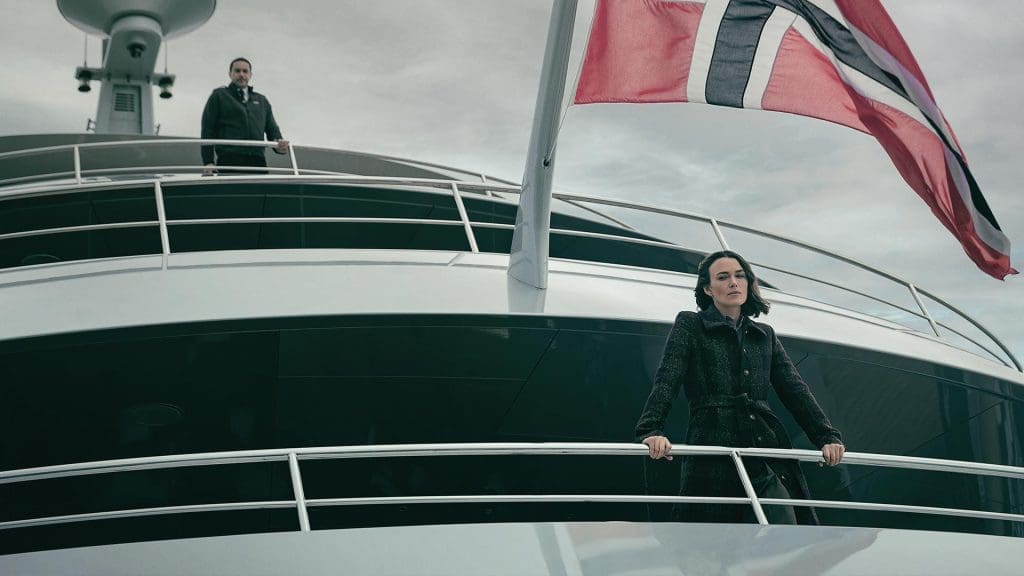
It is a grippingly frustrating story about gaslighting and danger on open water, adapted from Ruth Ware’s bestselling novel and filmed in part on the real 83-metre superyacht Savannah off the south coast of England. Keira clearly had fun with the genre. Talking about her recent run of twisty dramas, she has said she loves the feel of “proper genre thrillers” and that with Cabin 10, she was thinking of those cool, paranoid 1970s films, saying, “It reminded me of those ’70s thrillers,” and this was her chance to step into that space herself.
Lo herself is very much a grown-up heroine. Keira was drawn to her not because she is likeable but because she is unshakable. “I liked her certainty,” she says. “It’s very rare to play characters who are that certain. She made me feel quite powerful, even though she’s having a horrible time throughout the entire film.” She describes Lo as “a dog with a bone” who simply will not let the mystery go, no matter how many men in perfect knitwear tell her she is wrong.
For a certain generation of women, Keira’s career plays like a personal timeline. First there was Bend It Like Beckham, the west London football pitch, the makeshift training kit and a friendship that felt more real than any teen-movie crush. Knightley’s character Jules was the tomboy strike partner that teenage girls had been waiting for, funny and driven and uninterested in playing cute to make anyone more comfortable. The film was meant to be a small British comedy. It ended up being the little movie that travelled around the world, becoming a touchstone for women who finally saw a version of themselves chasing a ball and a dream.
Keira still feels that when women stop her in the street. “A lot of women do speak to me about it,” she told Vogue recently. “The fact that it’s had this life, and means so much to so many people, is amazing.” Her eldest daughter has even joined that club. She plays football herself, and Keira has told the story of watching the Lionesses win the Euros with her, then hearing her little girl say the next morning, “I dreamt that I scored the winning goal at the Euros.” For Keira, who never had that dream growing up, it was a moment that made her cry with happiness.
Within a year of Beckham, Keira was the girl in the wedding video scene in Love Actually, all luminous eyes and impossibly perfect knitwear, and then almost overnight she was the face on posters in every cinema on the planet. Pirates of the Caribbean needed a romantic heroine to stand next to Johnny Depp’s chaos and Orlando Bloom’s earnestness. What it got in Elizabeth Swann was something sharper. Knightley’s Elizabeth started as the governor’s daughter in a corset and ended as a pirate king with a sword in her hand. The trilogy grossed billions. Keira, still barely out of her teens, became one of the most recognisable actors in the world.
A different performer might have ridden that wave forever. Knightley swerved into something riskier. At 20, she took on Elizabeth Bennet in Joe Wright’s Pride & Prejudice, giving Austen’s heroine a modern wit and defiance that earned her an Academy Award nomination for Best Actress and made her one of the youngest nominees in that category. Two years later she starred in Atonement, wearing that now mythic green silk dress, delivering a performance that was all brittle glamour and repressed feeling while the world fell apart around her. Later came The Imitation Game, which brought a second Oscar nomination, this time for Best Supporting Actress as codebreaker Joan Clarke. By her mid-twenties, she had become that rare thing, a bankable box office name who was also taken seriously in the awards race.
From the outside it looked like a dream career on fast forward. Inside, it was costing her. Knightley has since spoken with striking honesty about the toll that level of fame took on her mental health. In her early twenties, she was followed daily by packs of photographers, sometimes 20 or more at a time, shouted at and baited so that any moment of distress could be captured and sold. “I did have a mental breakdown at 22,” she has said. “I took a year off and was diagnosed with post-traumatic stress disorder because of all that stuff.” She has described feeling “worthless” and learning that “it was big money to get pictures of women falling apart”, part of an era that fed on tearing young female stars to pieces.
The way she tells it, there was a point when the paparazzi simply moved in. “I remember waking up one day and there were 10 men outside my front door, and they didn’t leave for about five years,” she recalled recently. They rented flats opposite her house, shouted abuse to provoke reactions, and turned her daily walk into a gauntlet. In another interview, she summed up the effect in one blunt line: “I did go mad. Believe me. I went mad. I just managed to hide it.”
The next phase of her career was deliberate. Instead of chasing another massive franchise, she turned towards smaller and more political projects. In Colette, she played the French writer whose husband published her work under his own name, then fought her for ownership when she began to claim it back. In Misbehaviour, she joined an ensemble bringing to life the women who stormed the 1970 Miss World stage in protest at the beauty industry and its double standards. In Official Secrets, she portrayed whistleblower Katharine Gun, who leaked a memo exposing attempts to drum up support for the Iraq war. These were not just interesting characters; they were women pushing back against systems built to silence them.
Off-screen, Knightley also began using her platform to talk about how women are portrayed and how we talk about mental health. She has criticised the casual use of sexual violence as a lazy plot device, and she has spoken about the damage done by phrases like “man up”, saying they have contributed to a “mental health crisis” by teaching people to shut down instead of speak out. She is equally direct about motherhood. “I don’t think we give women enough credit for the physical and emotional marathon they go through when becoming a mother,” she has said, pointing out that the endless nights and the invisible labour are “quite extraordinary”.
Alongside all of that, life shifted in quieter ways. Knightley married musician James Righton in 2013. They now have two daughters, and by her own account, that changed everything. She stepped back from the relentless pace of Hollywood and based herself firmly in London, becoming more selective about what was worth the time away from home. “I’ve chosen to have children, I want to bring them up, so I’ve had to take a major step back,” she said last year, explaining that she can no longer bounce from job to job overseas and has no desire to anyway.
What she built instead was a different kind of creative life. There was television, with the stylish spy series Black Doves, which reminded audiences how good she is as a grown-up lead with secrets to keep. There were smaller films like Boston Strangler, where she played a reporter piecing together a serial killer case while fighting innuendo and institutional sexism. And there was drawing.
Knightley has dyslexia, something she has spoken about often, and she has developed a very particular way of learning lines. “I draw when I learn my lines,” she told The Guardian. “They’re normally old men’s faces with very detailed lines. I think it’s because I’m dyslexic, I have to get the words off the page as quickly as possible.” She records the whole script as audio, listens back while she sketches and lets the dialogue soak in. Friends and family now send her photographs of interesting faces, knowing they might be turned into another wrinkled old man in the margins of a script. She has described the process as putting her into “a really meditative state”, the opposite of the red-carpet chaos that once defined her.
Those sketches have taken on a life of their own. Knightley has turned the bedtime drawings she created for her eldest daughter, who was anxious about the arrival of a younger sibling, into a children’s book called I Love You Just the Same. “It was a book that I made originally for my daughter,” she explained. “She wasn’t sleeping, and we did this bedtime routine where I drew her a picture at night… when she woke up in the middle of the night, she’d know that I’d been thinking about her because there’d be a drawing.” What began as a love heart grew into a cast of girls, sisters, birds and cats. At one point, her daughter mischievously requested that the bird carry the baby away; Keira thought it was “the most genius thing” she had ever heard from a five-year-old, and realised there was a story there.
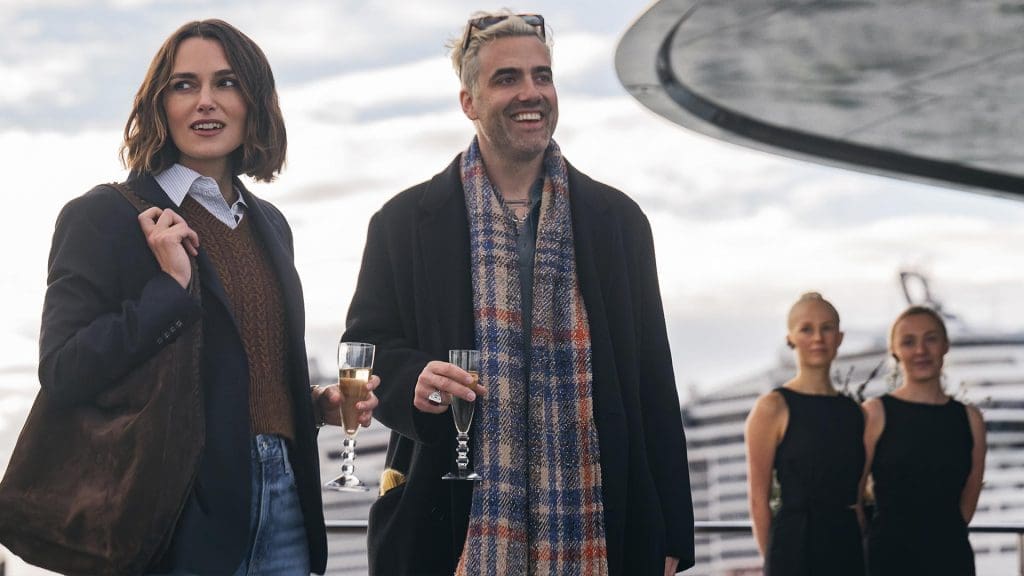
Which brings us back to The Woman in Cabin 10. On the surface it is pure entertainment, a tightly wound thriller on a boat, with Knightley’s Lo Blacklock trying to work out whether she really saw a body or whether someone is manipulating her perception. Look a little closer and it sits neatly inside the themes that have defined Keira’s second act. Here is a woman who has survived a traumatic break-in, who lives with anxiety, who drinks too much, whose own brain sometimes feels like a hostile witness. She is surrounded by people with money and power who tell her that what she saw is impossible and inconvenient. They angle for her to doubt herself. They encourage her to calm down, have a drink, get some sleep. The film turns that all-too-familiar experience into a thriller, but for many women the echo of real life is hard to miss.
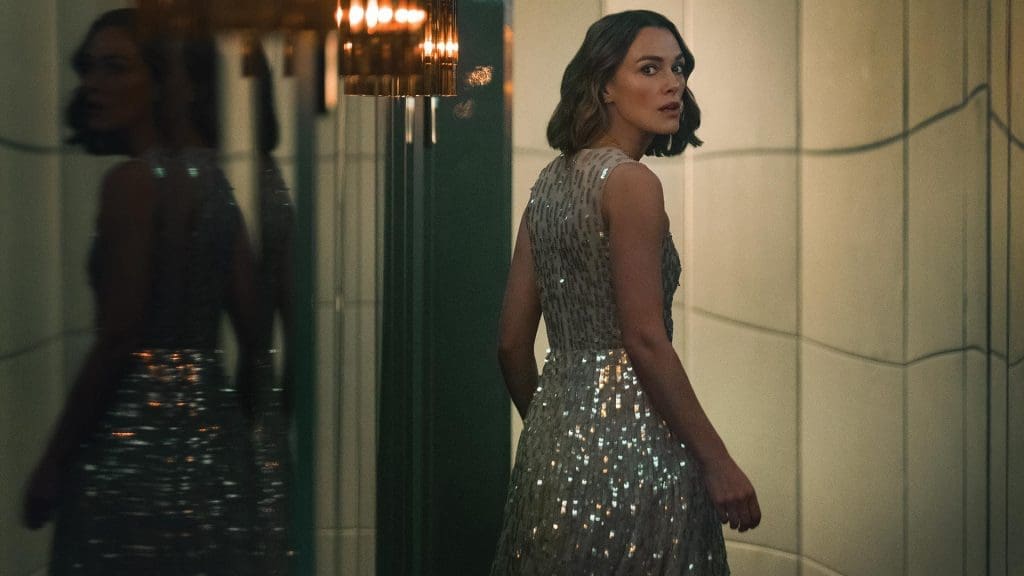
Filming it was not the glamorous yacht holiday it looks like on screen. Much of the production took place on the real superyacht Savannah in the English Channel. Cast and crew had to follow strict rules to avoid damaging the multi-million-dollar vessel. Tripods and lighting stands were banned from delicate surfaces, and a single scratch on the floor could cost hundreds to fix. Keira joked that the experience gave her a whole new kind of “PTSD”, saying the team spent weeks “crammed into tiny spaces”, forbidden to touch the carpets and unable to sit on any of the furniture unless the cameras were rolling. The fantasy on screen is smooth Champagne and teak decks; the reality was sandwiches in corners and constantly worrying about a US$200,000 rug.
The film has promptly thrown her back into the centre of the cultural conversation: press days, late-night talk shows, red carpets. At the 2025 Golden Globes, she appeared with a sharp new bob and a feathered black Chanel gown, looking every bit the European movie star while chatting cheerfully about gaslighting and fake blood. She remains a Chanel ambassador, but these days the campaigns sit alongside interviews where she talks about dyslexia, children’s bedtime routines and banning social media at home to protect her daughters from what she calls a “terrifying” and “unregulated” online world. What makes this moment feel like a comeback is not that Keira Knightley ever truly went away. It is that the industry has moved enough for the stories she wants to tell to sit at the centre rather than the edge. The Woman in Cabin 10 is a glossy global Netflix release carried entirely on the shoulders of a 40-year-old woman who has made no secret of the fact that she values her sanity over fame. The surrounding noise is no longer about her weight, or who she is dating, or how quickly a photographer can make her cry. It is about the work, the roles, the strange little drawings in the margins of the script that helped bring a character to life.