
The Power Of The Comeback
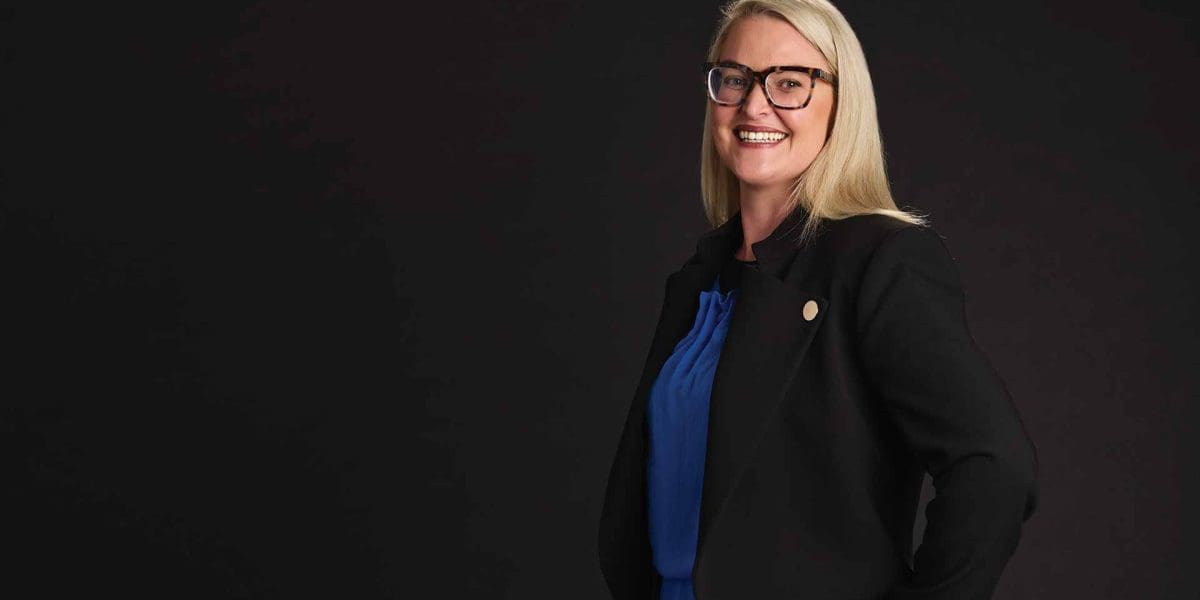
“You win or lose in the second half.” For Lisa Oakley, founder of People Associates, that line isn’t about age or timing or some midpoint in life. It is about the comeback. It is the belief that no matter how messy the beginning, how chaotic the middle or how far behind you feel, there is always time to turn the game around. The first half might empty you, knock you flat or strip everything back, but it does not get to decide the ending. Not if you refuse to let it.
Lisa never set out to become one of the country’s most successful go-to problem solvers in HR and dispute resolution. She grew up watching her mother reinvent herself over and over. “I was raised by a single mother who was quite a lateral person,” she says. “She didn’t have a linear, perfect career. She did this, and then she did that, and then she retrained to do something else. She just did everything.” From that came two traits that have carried Lisa through since. “A really strong work ethic” and a mindset that if you see something that needs doing, you figure it out and do it. When her mother later married a man who ran a small business, they took on projects not for wealth but purpose. “They didn’t necessarily do it for the money,” she says. “Their motivation was contribution. They’d cross-lease, subdivide, sell, renovate, and build. They were hands-on.” That blend of hustle and service helped to form Lisa’s blueprint.
Lisa built a career inside a global corporates, before leaving with no deck, no guaranteed revenue, no investor or partner. “When I left, I didn’t have one client,” she says. “I had no revenue. I just knew I could make it work.” Then came what she calls the trifecta: IVF, lockdown and divorce, all while trying to get a new business off the ground. Most people would have taken at least one of those as a sign to pause. Instead, she treated it as pressure she could work inside of. “Some days, you just get out of bed,” she says. “That’s the win. You can’t succeed if your head’s still on the pillow.”
Lisa leveraged a gap in the market to build People Associates. She had seen too much dead weight in HR, too many people hiding behind policies and paperwork instead of solving anything. “I just parachute in and get shit done,” she says. “I only work with ninjas. I’ve got no patience for incompetence.” The consultancy quickly gained a reputation for being fast, messy in the right way and uninterested in bureaucracy. She does not want to write documents that get filed away. “We’re there to fix things. We’re not there to create more work,” she says.
Conflict, to Lisa, is movement. Avoidance is what kills momentum. “Conflict is my jam,” she says. “If there’s no conflict, someone’s bullshitting.” She gets called in when organisations are stuck, broken or circling the same issue with no resolution. She does not come in to soothe. She comes in to change the temperature and force clarity. It is why founders, boards and CEOs bring her into messy environments.
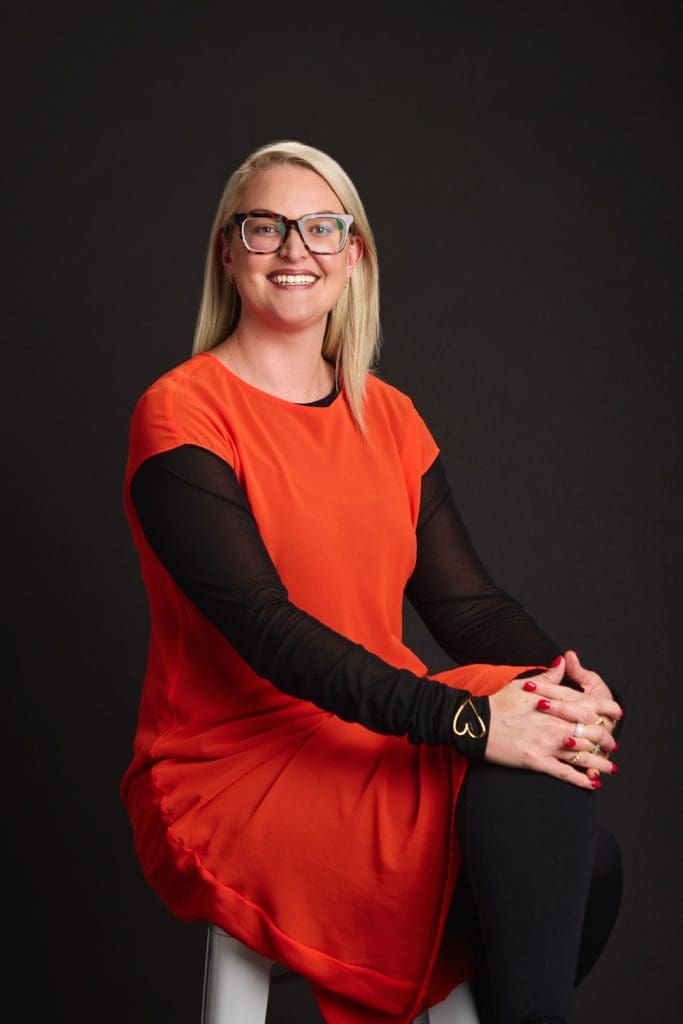
One of the most confronting dynamics she deals with inside organisations is what she calls “the Sally effect,” when the first person to speak up gets punished and everyone else watches the fallout. She has seen how quickly psychological safety erodes when leadership protects itself instead of the truth. “People don’t leave companies, they leave feelings,” she says. “They leave being dismissed or unheard.” For her, culture is not a values statement; it is whether people feel safe enough to be honest and whether leaders can tolerate hearing it.
Lisa is not trying to build a massive team. She is trying to work only with people who can carry their own weight and then some. “I’m not interested in hiring people I have to babysit,” she says. “I’m not a school.” Her team is intentionally small, made up of people who can walk into a boardroom, handle whatever is thrown at them and walk out having shifted something real. “We’re small because we can be. And I like being able to choose who we work with,” she says.
Her view of relevance is pragmatic. “You’ve got to stay useful. The only way to stay useful is to stay curious.” She sees AI as a filter that will remove the kind of HR roles that hide behind compliance. “AI will wipe out half the HR jobs that are just box-ticking. But that’s good. It means you have to be better.”
She is also blunt about New Zealand’s productivity problem. “We’re amazing at starting things and terrible at finishing them,” she says. “Our tall poppy thing is exhausting. We’ve got to get over ourselves.” She believes women, especially, have been conditioned to apologise for capability. “If you’re good, be good. Don’t pretend to be half as good to make someone else comfortable.”
Her definition of resilience is practical: it is momentum in any form. “Some days, resilience is getting the email sent. That’s it. Other days, it’s closing a massive deal. But you have to keep moving. Stillness is death.” That is where the second-half mindset kicks in. The first half might knock you around, stall you or strip everything back, but you are not out unless you stop playing. “The first half is not the whole story,” she says. “You can still come back from almost anything.”
Looking back, she is clear that the hardest years gave her a kind of mettle she would not trade. IVF, divorce, building a company in lockdown – none of it broke her. It recalibrated her. “When you’ve held your life together with one hand and built a company with the other, you stop being scared,” she says. “You realise most people never even try.” That is why clients come to her. Not because she is polished, but because she is fearless and fast, and not interested in pretending.
She does not sell herself as a mentor or a coach. She is a fixer. “We get brought in when people are stuck or sinking. We don’t stay for long. That’s the point.” She has no desire for empire-building but every desire for impact. Leadership, in her view, is not what you call yourself when things are going well. “Anyone can look like a leader when everything’s working,” she says. “It’s when it’s falling apart that you see who’s got it.”
Her life now is a constant rebalancing between motherhood, business and momentum. “I’m not here to be everything to everyone,” she says. “I’m here to be present where it counts.” She rejects burnout as proof of commitment. “Rest is not a reward. It’s fuel. And you’re useless without fuel.”
The second half, for Lisa, is not a midpoint. It is the space you enter when you decide the story is not finished, no matter what went wrong. It is the comeback zone, not the clean slate. It is where the scoreboard doesn’t scare you anymore because you’ve already survived the worst parts. “You don’t get to write the whole script,” she says. “But you get to decide how you show up in it.”