
The Gift of New Zealand’s Art Story
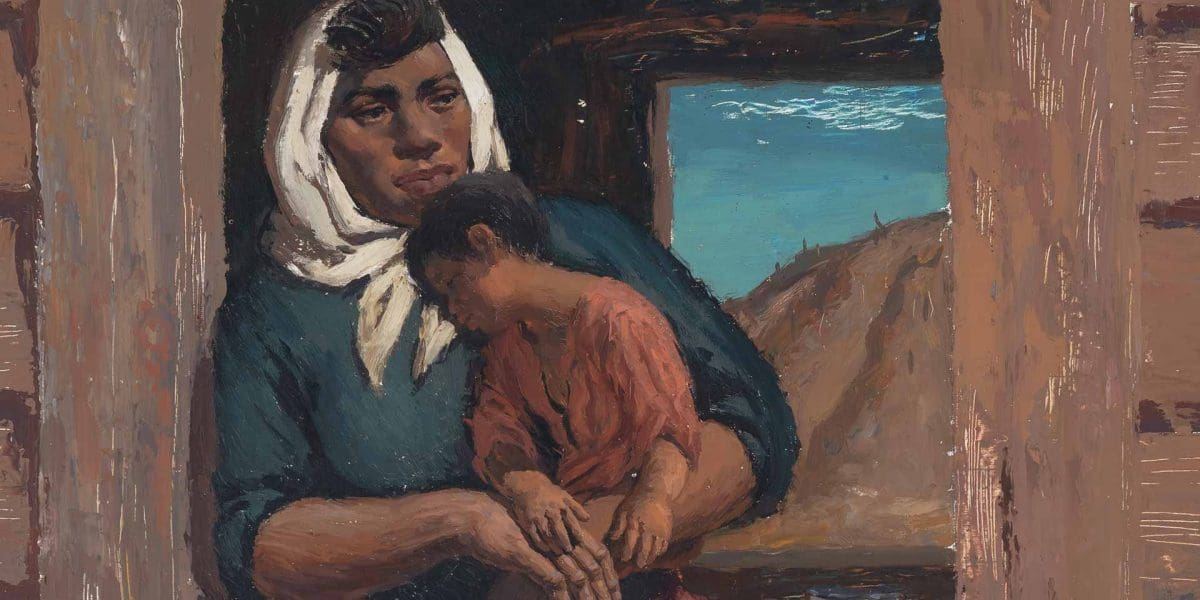
Above: Russell Clark, The Shearer’s Wife, 1952. Auckland Art Gallery Toi o Tāmaki, promised gift of Greg J Moyle Foundation through the Auckland Art Gallery Foundation.
For most of us, a visit to Auckland Art Gallery Toi o Tāmaki is an occasional weekend outing. For Greg Moyle, it became a long-term habit that has now reshaped the national art story.
Moyle isn’t a curator or an art-world insider. He’s a financial adviser, a former Auckland City councillor and a long-time community figure who grew up in Grey Lynn. His professional life has revolved around numbers and public service, and alongside that he spent more than fifty years buying New Zealand art simply because it mattered to him.
In the process, he has built one of the most wide-ranging private collections of twentieth-century New Zealand art. Now, 20 of those works are heading into public hands. Through a bequest arranged with the Auckland Art Gallery Foundation, Moyle has pledged a group of paintings that would usually sit well beyond a gallery’s acquisition budget, ensuring they stay together and stay visible, instead of disappearing into private auctions and living room walls. Moyle’s promised bequest brings together a who’s who of twentieth-century and contemporary New Zealand art. The group includes works by Rita Angus, Frances Hodgkins, Ralph Hotere, Jacqueline Fahey, Louise Henderson, Raymond McIntyre, Michael Smither, John Pule and others, spanning from around 1913 to 2007.
Moyle’s interest in art began at Mount Albert Grammar School, where his Year 9 art teacher was celebrated sculptor and educator Arnold Manaaki Wilson. Later, as a young accountant in Newmarket with an antiques dealer across the road, he started buying works whenever he could. The rule was simple: only what he liked, and only what he could afford.
“For me, purchasing a piece of art is an emotional experience,” he says. “While I am not an artist, my appreciation of art has developed over the last fifty years. I count myself fortunate that circumstances have enabled me to assemble a unique collection of artwork that I have been able to share with my family, friends and the wider community.”
The bequest has been carefully selected with the Gallery’s curatorial team to complement existing holdings and to fill gaps in the story of New Zealand art. It also responds to something Moyle has watched with concern over the years.
“Over the years, I have witnessed a number of important collections, including works that should remain in the public domain, being sold,” he says. “I am motivated to keep the important items from my collection together for the benefit of the community, including my family, rather than having them sold upon my death, and I am delighted that they will find a permanent home with Auckland Art Gallery.”
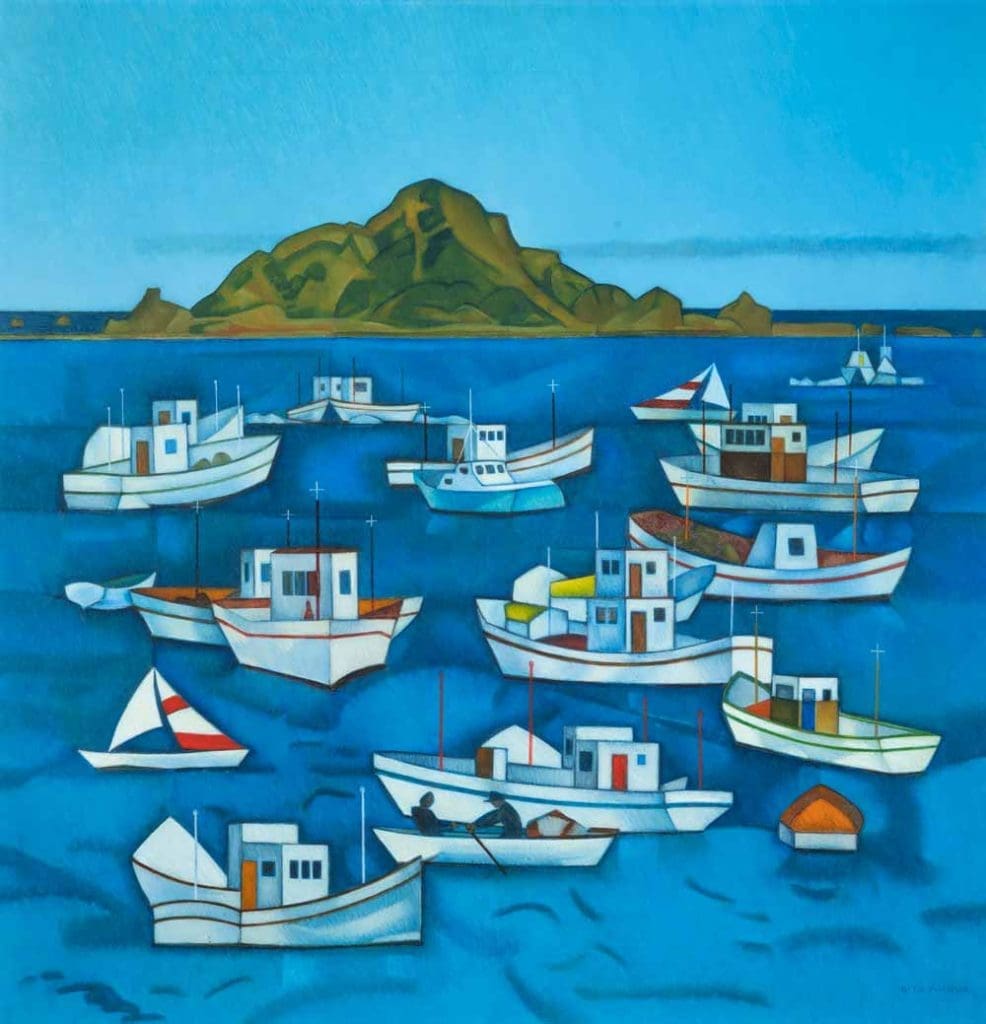
At the centre of the gift is Rita Angus’s Boats, Island Bay, 1968, an oil on board that shows fishing boats and a headland at Island Bay in Wellington. It is a clear, structured coastal scene from the late period of one of New Zealand’s most influential painters, and exactly the sort of major work that would usually be well beyond a public gallery’s purchasing budget. Two other Angus works join it: Evening View from the Studio, a watercolour and pencil study from around 1961–62, and Houses, Wellington, a 1964 watercolour that records the city’s built landscape.
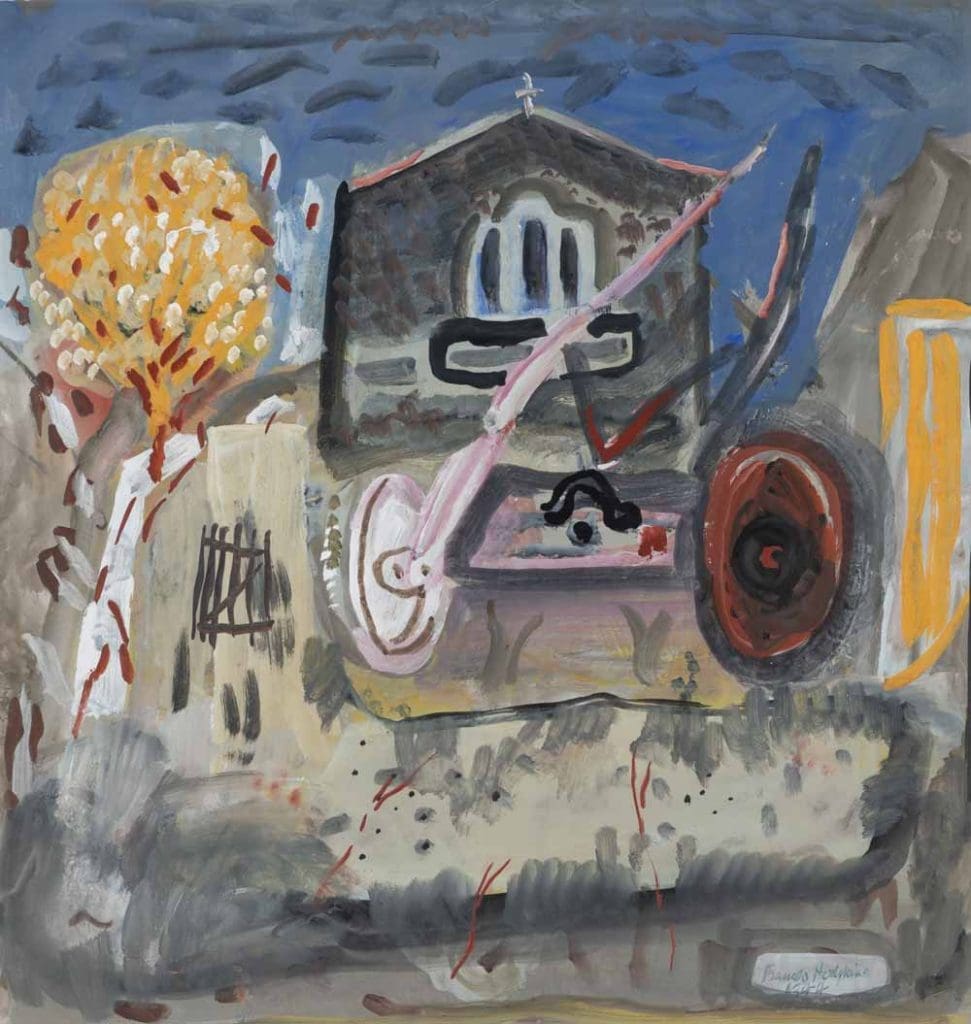
Frances Hodgkins, one of New Zealand’s most important expatriate artists, is represented by two late career works made in England: Chapel in the Field, Corfe Castle, 1944, a gouache showing a church building in its rural setting, and The River Tone, Somerset, c.1939, a watercolour and gouache on paper view of riverbank and landscape. Together, they give a concise view of her mature style and overseas practice.
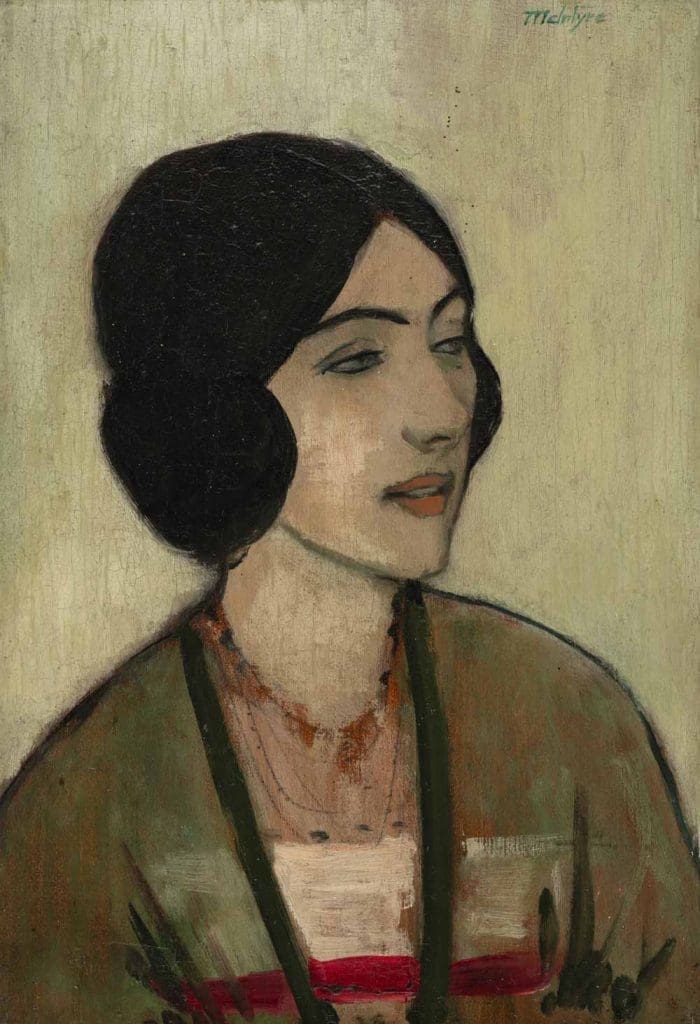
From the same broad period, Raymond McIntyre’s Evening, Chelsea Embankment, c.1913, and Woman in Chiffon Jacket, c.1914, both oil on board, add early twentieth-century portrait and city scenes to the Gallery’s holdings. Lois White’s News, c.1939, oil on cardboard, shows figures grouped around a newspaper, capturing a moment of shared attention in the pre-digital era. Bessie Christie’s Knitting for Soldiers, c.1949, oil on card, records women knitting for troops, anchoring the collection in the social history of the mid-century home front.
The bequest also strengthens the representation of key post-war and later modernist painters. Russell Clark’s Maquettes and Carvings, c.1950, oil on board, shows sculptural models and carvings in a studio context, while The Shearer’s Wife, 1952, oil on board, presents a rural subject that reflects Clark’s interest in everyday New Zealand life. Louise Henderson’s April 1987 oil on canvas gives a late example of her structured, modernist approach to form and colour.
Jacqueline Fahey’s “Augusta and Voss,” 1962, oil on board, depicts two of her daughters in a matter-of-fact domestic setting, typical of her interest in family life and interiors. Kingseat, Early Spring, c. 1976, oil on board, draws its subject from the grounds of the former Kingseat psychiatric hospital, linking landscape to institutional history in a direct, observational manner.
Two works by Ralph Hotere, Binisafua, 1978, and Menorca, 1978, both oil on unstretched canvas, come from a series associated with his time in Spain’s Balearic Islands. Their format and surfaces reflect his ongoing interest in materials and support, while the titles link them to specific places.
Michael Smither’s Boys Fighting over Pink Gun, 1978, oil on board, shows two boys and a toy gun in a setting that includes domestic and industrial elements, a straightforward yet charged scene that has become one of his best-known works. Richard Lovell-Smith’s Oasis, 1958, oil on canvas, and Douglas MacDiarmid’s Pataclaq (Street Gamblers, Bahamas), 1976, oil on canvas, introduce additional landscape and international subject matter.
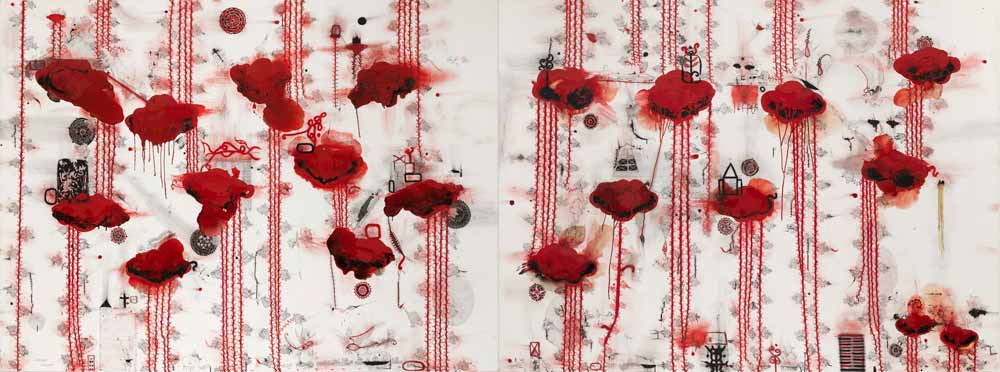
The most recent work in the bequest is John Pule’s Higher Ground, Lower Ground, 2007, a large acrylic, enamel, pastel and ink on canvas. It brings Pacific and migrant narratives into the group and shows contemporary practice alongside the earlier twentieth-century works.
In total, the bequest covers more than a century of art making in New Zealand and beyond, with a strong representation of women artists, major modernists and later contemporary voices. It continues a long tradition of philanthropy at Auckland Art Gallery Toi o Tāmaki and ensures that these works will be conserved and accessible to the public rather than dispersed behind closed walls.
The gift will be celebrated in a dedicated exhibition at the Gallery, opening 23 May 2026.