
Informed Leader
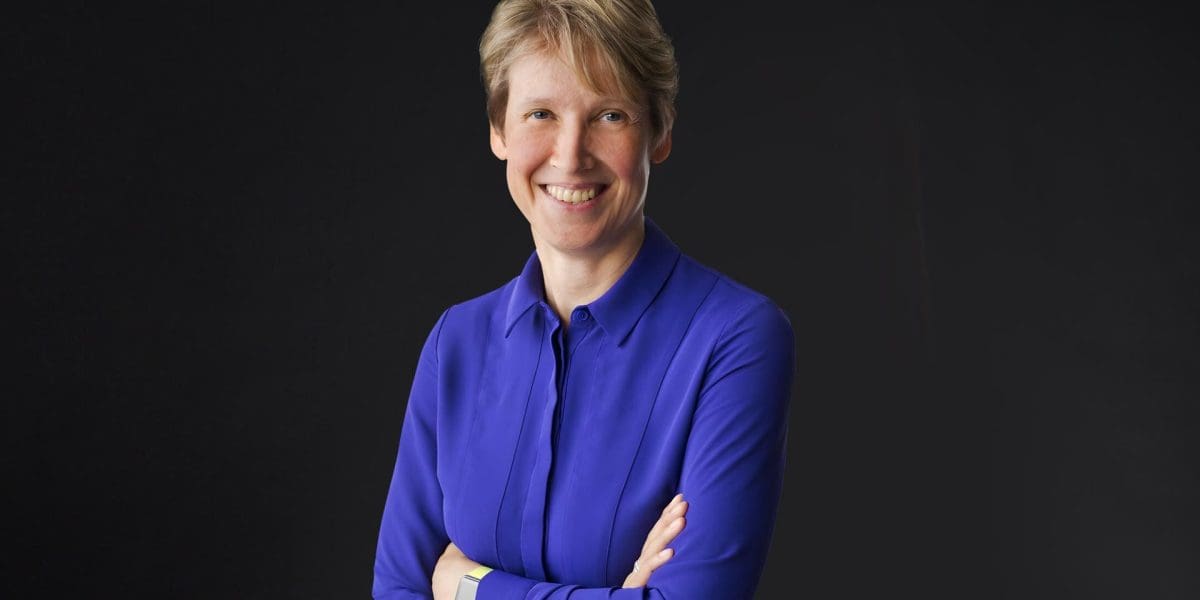
She never intended to build a company. Even now, looking back, Sarah Heal still describes the beginning of Information Leadership as “a bit of a happy accident.” There was no plan, no strategy, and no planned leap into entrepreneurship. It began with a phone call from a friend.
It started simply. A friend in Auckland needed help and asked if she could come up a couple of days a week. At the same time, her Christchurch boss offered her two days of work as well. Almost by accident, she found herself with four days of client work and a spare day to send invoices, do admin and follow up leads. There was no strategy, no talk of scaling or hiring, just work she genuinely cared about and could see making an impact.
At the same time, she and her partner, now husband, Grant, were deep in a shared fixation: the way organisations handled information. Or rather, how they struggled to. “I was deeply interested in information and in the problems that organisations were having, getting control of their information and getting it to really work for them,” she says.
They began speaking publicly about their ideas, writing, presenting, and gradually shaping a point of view they felt could help. “We were playing with a whole lot of ideas, and we wanted to go out and share them with our community. So we started doing a whole lot of talks and presentations.” Eventually, they put their thinking into a self-published book as a way to “stake some territory” in the space. “It was kind of us saying, here are our ideas about how organisations get value from information, how they get value from IT, how they stop wasting money.”
These ideas gained momentum. “People put their trust in us and said, ‘We like these ideas, we want to see where we can go with them. Come and do some of this stuff for us.’” She didn’t set out to build a consultancy, but the need was there, and the work kept unfolding.
Two decades later, that unplanned beginning has become a nationally recognised consultancy at the heart of digital transformation. Today, Information Leadership helps organisations navigate content chaos, legacy systems, digital risk, cloud migration and AI readiness. Their work touches hundreds of organisations across New Zealand and Australia, especially in high-trust environments like government, utilities and large enterprises.
This scale hasn’t been fuelled by hyped entrepreneurial ambition but a series of decisions driven by curiosity, service and pragmatism. “We didn’t have a plan to add a whole lot of people,” she says. “We just went and worked with people who had interesting problems and who were open to our ideas.”
That instinct to follow the work rather than force it shaped the identity of the business. They began with a philosophy that information should be usable, findable and safe, not buried in silos or scattered across disconnected systems. “A classic example is when organisations are running multiple systems that generate or rely on the same information,” she says. “They’re struggling to create a coherent landscape their staff can use to make decisions or take actions.”
Her approach is never about moving fast for the sake of it, but instead solving what is in front of people. “What we do is help them create a single pane of glass,” she says. “We don’t move the information around, but we open the visibility to it and show where the information connects and where the flows are.”
Over the years, the technology landscape changed, from legacy platforms to the cloud, and more recently to AI. But the organisation’s role stayed constant, helping people understand and use information well. “Until a few years ago, it was completely cost prohibitive to do anything about all the stuff sitting in legacy systems,” she says of the mass of unstructured or sensitive content many organisations hold. “But now with AI and the tools we’ve built, we can interrogate that content, describe it, take action on it.”
The company originally positioned itself as technology-agnostic but eventually became known for deep Microsoft 365 expertise as customer needs evolved. “What we found was that customers didn’t just want the strategy, they actually needed that practical connection,” she says.
Sarah has also witnessed how organisations at every level get paralysed by the illusion of more data. “Information is a substitute for action,” she says. “Often, if a decision maker is not comfortable with making a decision, the default is to ask for more information. Give me a report on that.” But she believes that leaders need to shift that mindset. “You have to get comfortable with incomplete information. If all the information was complete, the decision would be obvious and no one would bring it to you anyway.”
Responsibility has also evolved as the company has grown. For years, she didn’t carry the emotional weight of having so many people depending on the business. That changed over the past year. “We’ve hit recessions before, but this year I felt the responsibility much more acutely,” she says. “When things are going well, you don’t really have to worry. Money’s coming through the door. But when you hit a recession, that responsibility is quite acute.”
Her way of coping isn’t to freeze, but to work. “We don’t get mad, we get even,” she says. “Whatever problem you have, most problems will go away if you outwork them. I try not to dwell on the responsibility and I try not to dwell on the worry. I think about where’s the best place I can put my shoulder to the wheel.”
She is careful not to conflate drive with ego. “I want to get the best results in the country for the customers we work for. I’m 100 percent committed to that. And whenever we fall short, I feel that really, really personally.” But she has no appetite for being the face of something, or chasing notoriety. “I’m not really particularly interested in winning a prize, or having a profile, or people thinking about me a certain way. That doesn’t interest me. It’s all about the results and the impact.”
Sarah hires with a similar philosophy. “We’re looking for humility because there’s a lot to learn when you start here,” she says. She loves unusual combinations, mental flexibility, people who have done more than one thing well. “Have they made unexpected connections? Have they worked across different functions? Can they talk about what else they do beyond work?”
Working alongside her husband has been both a joy and a test. In the early years, they were energised by the building stage. “It was the most exciting thing we could possibly do,” she says. “We just loved working together, we had so many ideas, we wrote the book together.”
But it didn’t stay that way. “We stopped working together as much because we had to do HR stuff, customer stuff, and we didn’t have clear roles. That was pretty shitty.” Now, with more support around them, they have returned to the parts of the work they enjoy most. “It just sort of feels nicer now,” she says. “Grant and I can get back to talking about the ideas and where we might go with this.”
Despite building something significant, she never aspired to global domination. There were moments where expansion was discussed. “From time to time, we have thought about, should we go elsewhere?” she says. “But I like to walk my dog at the beach in the morning.”
A focus on local first is also fundamental to the business. Many of the organisations they serve are public-facing, and she sees that as a responsibility in itself. “They’re serving our whānau, our communities, our children,” she says. “We have a duty to do the absolute best for them that we can possibly do.”
Over time, she has realised that leadership isn’t always loud or forceful. Often it looks like resilience, consistency and refusal to be knocked off track. “If things don’t work out, it won’t be through lack of effort.”