
A Letter to Them
lydiarachel.com Photography
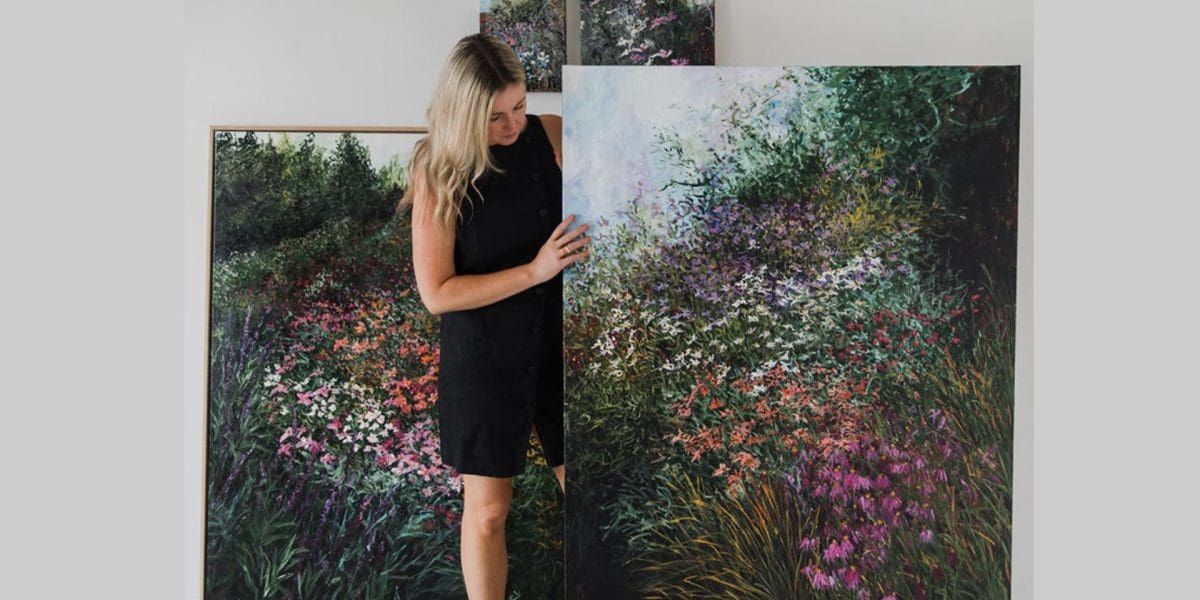
Finding success in two careers is hard, having to say goodbye to one of them is even harder. Rachael Mayne had to make this choice between clinical psychology and art, with each having a symbiotic relationship with the other. Since taking the plunge with art she has been doing sold out exhibitions, and her commission lists are closed. People can’t get enough of her impressionistic style that draws you into its lush worlds.
Following three consecutive sold-out exhibitions with Turua Gallery—each selling out on opening night—Auckland-based artist Rachael Mayne returns with her most personal and ambitious body of work to date. Her upcoming solo exhibition, A Letter to Them presented with Turua Gallery, opening Friday 13 March and running until Wednesday 18 March.
A Letter to Them is a deeply considered body of work shaped by Mayne’s 15 years as a clinical psychologist and the people whose stories informed and shaped her creative practice. The exhibition reflects what she learned while bearing witness to trauma and hardship, alongside the extraordinary human capacity for resilience, courage, kindness and change.
We sat down with Rachael to discuss how Psychology has informed her process, and where she’s going from here.
Can you describe the moment you knew you were ready to step away from clinical psychology and commit fully to painting?
There wasn’t really one clear moment, it was a gradual decision. The juggle of parenthood, clinical work and my creative practice had become too busy to sustain. In January 2025, I decided to take a sabbatical from my clinical work.
It was a confusing place to be – two fulfilling careers that I felt deeply connected to, but the impossible decision of having to let one go temporarily. In the end, it felt important to take some time to restore my energy, spend more time with family, and to make space for creativity. I don’t see it as a permanent departure from psychology and I imagine I’ll return to clinical work when the time feels right.
What do you miss about clinical work, if anything, and what do you never miss?
I mostly miss the connection with people; my clients, colleagues and clinical team, university students, and supervisees. I found a lot of meaning in the work and it was rewarding to know that therapy made a positive difference in people’s lives. I am also endlessly fascinated with human psychology and neuroscience and miss the learning aspect of clinical work. This year I’ve set myself a small goal of reading one journal article a week to satisfy the need to learn and help me keep up with psychology research progression.
On the other hand, clinical psychology comes with a high level of clinical responsibility and careful decision making, it has been nice to step away briefly and take a break from the pressure that comes with this.
How did 15 years in clinical psychology change the way you understand trauma, resilience, courage, and change?
Over the years, I’ve had the privilege of working with hundreds of clients at a very deep and personal level. Being trusted with people’s inner most feelings, thoughts, beliefs, aspirations, etc, has given me a deep empathy for what it means to be human. Every person has their own story and personal challenges, no matter how things look on the outside. Human behaviour makes sense when you understand a person’s unique circumstances.
I’ve also seen just how brave and courageous people can be. I’ve worked with people who have experienced significant trauma and hardship, and still managed to find hope, forgiveness, and a way forward. It’s shown me how much capacity we have for healing, bravery, and positive change.
You’ve described this body of work as “a letter of gratitude,” who is that letter for, and what are you thanking them for?
‘A letter to them’ is a collection I’ve been working on over the last nine months and will be exhibited with Turua Gallery in March 2026. This collection explores what I’ve learnt from my clients and how therapy has shaped me as a person. My clients trusted me with a lot, and I wouldn’t be the person I am today without that work. This collection is a letter of gratitude and a thank you to all of the clients I’ve worked with over the years. For putting their trust in me as a therapist, and for the empathy, hope, resilience I’ve developed as a person as a result.
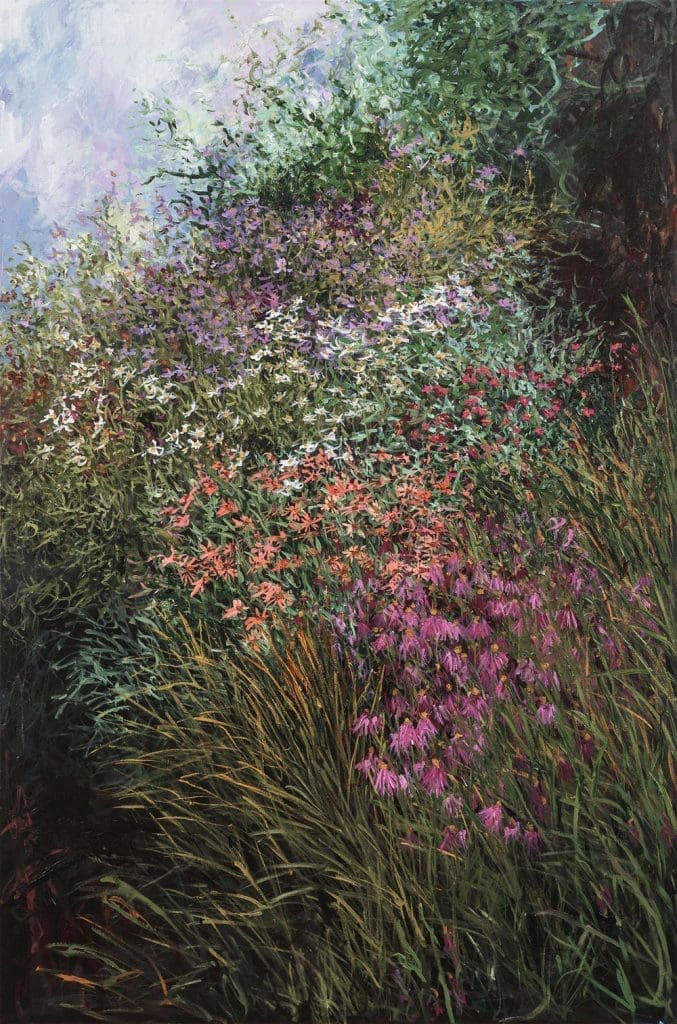
The collection also explores themes of bravery, resilience, courage, and hope. I’ve channelled this through the artwork in terms of pushing my style, colour palette and the scale of the paintings. One of the pieces in the collection is the largest paintings I’ve made at 4.2 metres and by far the most I’ve ever challenged myself in terms of size (it has been quite the marathon!). Overall it feels like the bravest body collection I’ve made yet and I hope this energy resonates through the paintings.
What does a “working day” look like now compared to clinical work?
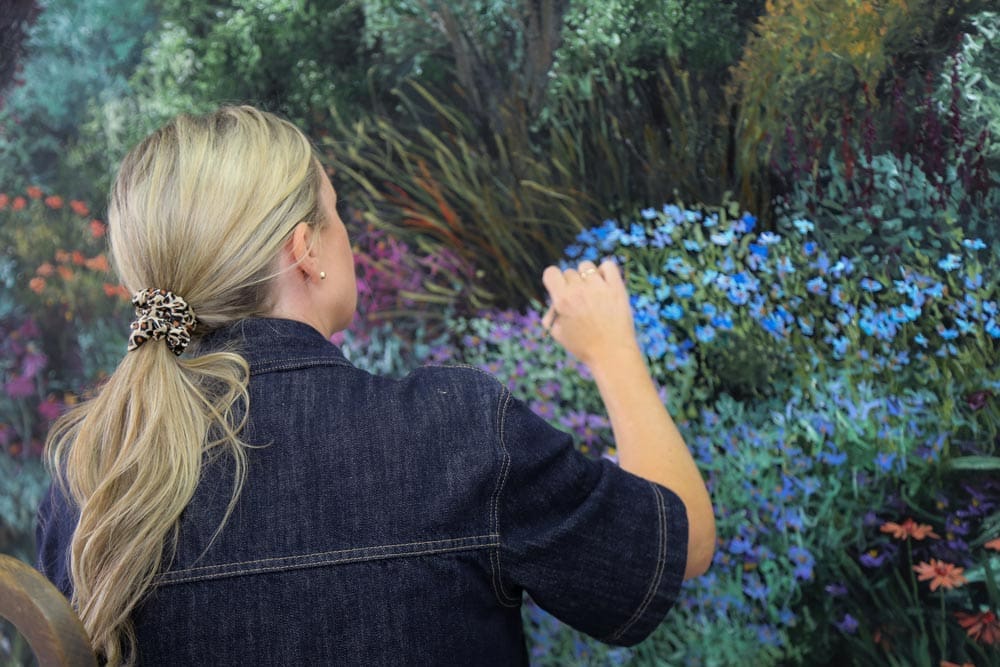
The biggest change has been my work uniform! Aside from that, the biggest change has been my work schedule; I used to split my week into two days or clinical practice, two days of painting and one day for administration. I now split my time between painting and running the creative business (liaising with my galleries and stockists, marketing, running an online print store, and organising events at sunny studios). A nice benefit to this change has been having a more flexible schedule and what this has meant for our family and health. If one of my children is home sick, I’m not rushing around cancelling clients etc.
After working with people in clinical practice for so many years I knew I’d struggle spending my ‘working days’ on my own painting. Last year, we set up ‘Sunny Studio’s’ which is a creative studio I share with another artist and an interior stylist. I now mainly work at Sunny Studios and I love the creative companionship and community we have developed.
What themes kept recurring in your clinical work that later echoed in the studio?
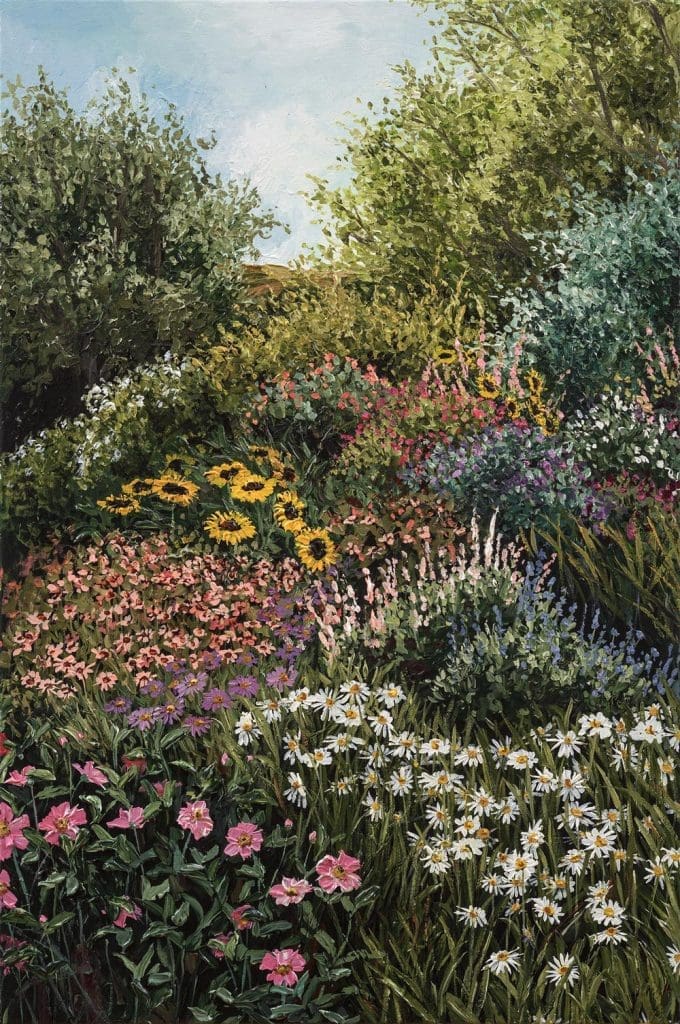
The main theme I’ve observed is a long standing obsession with painting gardens flowers, and landscapes. At first I wasn’t consciously aware of what was pulling me towards gardens, but over the years it’s became clear that gardens and nature are a place of solace and restoration for me. This helped to balance out the emotional intensity of clinical practice. While immersed in a large garden painting, I find a sense of calm and balance. There is a large body of research showing that time spent in nature reduces stress and improves emotional wellbeing – even when that nature exists on a canvas.
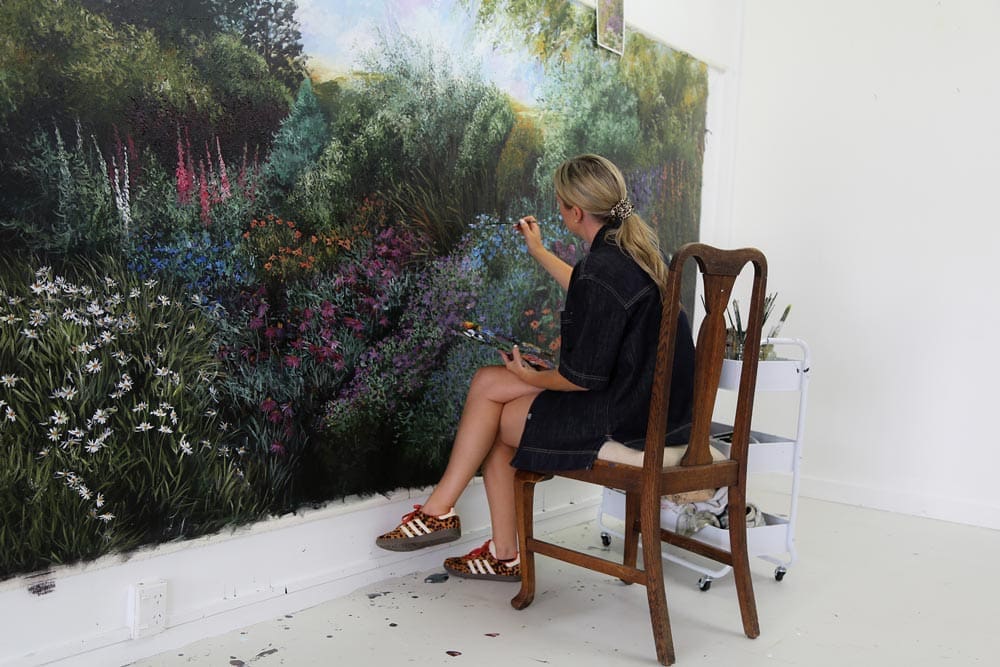
What boundaries did you set for yourself making this series?
Creatively, I tried to loosen boundaries rather than tighten them – stretching myself in terms of scale, colour palette, and style. The main boundary I did set for this collection is ensuring I protect my energy and make time to rest, exercise, and spend time with family and friends. I find that collections can be all consuming and I have a tendency to push myself too far in terms of the hours and hard work that goes into making a collection. Having a studio away from home and really helped with that balance.
When you’re building layers, what tells you to keep going versus stop?
This can be a very tricky part of the process! There have been times where I’ve ‘overdone’ an artwork and this is frustrating. If I’m feeling unsure I try and create a bit of space from the painting; I might pop it out of sight for 1-2 days. Coming back to it with fresh eyes helps to gain a new perspective. If I’m really stuck, a debrief with my studio colleagues or mum (who is an art teacher) is really helpful.
Do you start with an intention (a feeling or concept), or does the meaning reveal itself through the act of painting?
It’s usually a mix of both. My paintings tend to act as a mirror to my current experiences and feelings in life. As a psychologist, I am a deep thinker, I like to reflect, and my mind is often buzzing (which can sometimes drive my husband a bit crazy when he simply wants to relax at the end of a long day!). Leading up to a new collection I jot down ideas regularly in a journal or as voice notes on my phone. At first the ideas are abstract and almost incoherent, but over time clear themes and concepts begin to emerge. These become the foundation for a new body of work. Sometimes it is the opposite; I simply feel drawn towards a colour palette or composition and as I complete the painting the meaning behind the work starts to reveal itself.
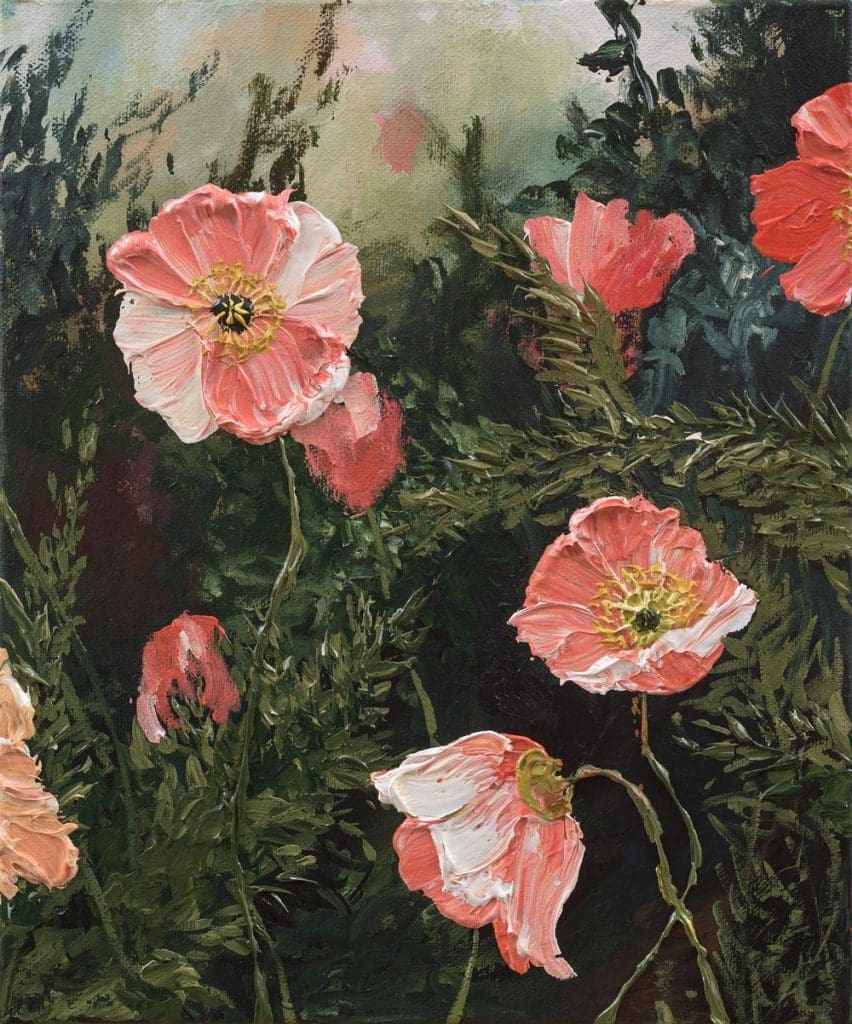
Your previous exhibitions have sold out quickly, how do you protect the integrity of the work from market expectation and hype?
Having a strong relationship with my gallery helps enormously. Working with Turua Gallery allows me to stay focused on making the paintings, while they handle the rest.
It is a constant balancing act protecting the integrity of the creative process and making art that is true to me and authentic, while also holding in the back of your mind how paintings will be received by the public. I’ve learned that the paintings that feel the most authentic and true to me, tend to hold a certain energy and ‘magic’ that people respond positively to (as ‘woo woo’ as that may sound!).
What do you want people to misunderstand less about the relationship between creativity and wellbeing?
In a world that’s increasingly driven by AI and screens, creative practices help us to feel grounded, connected and emotionally well. There is a lot of research that demonstrates a powerful relationship between creativity and enhanced mental and emotional wellbeing. I think as society becomes increasingly digitalised we’ll see a movement towards people connecting back to good old fashioned creative activities like pottery, painting, sewing, and carving etc. Already we’re noticing an increase in demand for workshops and paint and sip nights.
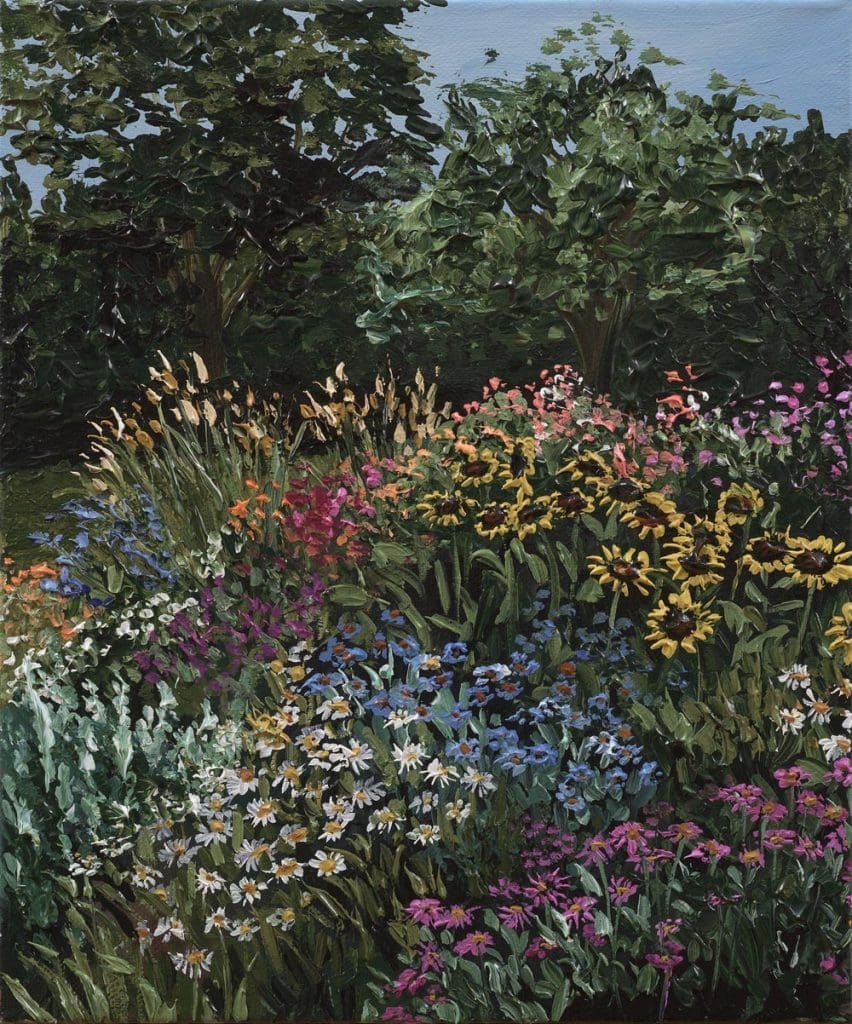
What has making this body of work changed for you, personally, professionally, or artistically?
It’s helped me to build confidence in my ability to stretch myself and push boundaries. Especially in terms of scale, it has been liberating painting at such a large scale and I look forward to doing larger artworks in future.
How do you handle the “after-effects” of painting something emotionally heavy, do you have rituals to decompress.
Painting is generally a time for me to decompress, have a moment of quiet, listen to some music and enjoy an ice coffee or glass of wine. I generally feel energised and calmer after time in the studio. Sometimes it’s hard to get into a calm ‘creative zone’ if I’ve had a busy or stressful week. I find simple routines like exercising before work, lighting a scented candle, making time to meditate or journaling, and listening to gentle music help me to get in the right head space to create.
You’ve built a long-standing relationship with Turua Gallery, how long have you worked together, and what has that partnership meant to you?
I’ve been working with Turua Gallery since the end of 2020. What started as a local relationship grew naturally, and we’ve since worked together on three solo exhibitions and several group shows. Along the way, I also worked with international galleries in the UK and Australia, which was a valuable learning experience. Spending time working further afield made it clear how just how strong my relationship with Turua Gallery is. They’re a family-owned gallery and very approachable, but also highly professional. There’s a solid level of trust there, and I feel lucky to have that kind of support so close to home.