
Building and Maintaining Resilience
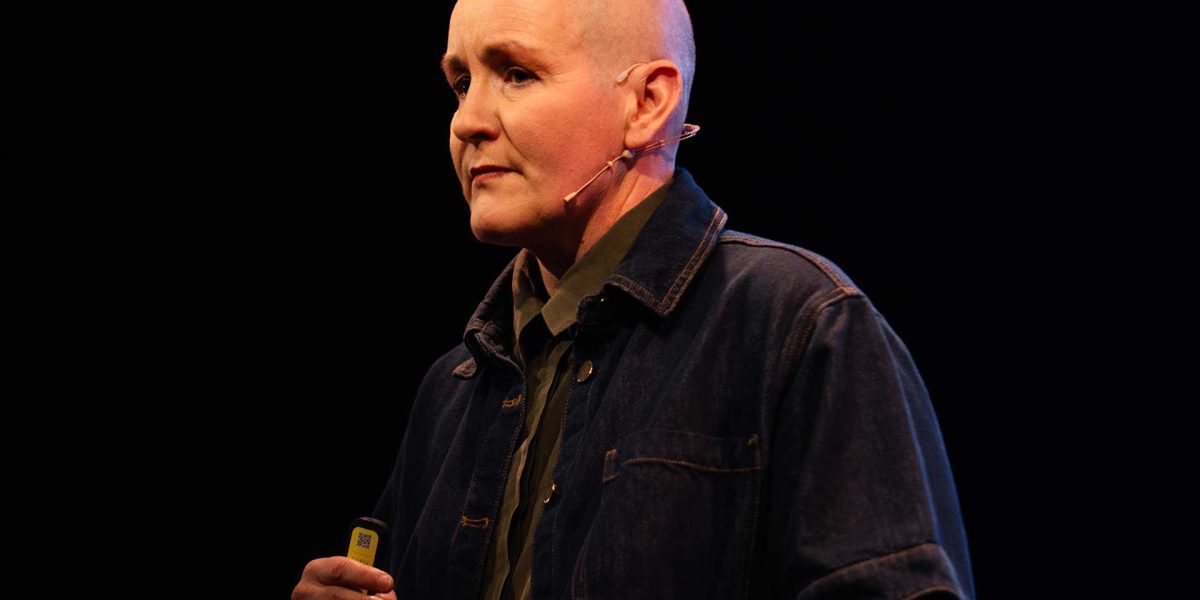
Sixteen years ago Di Foster was given twelve months to live and told to put her affairs in order. She declined, had a chat with Death over green tea, and built a framework for living intentionally instead.
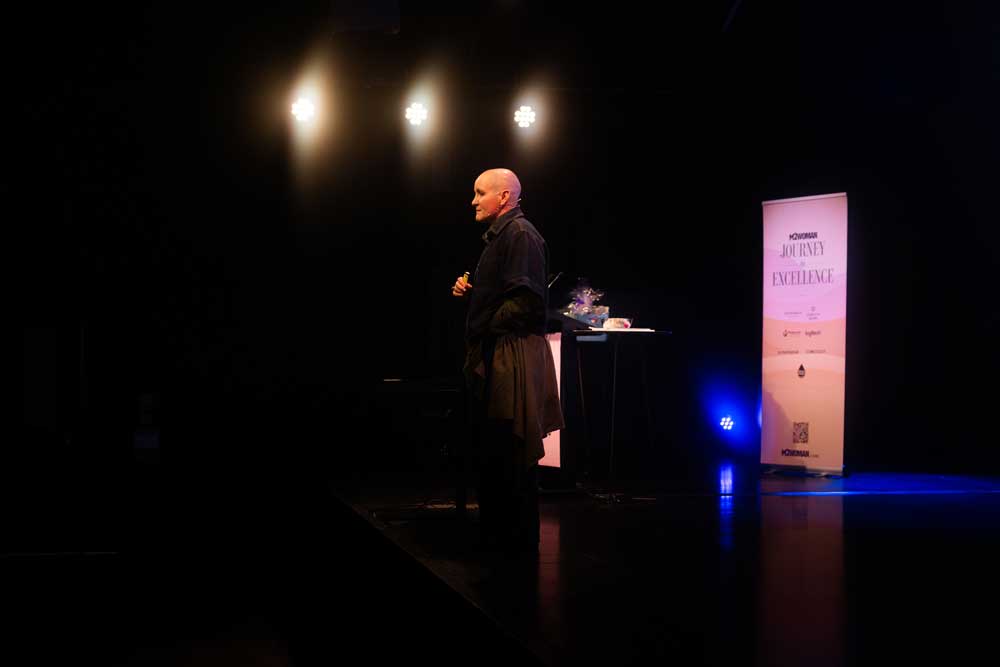
Di Foster opened by admitting that the six-year-old inside her, the one who loved planning her whole life out, “is mortified that her 55-year-old version of herself gets to do this”: stand on a stage and talk about the worst day of her life. Before she did, she made the whole room stand up. Anyone who had ever felt lonely, found work or family hard, or woken up wondering if the world had gone mad, on their feet. Nobody stayed seated. “And yet you’ve kept going anyway.”
Then, the worst day. Terminal secondary breast cancer, metastasised in her lungs, one lung collapsed, 25 per cent of lung capacity the only thing keeping her alive, and a prognosis with no wriggle room: “There’s a zero chance that you’ll last beyond 12 months.” She was told to go home and put her affairs in order, which struck her as a poor use of the time. “My affairs are not that far out of order that they’re going to take 12 months to get put into something that’s acceptable to die.”
She also has a rule that if the universe wants her to listen, the message should arrive with some style, Karen Walker being the standard. The oncologist delivering her death sentence was wearing Roman sandals, long beige walking socks and short shorts, which she deemed unacceptable. So instead of his verdict, she listened to what she calls “the whispers of my own heart”, which sent three messages. Be happy, which she translated into be present. Go natural, which saw her leave a medical system offering only palliative chemotherapy, treatment that might ease symptoms but “would give me no more days”. And be grateful, at which she snorted out loud: she was 38, newly moved to Christchurch for the love of her life, childless, and apparently dying.
Grateful arrived anyway, about five days later. It looked like waking up each morning and asking, “Am I going to die today? Because if I am, I’m not getting out of bed to do my hair.” Then, quietly, gratitude for the 25 per cent of her lungs still working, for her partner, and for that one day.
The black cloud took about four weeks to shift. Sitting in the sun with an empty pot of green tea, she reached a hand over her right shoulder and said, “Hello, Death. It’s time you and I had a chat.” She will not disclose the conversation, but since that day she has not spent one moment worrying about dying. “Instead, I’m absolutely obsessed with living.” The days she will not have, she says, are none of her business.
Then came the cranes. A karate mate, Glenn, and his wife Tanya, who had lived a decade in Japan, arrived for afternoon tea carrying a white rectangular box. Ninety minutes later Glenn finally stood and explained the myth: fold a thousand origami cranes and you earn a wish, and if four people fold them together, they can gift that wish to someone. He lifted her thousand cranes from the box by a single strand. Hung outside, the cranes deteriorate through the seasons, and when you find one loose in the garden, or in her case floating down the Avon, your wish is coming true. Hers was precise. “I didn’t wish not to have cancer. I simply wished that with every day I was given, I would do the very best I could with it.”
Fourteen months after diagnosis, her famously deadpan husband (“the man we check for a pulse”) observed that she seemed well and asked what they were going to do with the rest of their lives. Her answer: a baby, before her self-imposed deadline of 40, giving him six weeks. His objection, that they had been through five and a half thousand earthquakes, relocated two businesses and were living at her sister’s, did not survive a weekend she booked in Akaroa. Jackson James Foster arrived three weeks before her 40th birthday and turned 14 in December. Sixteen years and three months on from the diagnosis, she describes what happened as radical remission.
The worst day of her life, she says, became the best year, and out of it came the model she now applies to everything. Events happen and we tell ourselves a story about them; keep the story and you land somewhere accidental, when most of us would rather land somewhere intentional. Her husband says she never lets the facts get in the way of a good story. Her defence: “All my stories benefit the future version of myself.” The engine of the model is radical responsibility. “It might not be your fault. I get it. But 100 per cent it will always be your responsibility. Your ability to respond.”
Key Takeaways
- Rewrite the story. Events are fixed but the story you tell about them is a choice, and the story determines where you end up. Reframe the past so it works for the future version of you.
- Take radical responsibility. Fault and responsibility are different things. Whatever happens, your ability to respond is always yours, and blaming circumstances hands your future to them.
- Prepare before things go wrong. Responsibility has two parts: responding when trouble arrives, and what you are doing today so you are in a better place to respond when it inevitably does.
- Embrace the joy of missing out. You can do almost anything, but not everything. Strategic non-action makes the hell yeses better; Foster wants a life of “hell yes and no thank you”.
- Stay obsessed with living. The days you will not have are none of your business. Being present in the days you do have is the whole game, and gratitude is how you get there.