
We Asked The Experts How To Succeed And Thrive
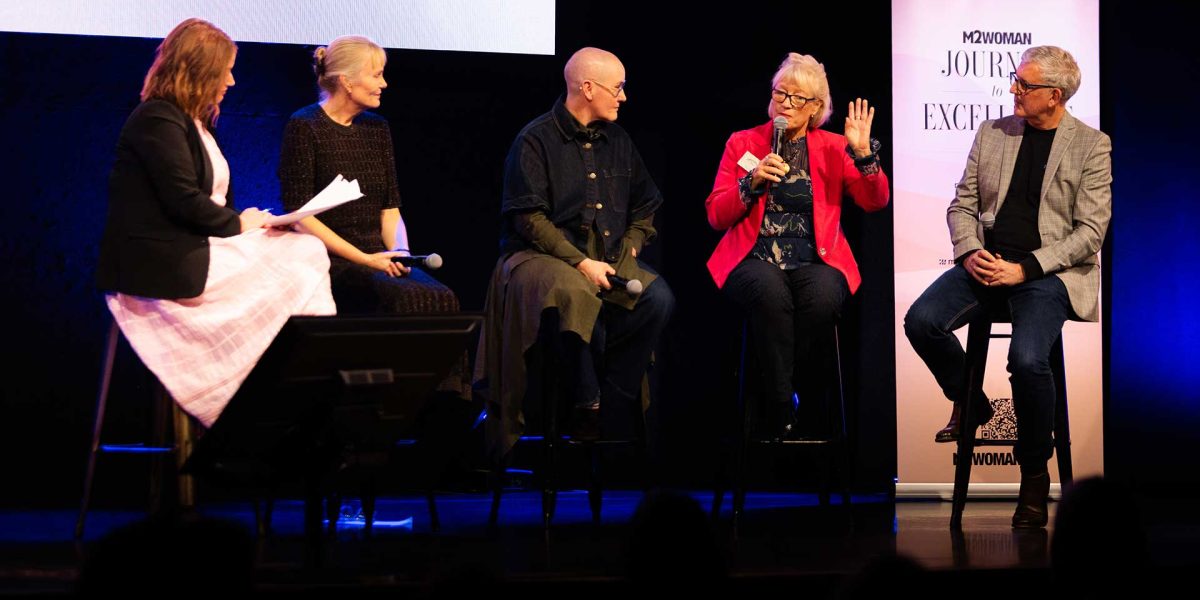
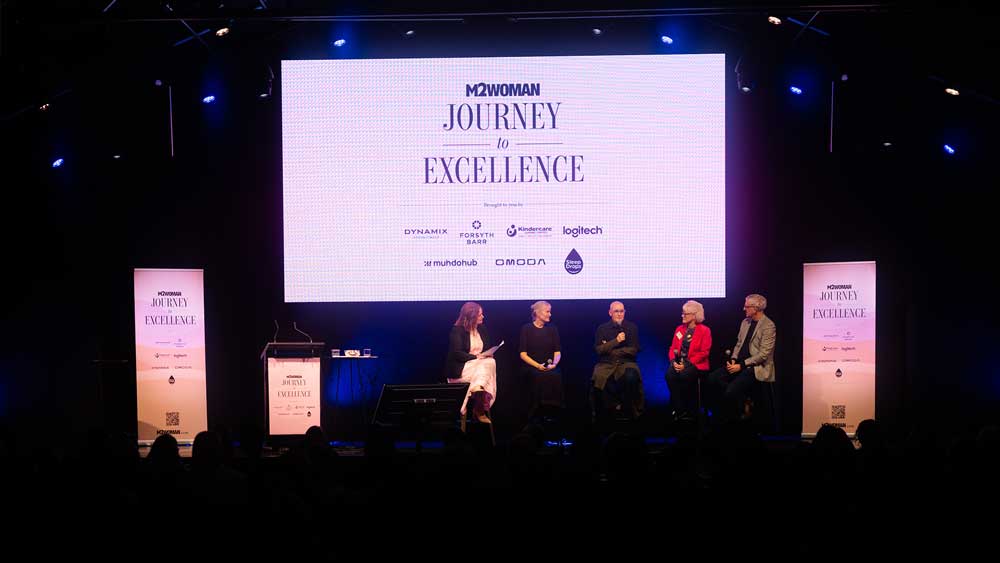
Host Joy Reid gathered Di Foster, Robyn Galloway, Andrew Nicol and Rosanne Graham for a closing kōrero on apologies, imposter syndrome, fruit salad, and why nobody should aim to win 100 per cent of a negotiation.
Joy Reid opened by confessing she had scribbled Rosanne Graham’s ten lessons “on scraps of paper”, there being no PowerPoint, and turned the theme over to the couch: what is your top practical tip for someone eyeing their next move?
Di Foster went first, with a report from the afternoon tea break. Someone had approached her with a compliment and opened with sorry. “Why would we start with sorry? As women we quite often apologise for taking up space. Just drop it.” Excuses got the same treatment: “They’re really cute and they’re so boring.” Then she quoted Yoda on trying versus doing.
Robyn Galloway picked up on inherited voices. Her mother had a proverb for every occasion, including “better to be thoughtful than open your mouth and prove it”, and those inherited views, she argued, quietly sabotage people for decades. Her advice was to interrogate the voice on your shoulder. “Once you know where that imposter syndrome is coming from, you can identify it. I was about 50 when I started. I’m not listening to that voice anymore.” Her verdict on the room: “Women don’t back themselves enough.” Andrew Nicol’s contribution was blunter. “Once you’re in over your head, it doesn’t matter how deep it is.” He throws his team in the deep end, with notice; one of his general managers responded with a calendar invitation reading, “I need floaties.” Graham’s version: shut the doubting voice down, go and do your service, and see what happens. “Be courageous.”
Reid then asked Galloway what destroys trust fastest in a negotiation. Bad faith, essentially: “You’ve got to start from a place of integrity on both sides. If people are in the room not for the right reasons, it’s already sabotaged.” So does greed. “A negotiation’s actually a negotiation, so you’re not going to expect to achieve 100 per cent of your goal, and neither should they.” She nominated current geopolitics as “the worst negotiation you’ve ever seen”, and shared her method: small talk first, read the room, and never get to the main point in two minutes. Reid asked whether it works on children. “Time out. I’ll let you know.”
Nicol was asked to place AI in a camp: tool, threat or teammate. “All of the above, definitely some big threat. Very, very useful tool, less teammate. It’s not human, it’s literally electrodes running in computers.” Pressed on staying human in a world moving that fast, he cited the UK finance team who transferred more than $20 million on the instruction of a fake CFO on a video call. “There’s a point coming where we’re not going to know whether we’re watching the real person or the avatar, and so I think we’re going to crave human to human connection.” His prescription: presence, devices away, and eye contact, “eyes are the window to the soul”. Foster answered the same question with fruit. She is a banana, delighted with her big yellowness, and the only mistake available to her is trying to be an orange, which would confuse the apples (“apples are easily confused”). A workplace, she said, is “a really amazing fruit salad”, and there is not a right way to be in it.
Asked what they wish they had known ten years earlier, Graham chose perspective. “If you let your worries and your concerns lead you around by the nose, you will follow that drama.” The moment you have a plan, the world settles back into a pattern, so trust that “you’ve got the inner strength and the inner resources to work your way through it”. Galloway noted that Christchurch entered COVID battle-ready after the earthquakes while Aucklanders were “in La La Land”, and passed on hard-won advice: watch out for leases, which can bankrupt you, so negotiate CPI-only increases and short flexible terms. Nicol described hitting decision fatigue in a senior corporate role and resolving, somewhere in Spaghetti Junction, to make any call within 24 hours given enough information. He was later called the most decisive manager his team had known. Very few decisions lock the door behind you, and in a crisis, “when you get into paralysis, that’s when you get locked down”. A reframe offered from the couch, that a choice feels easier to revisit than a decision, visibly hit home with the host.
The last question asked for one tip for doing life well. One answer: six hours of good sleep, achieved exclusively through rubbish books, harrowing prizewinners being useless for the purpose. Nicol offered a 15 year habit: one photo every day, rolling across his work screen, his son growing from five to 20 one frame at a time, plus daily exercise in some form. Reid declared she was keeping the question in her panel repertoire. “Always gets the gold.”
Key Takeaways
- Drop the sorry. Apologising for taking up space is a habit, not a courtesy. If you want the seat at the table, take it without a preamble of excuses, however cute they sound.
- Ask where the voice comes from. Imposter syndrome is often an inherited script rather than an assessment of your ability. Trace it to its source and it loses most of its authority.
- Nobody wins 100 per cent. A negotiation in which one side expects everything is already sabotaged. Start with integrity, read the room slowly, and leave the other side something worth having.
- Decide within 24 hours. Most decisions are reversible, and paralysis is more dangerous than a wrong call. If you have enough information, decide; if not, ask for more, then decide.
- Build tiny daily rituals. A photo a day, exercise in any form, rubbish books before bed: the panel’s coping mechanisms were small, repeatable and non-negotiable, which is precisely why they work.