

The Loop Is You
Eighty-two per cent of New Zealand businesses now use AI. Almost none of them can feel it. Expert speakers at the M2 AI Summit in Auckland spent a day explaining why the missing ingredient is not the machine.
Here is the state of play, courtesy of the Productivity Propelled report from 2degrees and Deloitte Access Economics. Eighty-two per cent of New Zealand businesses use AI in some form. The average adopting SME is associated with $400,000 more revenue a year than an equivalent non-adopter, and the average large business with $59.1 million more. And yet, as Andrew Nicol of Preductive reported from a fresh Gallup survey, seven out of eight people do not believe AI is making them any more productive. Adoption is nearly universal. Returns are nearly invisible. Somewhere between the subscription and the payoff, something keeps going missing.
The M2 AI Summit, held in Auckland on 29 April 2026, spent a full day locating it. The missing ingredient is not the model, the vendor or the budget line. It is the human sitting in the middle of the loop.
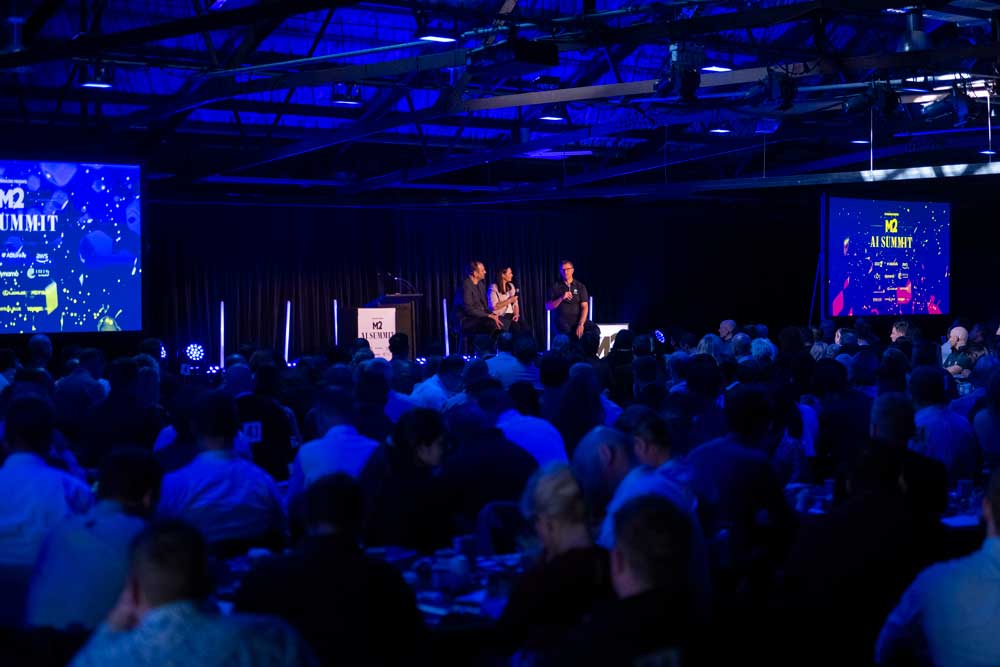
Dr Kerry Spackman, the cognitive neuroscientist who has tuned drivers for four Formula 1 teams, set the framework in the opening session. A racing car and its driver are a single feedback system, and the performance you get is multiplicative, the car times the driver. Your business, he argued, works the same way, because “there’s a human in the AI loop.” He gave that human a metric, HALQ, the human in the AI loop quotient, and warned that when it goes negative, AI simply amplifies bad judgement at scale, producing what he called the fire hose of AI slop. His proof was a near-catastrophe, a C-suite decision built on polished AI analysis that would have been a $50 million mistake. Spackman fed the offending documents into four leading AI models with detailed instructions to hunt for hidden assumptions and faulty logic. “All four AIs gave it a completely clean bill of health,” he said. He then found the errors himself, forensically, and fed his report back. “And they go, yeah, we missed all that.” Asked for his single takeaway, he did not hedge. “Humans will always be in the loop until none of us go to work.”
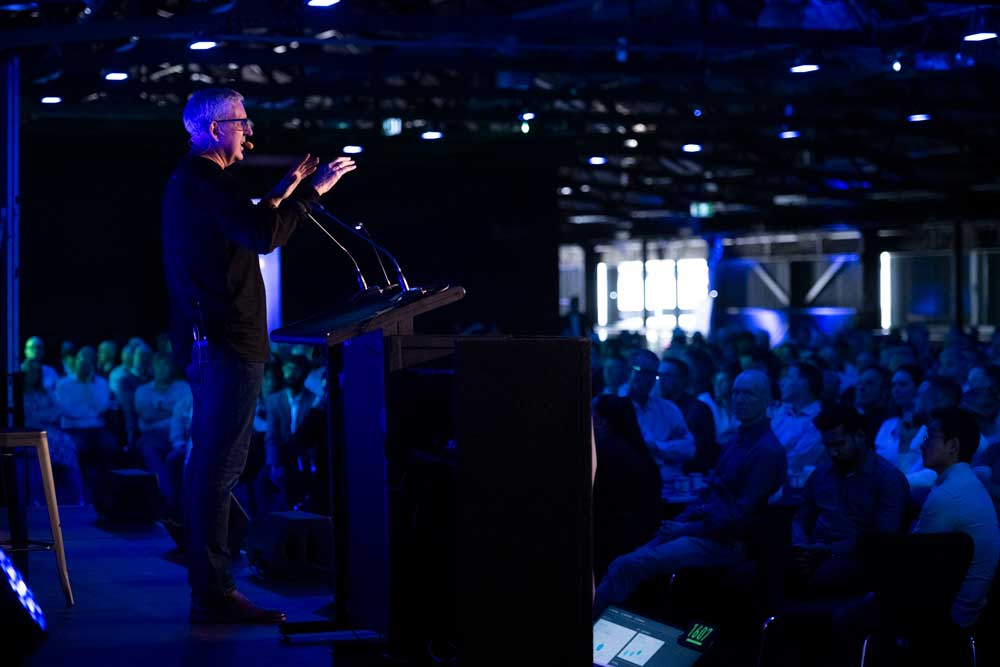
While Spackman brought in the physics, Korrin Balmain of Dynamo6 and Adam Courtier of 2degrees supplied the sociology. Asked how to fix New Zealand’s productivity, Courtier deadpanned that the easy answer was to use more AI, “but seriously, it’s not the solution.” The report’s finding, a 1.5 per cent productivity uplift for every ten points of AI adoption, only materialises in firms that change how work is done rather than treating AI as a chatbot. Balmain suggested that “people move at the speed of trust.” Organisations everywhere have switched on Copilot, Gemini or Claude and then watched almost nobody use them, because nobody feels safe to. Her remedy is deliberate, psychological safety, a culture of curiosity, and her me, we, them framework for deciding what you keep, what you share with your “AI collaborative partner”, and what you hand over entirely. Courtier’s version is the experiment. “We use the term experiments intentionally because that gives people safety around it.”
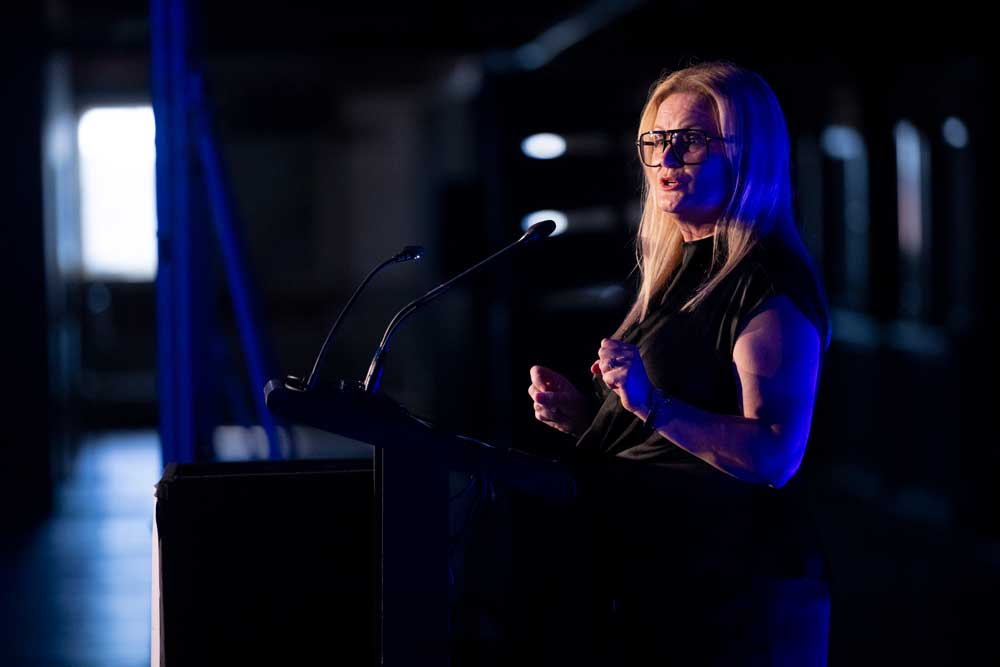
The team from Rush Digital, founder Danu Abeysuriya, Head of AI and Engineering Hamish Friedlander and Director of Marketing Alaina Luxmoore, staged their session as a live edition of their podcast, which is called, Human in the Loop. Handed the question of whether AI actually makes teams great, Friedlander suggested that “AI is not a magical tool that will take something that’s not working and make it work.” It can cover the gaps holding a functional team back, “so, I guess, yes, it will take a good team and make it a great team.” Abeysuriya’s contribution was blunter, drawn from an underdog football season in which his coach made the team map out exactly how they would lose, then work backwards. The AI wave is coming regardless, he said. “You’re either going to be a victim of it, or you’re going to be surfing it.”
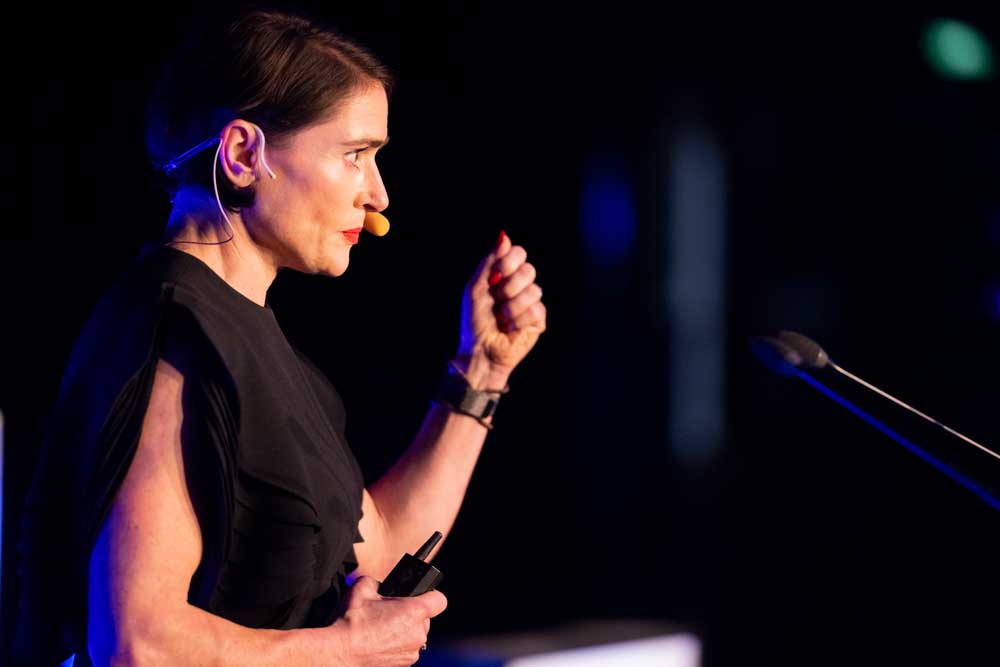
The afternoon’s practitioners showed what surfing looks like, and it turns out to be a management skill older than software. Delegation. Amir Mohammadi of Nodey drew the line most sharply. Most teams still use AI like a search engine, but the fast ones “are not asking for answers, they are delegating work,” iterating and steering a collaborator rather than prompting once and moving on. His evidence was 472,000 lines of production code shipped in months by two developers, himself as a no-code orchestrator, and Claude.“Everyone has the same tools. Not everyone has the same mindset”. Jared Langguth showcased his journey of winning over the sceptics and the non-technical at his own firm, one workflow at a time, until a marketing pipeline built by two people who had never done marketing produced what he described as two days’ work in one hour. His advice was to start before you feel ready. “Don’t wait for the big governance framework for the whole company to be settled before you start doing anything.”
John-Daniel Trask of Autohive and Raygun has been leaning into that philosophy over the years, insisting AI is “an everybody technology” rather than a god project handed down from the top. His marketing team shrank from five to two through natural attrition, dropped its external agency, and grew its numbers across two brands, on the arithmetic that a $15,000 monthly retainer loses to $50 of tokens. Andrew Nicol, fuelled by 120 coffees with senior leaders, folded it all into an axiom worth stealing. Don’t delegate what you can automate, and don’t automate what you shouldn’t be doing anymore, because most established businesses are riddled with process nobody would miss. His larger point was that “workflow thinking is back”, and Kirsten Taylor of SleepDrops is its unlikeliest proof. A naturopath with no tech background, she was quoted $25,000 and three months for a basic MVP, built one herself in about five hours instead, and went on to construct a clinically validated sleep platform in months rather than years. Her verdict carried the day’s whole argument in seven words. “AI doesn’t replace expertise, it amplifies it.” Though she added a duty of care, you must watch it “like it’s a very clever four-year-old about to run both of you in front of a truck.”
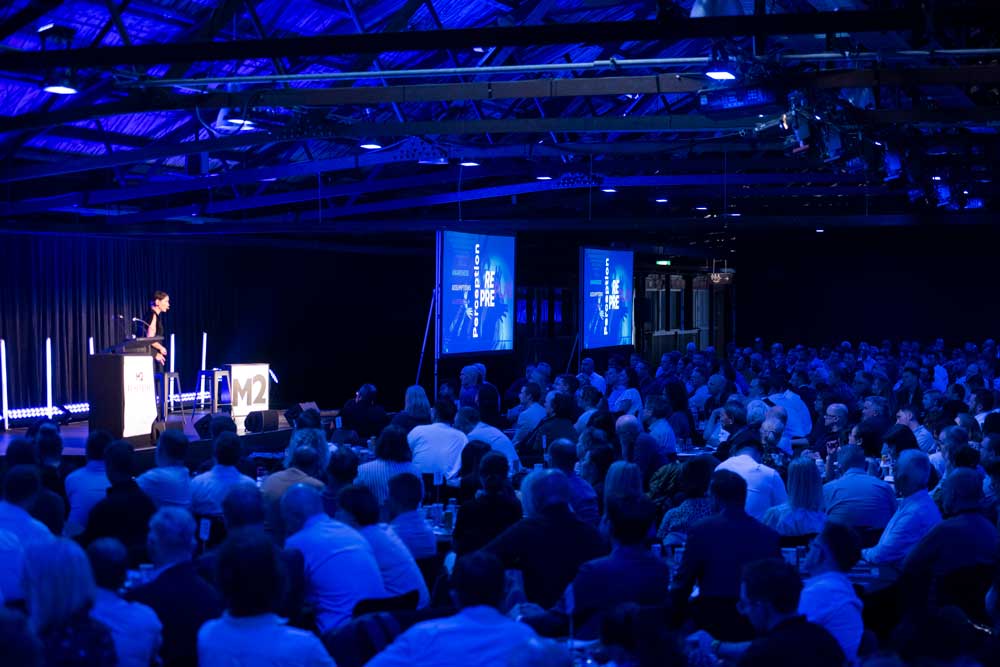
Which left Dr Alia Bojilova, psychologist and former NZSAS officer, to close the loop on the loop. The thing to evaluate right now is not AI but your stance toward it, and the stance that works is built on the same foundations she saw hold under fire, clarity, curiosity and, above all, trust. “Trust is the non-negotiable,” she told the room, and low trust is the biggest interference in potential, in a soldier, a team or a company rolling out its first agent. Her closing prescription was characteristically unclinical. Be a good egg.
So the gap between eighty-two per cent adoption and seven-in-eight indifference is not a technology problem awaiting a better model. The machine’s half of the multiplication is already extraordinary. The other half is you, and as Spackman promised at nine forty in the morning, that is where the competitive edge has been hiding all along.
9 Takeaways
- The human is the multiplier. Dr Kerry Spackman’s HALQ makes business AI performance multiplicative, machine times human, so a brilliant model in careless hands returns nothing, or worse.
- Trust sets the speed limit. Korrin Balmain and Adam Courtier showed that adoption stalls not at the licence but at the person, because people move at the speed of trust and experiments create the safety to build it.
- AI takes good teams to great. Hamish Friedlander’s honest answer for Rush Digital is that AI fixes what is holding a capable team back; it will not rescue a dysfunctional one.
- Surf the wave or be its victim. Danu Abeysuriya’s counsel is to map out exactly how disruption could beat you, then work backwards on each problem, because taking action is the fastest cure for anxiety.
- Start before the framework is finished. Jared Langguth’s route past scepticism is one small, low-risk workflow at a time, compounding until two days’ work fits in an hour.
- Agents change the arithmetic. John-Daniel Trask treats AI as an everybody technology, and the sums are stark when a $15,000 monthly retainer competes with $50 of tokens.
- Delegate like a leader again. Andrew Nicol’s axiom, don’t delegate what you can automate and don’t automate what you shouldn’t be doing anymore, makes workflow thinking the leadership skill of the moment.
- Expertise is the moat. Kirsten Taylor proved that deep domain knowledge, properly structured, is what AI amplifies, compressing a $25,000 three-month build into five hours and years of development into months.
- Mind your stance. Amir Mohammadi and Dr Alia Bojilova closed from opposite ends of the same truth: everyone has the tools, mindset and trust decide who wins, so commit to clarity, curiosity, and being a good egg.