
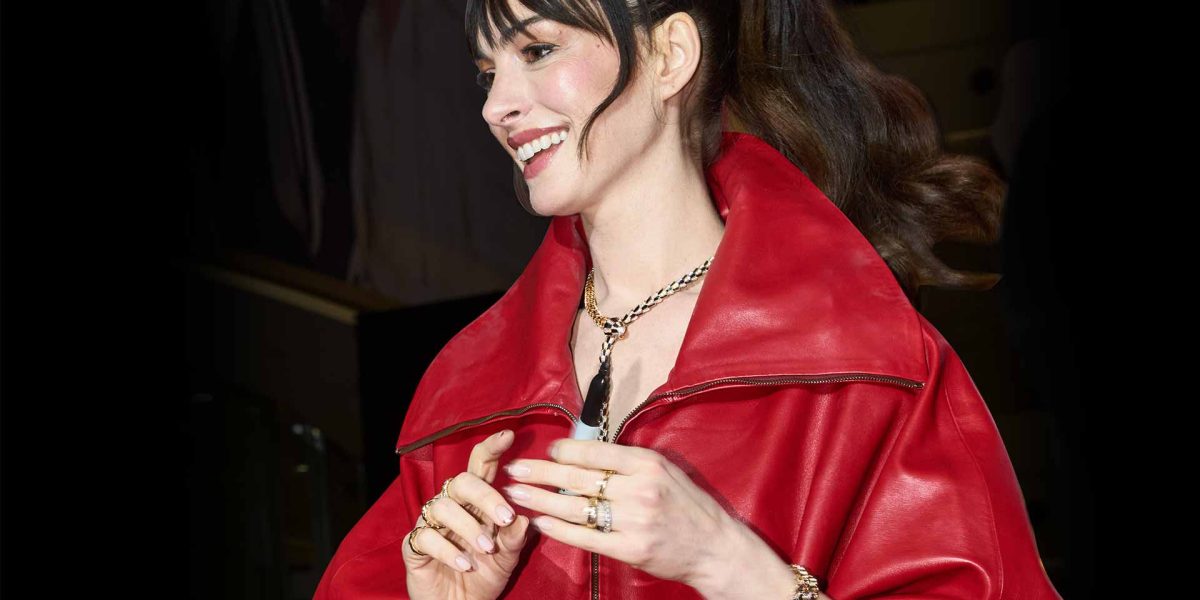
What Happens to a Woman Built for Power When the World Rewrites the Rules?
It is the question at the heart of The Devil Wears Prada 2. It is also, rather inconveniently, the question Anne Hathaway has spent the last decade answering in real time.
There is a particular kind of power that women of our generation were taught to respect without ever being fully invited to hold. It lived in certain offices, behind certain desks, administered by women who had spent decades clawing their way to the top of industries that were never especially designed to have them there, and who, once arrived, ran those industries with the focused intensity of someone who knows exactly how easily it can all be taken away. It expressed itself through access and exclusion, through who got the meeting and who waited in the lobby, through which names appeared on covers and which were quietly, permanently dropped. For a long time, it was the only game in town. Then, with very little fanfare and absolutely no apology, the world built a different one. And a lot of the women who had spent their best years mastering the first found themselves holding a skillset the new one didn’t especially need.
That shift is the backdrop to one of the more unexpectedly interesting films of 2026. The Devil Wears Prada 2 is technically a sequel to the 2006 comedy that gave us Meryl Streep as the most terrifying woman in Manhattan and a young Anne Hathaway as the ambitious outsider trying to survive her. Twenty years on, the power between those two women has reversed entirely, and not in a way that’s particularly comfortable for either of them. The all-powerful editor-in-chief of a high-fashion magazine empire is no longer dictating to the world from an untouchable height. She is fighting, in that particular ice-cold way of hers, to stay relevant in a world that stopped needing her permission for anything around the time everyone got a smartphone. Her former assistant, the young woman she once treated more or less like furniture, now holds enough power to rescue her or finish her off with a well-placed article. Soundtracked by an original song from Lady Gaga and Doechii called “Runway,” the film announces itself not as nostalgia but as a reckoning, and the question underneath all the extraordinary clothes is one that will feel uncomfortably familiar to any woman who has spent serious time in a serious career: when the structure that made you powerful crumbles, what are you actually left with?
To understand why that question carries real weight in 2026, it helps to spend a moment thinking seriously about Anna Wintour’s formidable career.
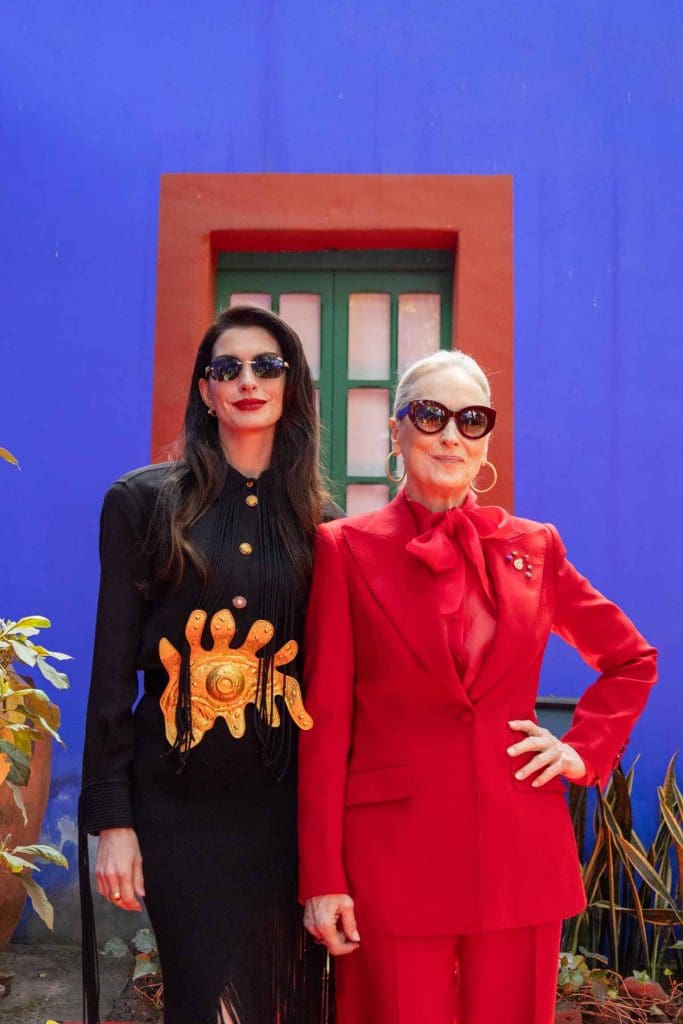
Wintour took over American Vogue in 1988 and spent the next 37 years building a power structure that would make most corporate CEOs feel a little inadequate about their legacy. She was up at 5:30 every morning, editing until midnight, running the Met Gala with what colleagues described as “militant” precision, a word that in this context sounds less like a criticism and more like a reluctant compliment. Her biography, written by Amy Odell after interviews with more than 250 sources, reveals that industry publicists routinely invoked her name when negotiations got sticky: “Do you want me to go to Anna with this?” was apparently enough to end most disagreements before they properly started. Bradley Cooper sought her counsel when casting A Star Is Born. Serena Williams called on her. Andy Warhol, in a characteristically contrarian move, once called her a “terrible dresser.” She did not appear to lose any sleep over it.
The scope of her influence was, by any reasonable measure, absurd. She helped push Christian Dior toward hiring John Galliano. She turned the Met Gala from a modest museum fundraiser into the most photographed, most dissected, most memeable night in fashion, personally controlling the guest list with the kind of authority that heads of state would find familiar and perhaps slightly threatening. The Guardian once called her the “unofficial mayoress” of New York City, which sounds like hyperbole until you remember that she was simultaneously shaping the aesthetic output of the global luxury industry, fundraising for American presidents, and making or quietly ending the careers of designers who had spent their entire professional lives trying to please her. Fashion had always had its power brokers, from Edna Woolman Chase running Vogue in the early 1900s to Diana Vreeland’s gloriously deranged reign in the 1960s, but Wintour built something different in scale and reach. She did not just edit the magazine but became what the magazine meant, and in doing so, she became what the industry meant too.
The most telling illustration of how far that power extended came during the production of the original The Devil Wears Prada in 2005, when Wintour was reportedly threatening designers and fashion personalities that Vogue would not cover them if they appeared in the film. How crazy is that? A fashion magazine editor wielding the threat of editorial exclusion as leverage against a Hollywood production starring Meryl Streep, just through the quiet and well-understood fact that being on the wrong side of Anna Wintour had consequences. “People respond well to those who are sure of what they want,” she once said, describing her own management style, in the most politely understated summary of a genuinely formidable operating approach.
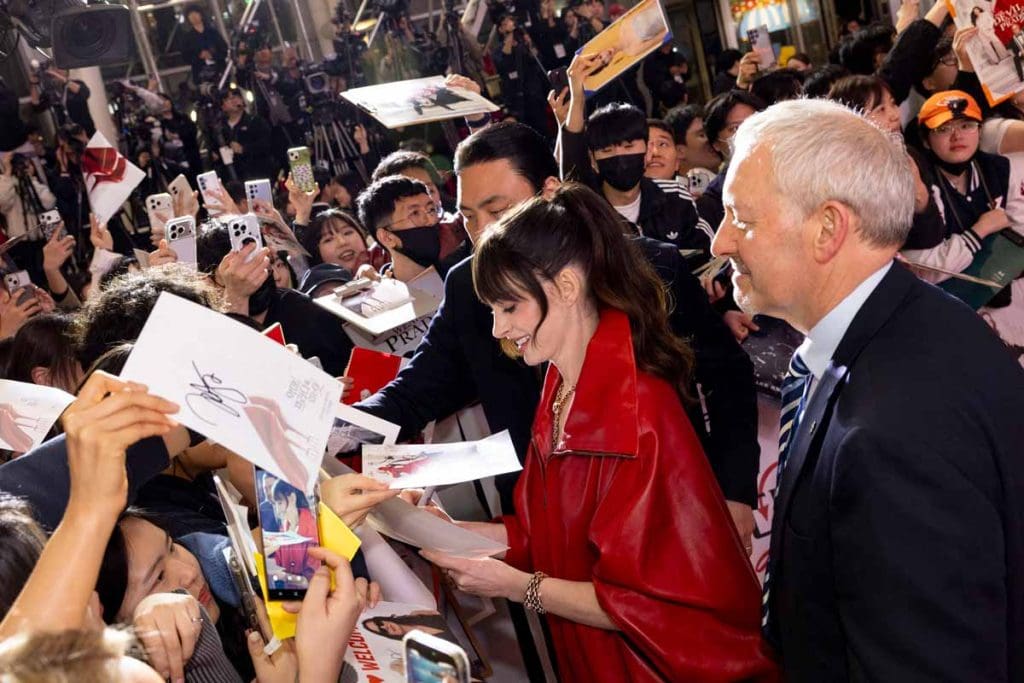
Gradually, though, and then very suddenly, the ground shifted. Fashion blogging gave way to Instagram, Instagram gave way to TikTok, and somewhere in that transition, the trickle-down model of fashion, the one where editors decided what was beautiful and consumers, grateful for the guidance, obeyed, quietly collapsed. The micro-influencer with two million followers and a well-timed discount code can now move more product on a Tuesday morning than a six-page Vogue editorial could in a month, and without attending a single show, without asking anyone’s permission, and without caring in the slightest whether Anna Wintour approves.
In June 2025, after 37 years, she stepped down as editor-in-chief, retaining the rather magnificent title of global chief content officer and continuing to appear at industry events in dark sunglasses, making people anxious in a more advisory capacity. Vogue, meanwhile, is cutting from 12 monthly print issues to eight a year, each one thicker, more expensive, and repositioned as a collectible object for people who want something to hold in their hands that isn’t a phone. One fashion journalist noted flatly that “you don’t need Vogue to keep up with fashion anymore.” The walled garden Wintour built over four decades hasn’t been demolished so much as rendered optional. People just walk around it now.
A very different world from 2006 when Hathaway was fresh off The Princess Diaries franchise, and the critical concern at the time was whether she had the weight to hold her own against Meryl Streep. She did, as it turned out. The film made $326 million against a $35 million budget and became one of those rare cultural artefacts that people still quote at dinner without any particular prompting. “Cerulean.” “That’s all.” “I’m just one stomach flu away from my goal weight.” What made it stick wasn’t the fashion or the one-liners but something more unsettling underneath, a story about the cost of ambition, about what you give up when you decide you actually want to be good at something, about the vertigo of being a young woman in a room full of people who are better dressed, better connected, and significantly less apologetic about both. The genius of the script was that it never entirely condescended to the monster at its centre. The editor was awful and she was also, quite clearly, extraordinary at her job, and the film had the confidence to let those two things coexist without resolving the tension for you, which is probably why people are still arguing about it 20 years later.
Hathaway herself was in her early twenties during that shoot, and by her own admission still very much figuring it out. “I was a 22-year-old mess of a human when I made The Devil Wears Prada,” she told Harper’s Bazaar recently, with the kind of breezy candour that only comes from being firmly on the other side of something. “I feel like I was everybody’s babysitter. We’ve grown up together.” She talks about fans sending her their graduation announcements and wedding invitations, which is either extremely touching or mildly alarming depending on your perspective, and possibly both. “I’m so happy for them and how their lives are unfolding,” she says, and the thing is, she genuinely seems to mean it.
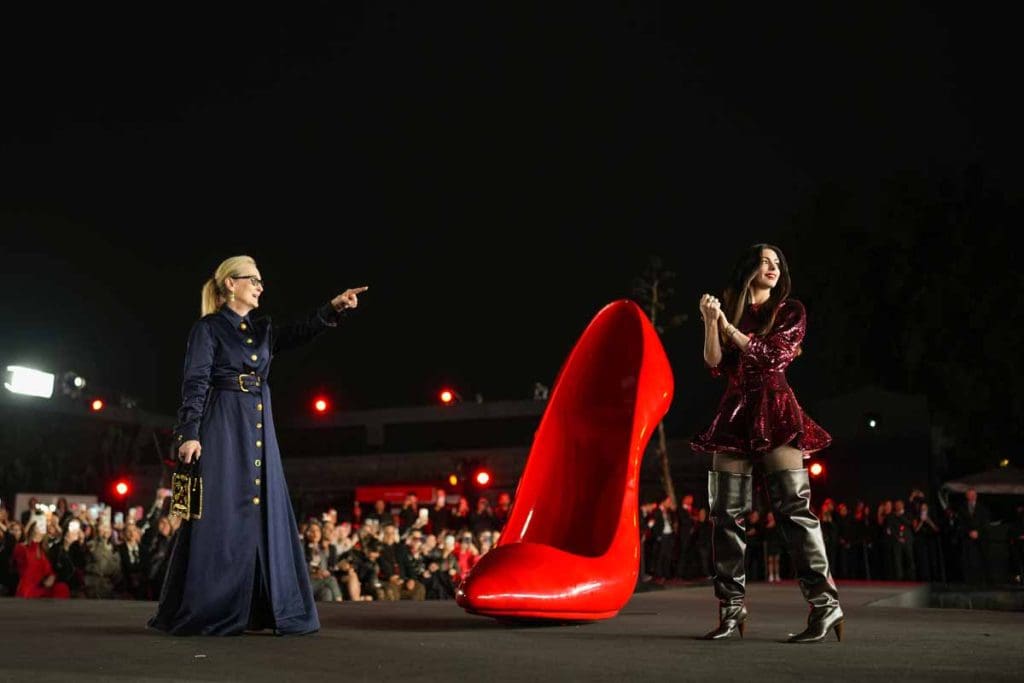
But this is also the woman who once said, very plainly, “I think about who I was when I made The Princess Diaries and how little confidence I had, but how ambitious I was. Those two things were not a comfortable mix for a very long time.” That tension, between wanting things enormously and not yet knowing how to carry that wanting without apology, is what defined the first chapter of her career and what the internet eventually turned against her for. She was too keen and too grateful at the podium, and she wanted it in a way that made people uncomfortable, which, if you’ve spent any time thinking about how ambitious women are perceived in public life, will come as absolutely no surprise.
Hathaway spent the years after The Devil Wears Prada proving that she had more strings to her bow. Rachel Getting Married earned her a first Oscar nomination. The Dark Knight Rises followed. Then Les Misérables, for which she shaved her head and won Best Supporting Actress in 2013.
And then the internet decided it didn’t like her.
The phenomenon was given an actual name, “Anne Hathaway Syndrome,” which is one of those internet coinages that reveals far more about the people doing the coining than about its subject. The backlash was vague and largely incoherent, the way pile-ons tend to be, and it boiled down to the charge that she was too polished and earnest, and apparently wanted it too much. “The vitriol cut deep because it mirrored my own self-criticism,” she said during a 2022 Women in Hollywood speech. “When your self-inflicted pain is amplified back at you, it’s a thing.” She stepped back, focused on her marriage to jewellery designer and actor Adam Shulman, her two sons, and projects that interested her rather than ones designed to win people back. She also stopped drinking, which she has spoken about: “I don’t normally talk about it, but I am over five years sober. That feels like a milestone to me. Forty feels like a gift.”
She and Shulman have been together since 2008, married since 2012. “He changed my ability to be in the world comfortably,” she told Elle. “I think the accepted narrative now is that we, as women, don’t need anybody. But I need my husband. His unique and specific love has changed me.” She has also been disarmingly honest about the journey to motherhood, which was not straightforward. When she announced her second pregnancy on Instagram in 2019, she wrote directly to her followers: “For everyone going through infertility and conception hell, please know it was not a straight line to either of my pregnancies. Sending you extra love.” Later she told Vanity Fair: “Given the pain I felt while trying to get pregnant, it would’ve felt disingenuous to post something all the way happy when I know the story is much more nuanced than that for everyone.”
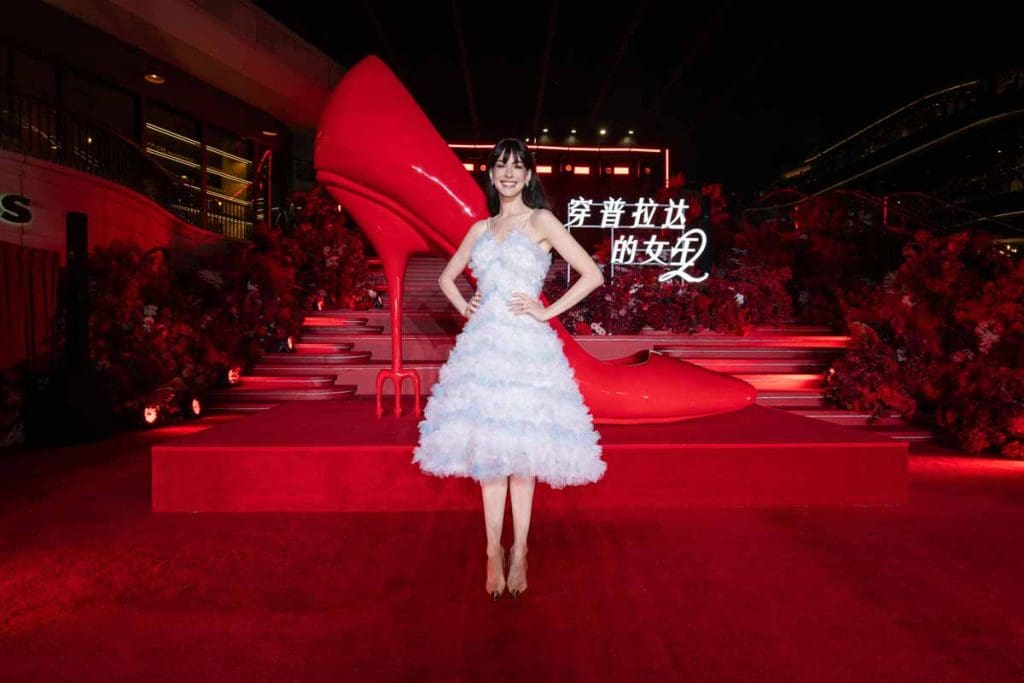
That willingness to say the complicated thing, to resist the edited optimised version of herself, is arguably what has made her cultural rehabilitation so complete. The internet initially punished her for being too polished, and she came back by being more honest. Becoming a mother changed the calculus entirely. “It’s not like I was lacking integrity, but it made me want to be completely, on every level, true to my word,” she said. Her two sons, Jonathan and Jack, now ten and seven, have apparently done their bit to keep her grounded in the most practical possible sense. “Kids interrupt you all the time,” she says, in a tone that manages to be simultaneously exasperated and grateful, and in a Harper’s Bazaar interview recently, she discussed the idea that balance is a trap and has largely abandoned the concept. “If the weight shifts in one direction, you then have to bounce it up on the other side, and we find that it winds us up as opposed to making us steady.” Harmony, she argues, is more honest. “We seek to harmonise our life.” It is a reframe that will feel useful to any woman who has spent years feeling vaguely guilty for not achieving a balance that probably never existed as advertised.
Her work ethic, she insists, was never about external validation anyway. “I’ve always just felt defined by my work ethic, because my skill set is what it is and I have to work with what I have, but how hard I can work is something that I can control. And so I never want to pull up short and feel like I could have worked harder. If I know that I’m working hard, I can live with who I am.” It is a surprisingly grounded thing to say for someone with an Oscar on a shelf somewhere, and also, recognisably, the thing that tends to get driven out of women somewhere around the time they are told they should be grateful for what they already have.
Which brings us to 2026 and what is, objectively, a frankly ridiculous workload for one human being. The Devil Wears Prada 2 is only part of the story. She is also starring in Mother Mary, a psychological pop-star thriller from A24 directed by David Lowery, opposite Michaela Coel, in which she plays a global superstar on the edge of a comeback performance and performs every song in the film herself, on a soundtrack written by Charli XCX and Jack Antonoff. The dancing required for the role presented its own particular challenge, and she trained hard for it despite not being, by her own reckoning, naturally suited to it. “It was really, really humbling to have to deal with the limitations that my body had always had, that I’d accepted as part of my identity, but now they were no longer acceptable,” she said. The choreographer on the production later noted that the filming atmosphere felt like director Lowery had “unintentionally started a cult,” which sounds either alarming or wonderful depending on your disposition. And then, behind that, there is Christopher Nolan’s adaptation of The Odyssey, for which she is also attached, marking her third film with a director whose attention she describes with characteristic openness: “Getting to be invited twice felt special, but three times? That would’ve been greedy, so I never let myself hope that would happen.” The woman the internet spent several years finding irritating is now one of the most in-demand actresses working, and she seems to regard this development with more curiosity than triumph.
It also came with a confession that surprised a few people. “Photoshoots used to terrify me,” she admitted in a WWD interview earlier this year, which is not what you expect from a woman who has been on more covers than most people have had haircuts. The fear, she explained, was really about failure, about the version of herself she might not be able to produce on demand. What shifted, she says, was arriving at a deeper kind of personal openness. “When I arrived at that place in a more meaningful way in my life, that was when it opened up for me in terms of a tangible relationship in fashion.” She now appears in Bulgari campaigns looking like she is not having the worst time, which suggests the process is going reasonably well.
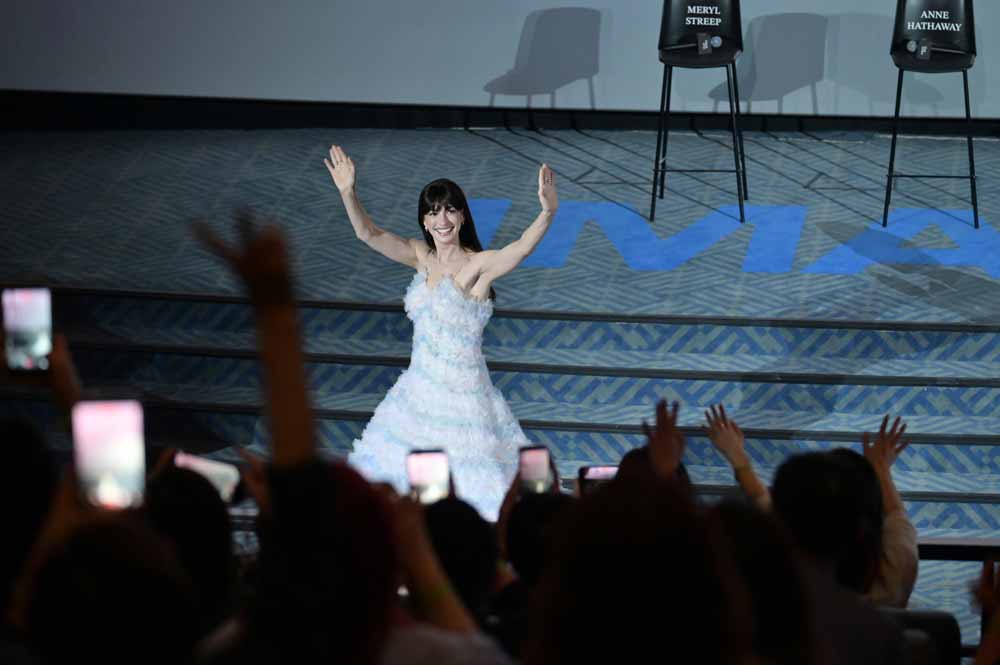
As for the sequel itself, the thing that finally moved her from polite reluctance to full commitment was straightforward: Meryl Streep read the new script and loved it, and that was that. “Once Meryl read the script and loved it, I was in. No hesitation,” she said on the global press tour in Tokyo, and sometimes it really is that simple.
The first film asked whether you could be ambitious without losing yourself. The sequel is asking something thornier: what do you do when the system that shaped your ambition stops functioning? The magazine needs money, the former assistant can save her old boss or end her, and whatever else you want to call it, that is not really a fashion plot. It is a power plot with exceptional tailoring.
And threading through all of it is “Runway,” the original song from Lady Gaga and Doechii, two artists from entirely different corners of the music world collaborating on a track for a sequel to a film about the magazine industry, at the precise moment the magazine industry is genuinely fighting for its life, without having asked a single editor for their thoughts on the matter. The irony is almost too neat.
“I knew in every cell of my being that I wanted to act,” Hathaway once said, recalling the moment as a small child she watched her mother perform as Eva Perón and understood, with total clarity, what she wanted her life to be. That certainty has been tested more than she probably anticipated: public ridicule, industry indifference, the specific fatigue of trying to be taken seriously by a business that keeps moving the goalposts for women in their forties. But she is still here, still choosing the more difficult option, still turning up in elevators next to Meryl Streep and holding her own.
She knows what cerulean is. And this time, she also knows how to use it.