
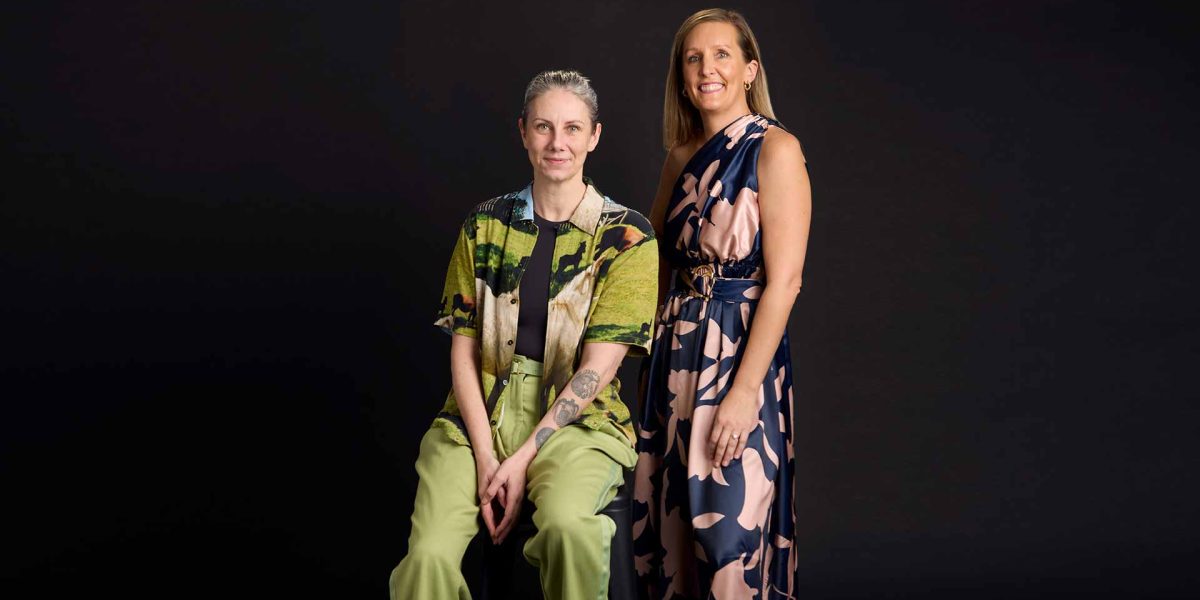
Winning on the Same Team
Alaina Luxmoore and Heather Polaschek of RUSH have spent years navigating industries that have not always made space for women. What they have been a part of building together showcases what genuine support in leadership actually looks like.
Alaina Luxmoore is Director of Marketing at RUSH, Aotearoa’s leading digital design and software development partner. Heather Polaschek is Head of People and Performance. Between them, they have nearly 40 years of experience across advertising, tech, telecoms, retail and the public sector. A lot of what they say about leadership and culture is grounded in having been in rooms where the rules were very different.
“RUSH is, to be very honest, the first career I’ve been in where the level of support for growing women in leadership was an imperative, not a side quest,” Alaina says. “And even in past roles where I’ve had wonderful female bosses, there’s often been a limited amount of space, or it was a very particular type of woman who was allowed to sit at the table.”
She came up through advertising. Mad Men, she notes, was not that long ago.
Heather describes the same decade from a structural perspective. The old conversation, she says, was exhausting. “Ten years ago, we were fighting for equality in a different way. It was this constant question: how are we going to influence people to show them why it’s important?” That argument is largely settled now. McKinsey, Bain and BCG have all made the case. “The conversation isn’t why we need diversity. It’s actually how we get more women in leadership because we know it’s important.”
Both women are fiercely competitive. Alaina says so without apology. But something about where that energy now goes has evolved.
“The competition has shifted from being against each other to how do we win on the same team?” she says.
“I’ve always got your back, you’ve got mine, but I’ll make you better, and I’ll be honest. Radical candour. In order to achieve the goals of the business, but also professionally and personally.”
Heather also gives a practical example of what male allyship looks like within the Senior Leadership Team. She told RUSH CEO & Founder Danu about a pregnant employee who was worried about her career. His response: “Well, why would it be an issue? Of course, this is fine.”
She contrasts it with how that conversation might have played out ten years ago. “Oh, this woman’s pregnant, it’s going to impact this project.” The difference is not just attitude. It is what gets said when the woman in question is not in the room.
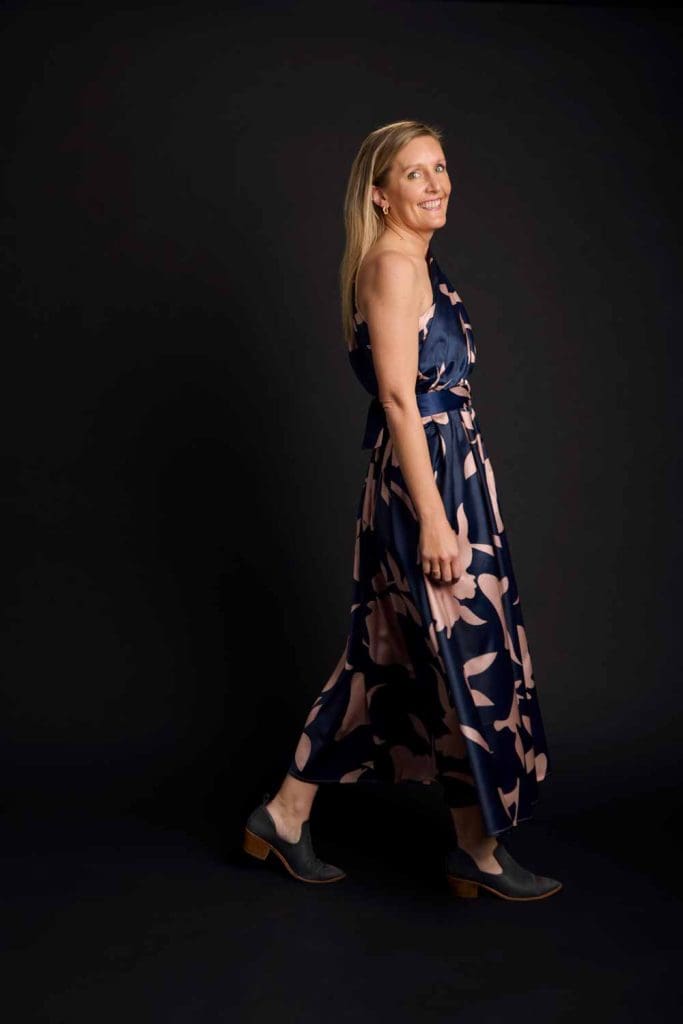
Alaina brings up a quote from Chris Rock.
“The most racist or sexist thing that has ever happened to you, you don’t even know about. The conversations being had about you that are preventing you from moving, you weren’t even in the room to hear that conversation.”
She uses it to make a point about AI and access to information. “The democratisation of information through AI is allowing you to at least ask the questions that give you a peek.” Salary benchmarking, gender pay data, company composition. “In the past, you were either not allowed to ask the questions, or you weren’t getting the straight answer.”
When asked how you actually know you are in an organisation where gender equity is real rather than rhetorical, Alaina talks about what is present and what is absent.
“The absence of sexist comments. The absence of conversation about what people are wearing. The inclusivity of language that has become part of everyday vernacular where people aren’t having to be reminded of how to speak to people in a non-gendered or biased way,” she says. “These are all things that, when they are there, you’re subconsciously being put in your place. And sometimes, you can’t pinpoint that that’s why.”
She had to think back to previous workplaces to even notice what RUSH does not have. Inclusive cultures, she suggests, should feel unremarkable.
Heather suggests that formal frameworks matter because they signal intention publicly, but the real work happens in conversations that never make it into any policy document. An executive quietly checking in after a meeting. A founder reviewing salary data line by line to make sure women are not being underpaid.
“It’s the championing behind the scenes that people don’t see. It’s not performative. And it doesn’t mean we always get it right either.”
Alaina remembers when RUSH had a reputation in the market as a bit of a boys’ club. Most senior leaders were male, most engineers were male. Women inside felt respected. Outside, people murmured it was hard to do well there as a woman. “Which we knew internally wasn’t right.”
She describes Heather’s arrival as a turning point. One of the first things Heather did was say she didn’t think RUSH had ever done a gender pay gap assessment, and that she was going to do one. “It just set the bar,” Alaina says. “Here’s how seriously I take women in leadership here.”
Both are mothers. Alaina jokes that Heather must be a digital twin given the hours she logs. And both are honest that flexibility has not removed the tension between executive ambition and parenting.
Alaina uses the glass balls and rubber balls analogy. Some things in life can be dropped and will bounce back. Some will shatter. “Sometimes you have to drop a rubber family ball to catch a glass work ball, or vice versa.” Whether the culture around you makes you feel ashamed when you do, is a different question.
She was denied a promotion while pregnant. One she had been explicitly told was coming. She uses it as a reference point, not a grievance. At RUSH now, if someone needs to step away for a family matter, someone else picks it up. “It’s never seen as a bad thing.”
Heather also has some advice for the juggle. “Sometimes you’re not going to be a great parent, sometimes you’re not going to be a great leader, sometimes you’re not going to do what you need to for yourself, and that’s okay. Just be less hard on yourselves.”
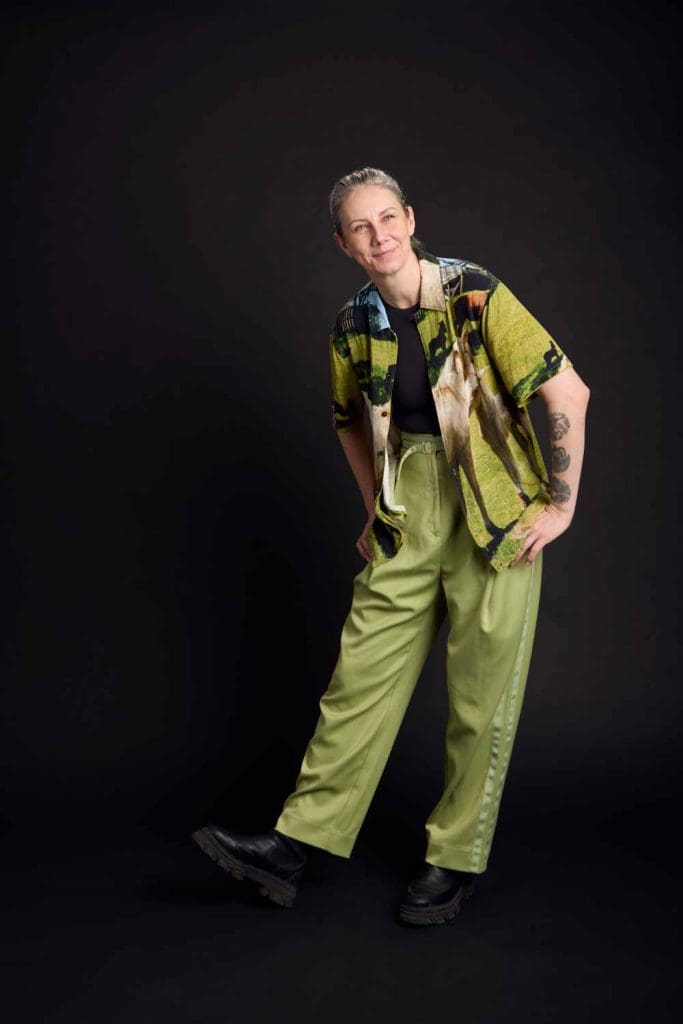
While the social business case for DEI has been well established, it has become politically toxic in some quarters and programmes are being wound back. RUSH has gone the other way. “We said, ‘Well, we’re not changing. This is fundamentally who we are. What else are we going to do?’” Heather says, adding that they are currently on a Te Ao Māori journey, deepening their commitment to indigenous frameworks of relationship and interconnectedness.
“You are more successful as a business when you have more diversity in leadership. So why would you pull away from it? You’re pulling away from it because you don’t want your business to be as successful. That seems quite ridiculous,” Heather adds.
She also warns that the people entering the workforce now are watching which companies kept their promises. “All these businesses that made all these promises and then turned back, they’re going to be remembered for it. And when the next big push comes with the next innovation wave, and everyone’s hiring again and trying to get great talent, they’ll struggle.” She pauses. “Maybe a personal belief and a hope.”
When the conversation turns to what each of them has learned about themselves as leaders, Alaina highlights how much the context of a workplace can have such a profound personal impact, for better and worse.
She describes arriving at RUSH with years of evidence of being a capable, at times excellent, employee, but very little self-worth to match. A long run of workplaces had told her to stay small. “The stripping away of the negative self-talk and negative narrative was as important to my career growth as any technical skill.”
“The growth has been in being a person who can simply say: ‘I’m good at this thing and I have evidence, so I’m going to chase it.’ Instead of looking for external validation and permission to do the thing first,” Alaina reflects.
Heather has spent the past two years adding an entirely new commercial remit, taking on RUSH’s Managed Services function alongside her People & Culture role. “To realise, even later in your career, that you can really pivot and do really well if you have a curious mind and a great community around you.”
Alaina adds in respect to growth, about what it took, about finally being able to act on what she knows she is good at rather than waiting for someone else to confirm it.
“I think that’s the growth part,” she says. “Stepping out from behind your own shadow.”