
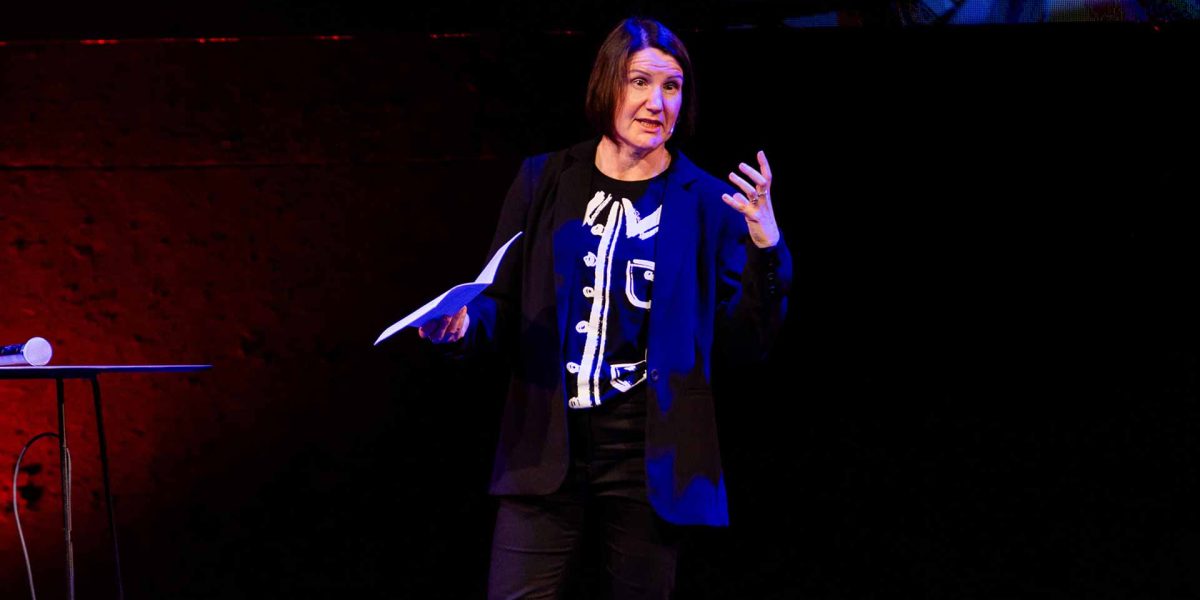
Michelle Batchelor (Née Preston) – How To Become A C Suite Leader
Michelle Batchelor is the CEO of Life Plus NZ, Preston and Blythe, and Little Life, with deep experience across healthcare, staffing, and recruitment. Before the boardroom she competed internationally as Michelle “Pressure” Preston, winning multiple titles across Muay Thai and boxing. She pairs high performance habits with practical people leadership and disciplined execution.
Ali Harper gives Michelle a warm welcome and the room meets a leader who has lived two demanding arenas. In sport she is Michelle “Pressure” Preston, a multiple world champion who has fought more than a hundred times. In business she is Michelle Batchelor, CEO of Life Plus and Preston & Blythe. She opens simply: “You get out what you put in.” The line threads through everything that follows as she maps ring habits to boardroom results.
She starts with origin and mindset. “I grew up in Manchester,” she says, describing a home where her father’s rules were clear. “If you get hit, hit back twice as hard. If you get knocked down, get back up.” At fourteen she walked into a Thai boxing class, the only girl in a room full of men. “There were no girls to fight, so I fought boys.” She laughs softly at the memory, not to glamorise it, but to show where her tolerance for discomfort began. “You learn early to walk into hard rooms.”
A British Army stint added accountability. “Structure helps, but you still have to show up,” she says. Back in civilian life she “fell into” healthcare recruitment and discovered the same mechanics. “It is repetition. You do the reps and track the progress. Small improvements compound.” The translation is direct. Training blocks turn into weekly targets. Pad rounds turn into client calls. Cutting weight becomes cutting distractions. “The scoreboard changes, the habits do not.”
Her move to New Zealand sharpened the lesson about proximity. “I went to every gym I could find, watched, asked questions, chose the coach whose results I wanted, and copied the habits.” She makes the principle explicit for leaders. “Stand next to people who are already where you want to go.” She applies the same filter to hiring and team design. “Your corner determines your ceiling. Choose it with intent.”
Michelle’s most vivid story is a world-title week that delivered both her best performance and one of her hardest lessons. “At the weigh-in I was one and a half kilos over,” she says. “I thought, how long is my hair, can I cut it off.” The room laughs. “Instead I put on layers and ran in a car park for three hours. I made weight.” Fight night brought a career-best performance and a decision that did not go her way. “Sometimes you do everything right and you still do not get the outcome. Life is not always fair. What you do next is on you.”
What came next is a system she still uses. “Twenty-four hours to sulk,” she grins. “Ice cream, burgers, a bit of a cry. Then back to training and back to the plan.” In business she treats a lost tender or a tough quarter the same way. “Never a loss, always a lesson. Contain it, learn from it, move.” She is clear about the practical payoffs. “Energy is precious. A short reset protects it. A long spiral wastes it.”
Ali later asks about fatigue and the ninth round. Michelle does not romanticise it. “In a ten-round fight you can hit round nine and think, my legs have disappeared.” The solution is not a miracle. “It comes down to grit, determination, strength of character.” That grit is not vague. It is anchored to purpose. “You have to know the why. Family. Community. A sustainable future. Whatever yours is, it needs to sit right in front of your mind when the body wants to stop.”
The leadership throughline is consistency. “Excellence is built when nobody is watching,” she says. “People learn who you are from how you show up every day.” She pushes against the idea that charisma wins the day. “Consistency wins the day. Treat people well, set the standard with your own behavior, and repeat.” She adds a sharp note about goals. “Fuzzy goals do notidea that charisma wins the day. “Consistency wins the day. Treat people well, set the standard with your own behavior, and repeat.” She adds a sharp note about goals. “Fuzzy goals do not work. If you fail to plan, you plan to fail.” She encourages leaders to make goals crisp, visible, and connected to a reason that survives pressure.
Communication and emotional intelligence come next, framed as trainable skills. “Tailor your approach to each individual,” she says. “I am quite blunt and usually say it how it is.” The work is learning how others are wired. “Be aware of who they are, what drives them, how they react.” How do you build that awareness. “Self-reflection is key,” she says. “Beginning and end of the day, ask what went right, what went wrong, what can I learn.” She treats wins and misses as data. “If you review both with curiosity, you get useful insight.”
Michelle returns more than once to the importance of team. “We work beside each other,” she says, echoing a theme that also surfaced in the panel. “Everyone brings something different.” The quality of the corner in a fight becomes the quality of the leadership bench in a company. “The wrong corner costs you. The right one protects you in the late rounds.”
She speaks plainly about recovery habits. “Training is stress management,” she says. “Thai boxing keeps me sane.” She smiles when she mentions her daughter and two golden retrievers. “That time grounds me.” The point is not lifestyle theater. It is performance infrastructure. “Build things into your day that keep you steady.”
When the topic turns to external shocks, she does not exaggerate or minimize. “You take it on the chin,” she says. “Stay alert, be agile, and move quickly.” She believes resilience can be designed. “Name your stressors, decide how you will respond, and practice the reset.”
She closes where she began. “You get out what you put in.” Then she gives the line that many in the room wrote down. “When you know your why, you will find your way.” It sounds simple, but it explains how she connects ninth-round grit to long-cycle leadership. Purpose feeds consistency. Consistency builds trust. Trust compounds results.
Key takeaways you can use now
1. Treat purpose as a performance tool by writing your why where you will see it in hard moments.
2. Translate ring habits into operating habits by turning training blocks into weekly targets and pad rounds into scheduled client conversations.
3. Choose proximity on purpose by standing next to people whose results you want and copying their repeatable habits.
4. Contain setbacks with a 24-hour reset that acknowledges emotion, extracts learning, and returns you to the plan.
5. Make goals crisp and visible because fuzzy goals drain energy and weaken execution.
6. Build consistency as a brand by showing up the same way in the quiet moments when nobody is watching.
7. Design your corner by hiring and developing a leadership bench that raises your ceiling and protects you under pressure.
8. Train emotional intelligence through daily reflection that captures wins, misses, and one adjustment for tomorrow.
9. Tailor communication to the person in front of you by understanding their drivers and likely reactions.
10. Protect energy with simple anchors such as training, meditation, or family time that stabilize mood and focus.
11. Expect ninth-round moments and pre-decide your response so grit is a plan and not a hope.
11. Treat failure as data by running short post mortems that capture causes and countermeasures without blame.
12. Practice deletion and focus by cutting distractions the way you would cut weight before a fight.
13. Share the load by making the vision shared and credit shared so the team feels ownership.
14. Keep moving in volatility by watching key signals, acting quickly, and adjusting strategy without drama.