
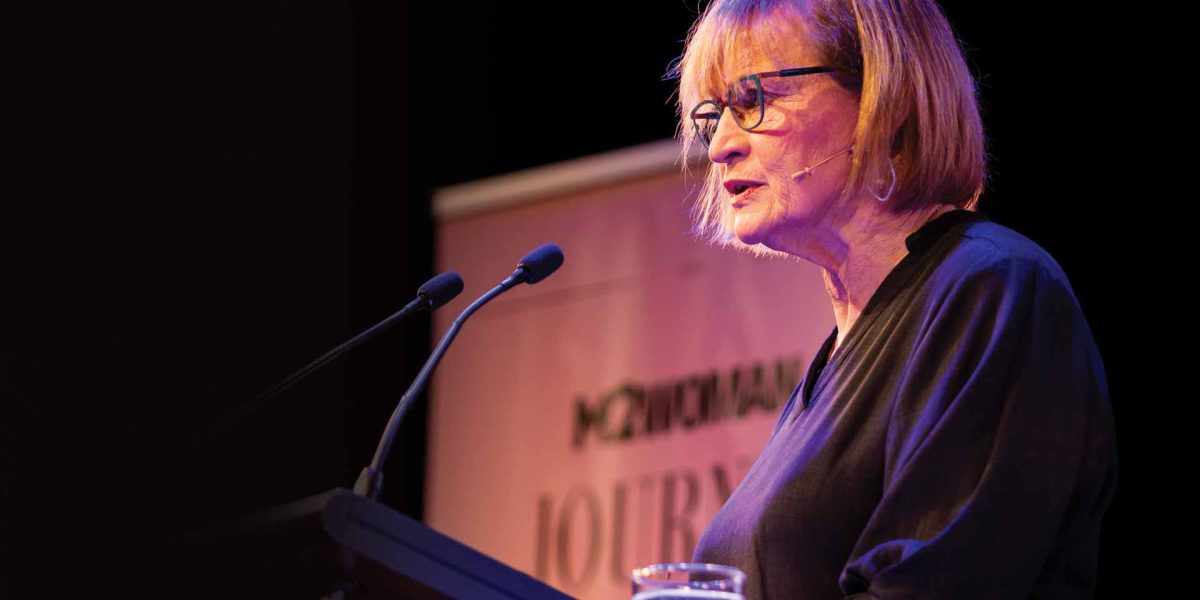
Peri Drysdale – Building and Maintaining Resilience
Peri Drysdale is the founder of Snowy Peak and Untouched World, and the founder of the Untouched World Foundation. She built a global knitwear business from a home start, pioneered possum merino innovation, and grew a brand recognised internationally for quality and sustainability. She is a long standing advocate for values led commerce and practical environmental responsibility.
Peri Drysdale takes us back to the beginning of business journey. “I started with almost nothing,” she says, “and I learned to choose courage over comfort.” She frames the arc quickly. “From hand knits at the kitchen table to global showrooms. From raw wool to breakthrough yarns. Purpose has to be a practice.” Sustainability is not a slogan in her world. “Treat it like a design brief that sharpens decisions.”
The first spark is a child’s memory. “A parcel fell from the rural mailbag,” she recalls. “Inside were red shoes stamped Made in England.” That tiny inscription stayed with her. “It was my first lesson in country brand. Products carry stories.” Years later, as an at-home mother in Christchurch, she decided that New Zealand should add value to its wool instead of exporting it raw. “I had about two hundred dollars and no idea how to knit,” she says with a small smile. “So I asked a neighbor to teach me.” She wrote simple patterns. “I made garter stitch garments and mittens without thumbs because I had not worked out thumbs yet.” Then she walked into Trade and Industry with a box of samples. “Export was the plan from day one.”
The cottage model scaled fast. “Ten home knitters became hundreds,” she says. “At one point there were about five hundred outworkers.” The standards were unforgiving. “Half the garments went into a seconds pile at the start,” she admits. “I refused to lower the bar. We fixed the system instead.” Delivery was fragile because life is real. “Family life and flu seasons change your production curve when you are working out of homes,” she says. “You learn to move.”
Then came a stop-go moment. “We bought a state-of-the-art Japanese knitting machine,” she says. “Interest was twenty-seven percent and the family home was on the line.” The machine arrived without documentation. “There was no manual. The engineer had none either. Japan had not written it yet.” She and her team went to work. “We reverse engineered major parts and wrote our own process. It demanded every bit of mental, physical, and financial resource.” Around the same time her husband, Alex, became ill. “The little hobby became the full family support,” she says. “So scale was not optional.”
Experts said Japan would not want what she made. “I went anyway,” she says. She stood outside Takashimaya in Tokyo with a small bag of samples. “I waited for the doors to open and walked to the knitwear floor.” Photography was forbidden. “I took a few pictures to study design,” she laughs, “and staff came running. I opened the sample bag and explained.” They called a buyer. “By the end of day one I had an introduction to a major wholesaler,” she says. “The market everyone said did not exist was there.” Her summary is plain. “Preparation. Instinct. Ask.”
Innovation became a habit. “We prototyped a possum and merino blend that felt absolutely delicious,” she says. Supply and production were the real tests. “People said it would never be viable.” She refused to hand back the samples. “I said I will return these when a container of yarn is on the way to my door.” Then she flew back to Japan. “I sat with a technologist and worked through the problem end to end.” There was also a narrative challenge. “We had to elevate the story beyond pest fur,” she says. She convened a business development circle. “Leaders from Prada Japan and Senken Shimbun sat at the table.” She chaired in Ichinomiya as the only woman in the room. “They teased me as an honorary man,” she says with a shrug. “I was fine with that. The point was the work.” In that period a stunning possum coat was cut to Princess Diana’s measurements in a Burberry collaboration. “She died before it could be sent,” Peri says quietly. “The coat now lives at Te Papa.”
Travel sharpened her sense of responsibility. “I kept seeing beautiful places degrade,” she says. “Then I would sit in rooms where the only topic was GDP and growth.” She decided to build a different model. “We launched Untouched World to prove that style and quality can thrive without trashing the environment.” The design brief was practical. “Easy wear and easy care,” she says. “Garments that travel well, live well, and tread lightly.” In 2000 she founded the Untouched World Foundation. “Young leaders go out and work on real sustainability challenges,” she says. Recognition came later. “The United Nations nominated our company as a global exemplar,” she notes. “They even granted permission to place the UN education logo on garments.” She is pleased but not sentimental. “Recognition opens doors. The work has to earn the right to stay in the room.” President Clinton invited her to present at the Clinton Global Initiative in Asia. “Our commitments were called deep and far-reaching,” she says. “That was encouraging, but it also raised the bar.”
Peri’s operating system has a few steady lines. “Start before you know how,” she says. “Skills can be learned.” She is clear about standards. “Set a bar that hurts to miss,” she says. “High rejection rates are data about process.” She is equally clear about asking. “Ask for what the work deserves,” she says. “The worst answer is a polite no.” The best answer is a new door. “It opens only for the person who knocks,” she adds. She is not romantic about resilience. “Make it a system,” she says. “Diagnose. Adapt. Keep moving.” She gives credit to people who go all in. “Surround yourself with people who give their all as if the company were their own,” she says. “You can do more than you think if you are not doing it alone.”
Underneath the strategy is a personal discipline. “I do not front up at work until I have meditated,” she says. “Short, medium, long term. If I skip it I can feel the tension rise.” For years she swam at five in the morning. “You build things into your day,” she says. The tone stays practical even when she talks about legacy. “Ask what your red shoes moment is,” she says. “The spark that still pulls you forward.” Then the market question. “Where is your Japan,” she asks. “The place the experts say no but your gut says go.” And the standard. “Which lines will you refuse to lower when pressure is on.”
She closes with a simple invitation to act. “Start with one thing,” she says. “Write the story you want your product to carry. Fix one quality step. Ask one person you are nervous to ask.” She smiles. “Momentum is a teacher.” The room understands why. The story she told was not about luck. It was a sequence of choices that turned instinct into innovation, innovation into brand, and brand into a platform for impact.
Key takeaways you can use now
1. Anchor your product in a clear place story so country and company brand earn premium positioning.
2. Start before you know how and let momentum teach you the skills you lack.
3. Set unforgiving standards and treat high rejection rates as process data to fix, not as a reason to lower the bar.
4. Invest in capability that unlocks the next horizon and be willing to document and master the tool yourself.
5. Test expert opinion in the market by walking the floor, meeting buyers, and showing the work.
6. Ask for what the work deserves and make respectful requests a daily practice.
7. Turn materials into meaning by pairing technical innovation with a story customers can feel.
8. Convene senior advisors and run the room to borrow perspective and credibility while you learn.
9. Build products for people and planet at the same time and use sustainability as a design constraint.
10. Institutionalise impact through education or foundation work that outlives any single season.
11. Use recognition to open doors but rely on sustained quality to stay in the room.12. Read weak signals from travel and culture and adjust strategy before small issues become crises.
13. Systemise resilience with a routine that diagnoses issues, adapts quickly, and keeps momentum.
14. Hire and develop people who behave like owners to raise the ceiling on what is possible.
15. Protect personal energy with daily anchors such as meditation or early movement so decisions stay clear.