
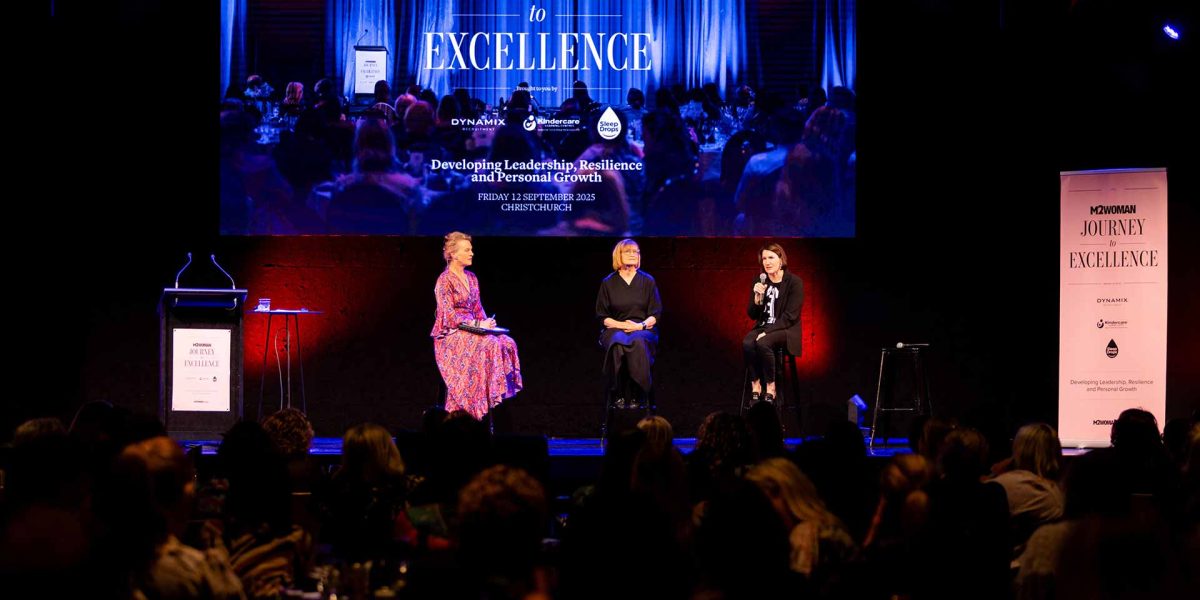
Q&A Panel Discussion: How to Find the Stamina to Succeed
Ali is joined by Peri and Michelle for the panel discussion and gets straight into the takeaways. “You’ve both faced very stressful moments where it’s make or break. What’s in your toolkit that gives you the stamina to keep going?”
Peri doesn’t hesitate. “For me it’s all about energy.” She describes the stop-go moments that punctuate a company’s life and the choice to move when the purpose is clear. “Our industry is so bad for the environment, it has to change.” Ali reflects it back. “Something bigger than yourself?” Peri smiles. “Oh yes.”
Michelle points to the anchor she spoke about earlier. “You’ve got to know the why. What’s driving you every day.” When the body is pushed to its limits, she leans on mindset. “In a ten-round fight you hit round nine and think, my legs have disappeared. It comes down to grit, determination, strength of character.” She widens it beyond sport. “Whether your why is family, community, a sustainable planet, or our kids, that’s what keeps you going.”
Ali shifts to teams. “Have you found that working beside people with different skill sets has been the key?” Peri reframes hierarchy. “I like to think it’s our vision.” She is clear about contribution. “We couldn’t run our business without every single person. Everyone brings something different. If one of them wasn’t there, we wouldn’t be there.”
Then the question of translating the ring to the room. Ali grins. “You can’t knock someone’s block off in the boardroom. How do you use the skill set from the ring?” Michelle answers with composure. “Tailor your approach to each individual.” She knows her default. “I am quite blunt and usually say it how it is.” The work is adaptive. “Be aware of who they are, what drives them, and how they react.”
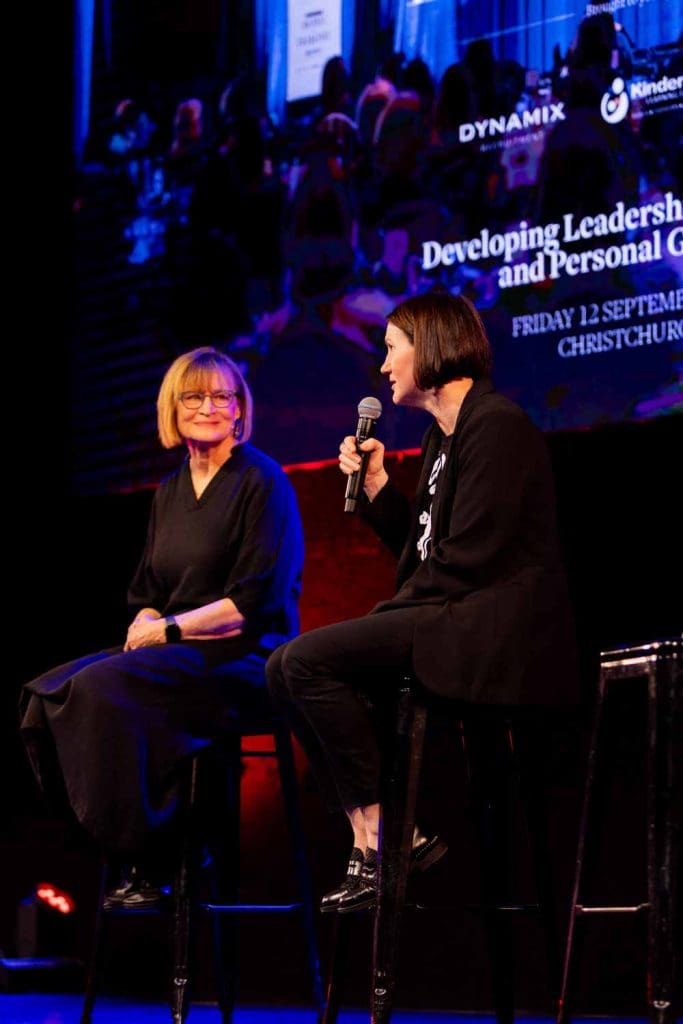
“How do people learn to be emotionally intelligent?” Ali asks. Michelle keeps it simple. “Self-reflection is key.” Her routine is deliberate. “Beginning and end of the day, what did I get right, what did I get wrong, what can I learn?” She treats highs and lows as data. “If you constantly review, you’ll get valuable insight. You need a growth mindset.”
On recovery, Peri jokes lightly. “Hobbies, how do you spell that word?” Then she gets specific. “I don’t front up at work until I’ve meditated. Short, medium, long term. If I haven’t done that I get tense.” She used to swim at five in the morning. “You build things into your day.” Michelle’s pressure valve is familiar. “Thai boxing, boxing, training.” It began as a hobby and now doubles as “really good stress management.” She adds the personal reset. “Time with my daughter and our two golden retrievers.”
Ali asks about shocks and exporting. Peri is matter-of-fact. “COVID was huge.” The company shipped to many countries, and tariffs bit hard. “Our numbers dropped to 54 percent of what we’d expect.” Experience shapes her stance. “Be alert and agile and move quickly.” She adds a steady line. “You take it on the chin. Something will turn up.”
Final asks for the room. “What do you wish you’d known earlier?” Peri returns to mindset. “Keep your energy up. Don’t sink down into what could be.” She uses a simple mantra when things go wrong. “I wonder what great things will come out of this.” She has seen the pattern. “For some curious reason, when you think that way, great things do come out of it.” Michelle closes with action. “Take action. If you’ve decided to do something, do one small thing today.” Examples come quickly. “Book the PT session. Meditate for 10 minutes.” The principle is the point. “It doesn’t have to be big. Just start.”
Key takeaways you can use now
1. Treat energy as a strategic resource and plan daily habits that protect it.
2. Connect hard pushes to a purpose larger than yourself, stated in one clear sentence.
3. Keep your why visible so it guides you when the work gets heavy.
4. Pre-decide how you will respond in late-round moments when fatigue and pressure spike.
5. Build a genuinely shared vision so credit and ownership travel across the team.
6. Design roles around distinct strengths rather than one-size approaches.
7. Adapt your communication to the person in front of you, not just the problem.
8. Know your default style and compensate with situational awareness.
9. Run a daily reflection loop to capture wins, misses, and one adjustment for tomorrow.
10. Lock in stabilising routines such as meditation, movement, or quiet planning before the inbox.
11. When shocks hit, acknowledge quickly, then move fast on the next best step.
12. Use deliberate reframing in setbacks to keep energy and creativity available.
13. Lower the bar for starting and take one concrete action today.
14. Surround yourself with people who rely on you and want you to succeed.
15. Protect simple anchors outside work, like time with family or pets, to stay grounded.